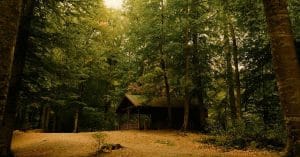
Despite the coldest winter in 16 years, with January temperatures averaging below freezing and nights dropping to -18.8°C, over 11,700 people booked overnight stays in Naturstyrelsen shelters around Copenhagen and North Zealand this winter. That’s 2,000 more than last year, continuing a growth curve that has nature officials calling the demand “wild.”
The numbers don’t lie, and they don’t make immediate sense either. December, January, and February 2026 averaged just 1.5°C, half a degree below the climate normal and the coldest winter stretch Denmark has seen since 2010. January alone clocked in at -0.6°C, making it the coldest month in 16 years. On one particularly brutal night in Isenvad, a small town in central Jutland, the thermometer hit -18.8°C, the lowest January reading in 23 years.
Yet while most Danes cranked up the heat and stayed indoors, thousands booked nights under tarps in the woods. The surge in shelter bookings is not a blip. It is part of a steady climb that has continued year after year, even as conditions have ranged from mild to miserable.
Østenvind and Endless Frost
The winter felt colder than the averages suggest. That is because averages smooth out extremes, and this winter had plenty. A December that started warm at 5.3°C gave way to January and February with sustained temperatures hovering right at the freezing point. Then came the østenvind, the relentless easterly wind that blew for weeks on end. TV 2 meteorologist Peter Tanev called it extreme. The wind kept blowing, amplifying the cold, pushing the perceived temperature down to -15°C on some days.
Snow fell more frequently than it had in 13 years. The country woke up Sunday mornings blanketed in white. Roads turned slick. Visibility dropped. And the snow stuck around because the winter was also bone dry, with total precipitation 38% below normal at just 114.8 mm. DMI climatologist Mikael Scharling noted that Denmark had not seen a drier winter in 17 years. Less rain meant less melt. The snow lingered, the frost deepened, and the whole season took on the character of an old fashioned isvinter.
Urban Danes in the Frozen Woods
Jes Aagaard is a nature guide with Naturstyrelsen Hovedstaden. He has watched the shelter boom unfold for years, and he still finds the trajectory remarkable. As he put it, any businessman would be thrilled with a growth curve like this. Over half of all shelter bookings nationwide during the winter months came from the Copenhagen area and North Zealand. Urban residents are driving the demand.
Aagaard believes city dwellers have a particular hunger for nature access. Many have figured out that shelters are available year round, not just in summer. They book early and often, securing spots months in advance just to guarantee a night outside. The system is strained. Naturstyrelsen has built more shelters, but demand keeps rising faster than supply.
Sarah Falk spent Monday night in a shelter on Amager with temperatures around 3°C. She admits it is cold. She also says it is worth it. The hygge, the coziness of a fire and friends in the woods, outweighs the discomfort. Her strategy for staying warm is simple and low tech. She stuffs extra clothes into her sleeping bag. Her friend brings better gear. Both manage fine.
Time, Quiet, and Proximity
Falk thinks the shelter experience offers something specific to people living in dense urban environments. There is more time out here, she says. Conversations go deeper than they would over coffee at a city café. The pace slows. The noise drops. You notice your surroundings and the people with you in ways that do not happen when you are plugged into the grid.
The appeal is not purely aesthetic. It is practical. Shelters in places like Rold Skov and closer to the city provide accessible wilderness without requiring a car or a week off work. You can leave Friday after work, sleep under the stars, and be back for brunch Sunday. That accessibility matters in a small country where nature reserves and forests are never far but where urban density makes solitude feel scarce.
No Correlation Between Cold Winters and Hot Summers
Tanev, the TV 2 meteorologist, also weighed in on a bit of folk wisdom circulating during the cold snap. The idea that a freezing winter guarantees a scorching summer has no statistical backing, he said, adding with characteristic bluntness that the belief probably emerged at the same time someone was drinking schnapps. The winter was cold. The summer will be what it will be. The two are not connected.
What does connect is the resilience of Danes willing to camp in subzero temperatures and the infrastructure that makes it possible. Naturstyrelsen shelters are simple, often just three walls and a roof, but they are maintained, bookable online, and scattered across accessible forests and coastlines. The system works, and people use it.
Sources and References
The Danish Dream: Rold Skov Denmarks Second Largest Forest
DR: Vinteren var den koldeste i 16 år alligevel overnattede rekordmange i naturen
DMI: Vinteren 2025-26 var kold og knastør
Politiken: I en lille by i Midtjylland ramte de 188 frostgrader i nat
BT: Iskoldt vintervejr over Danmark det er ekstremt at vi har set østenvind i så lang tid