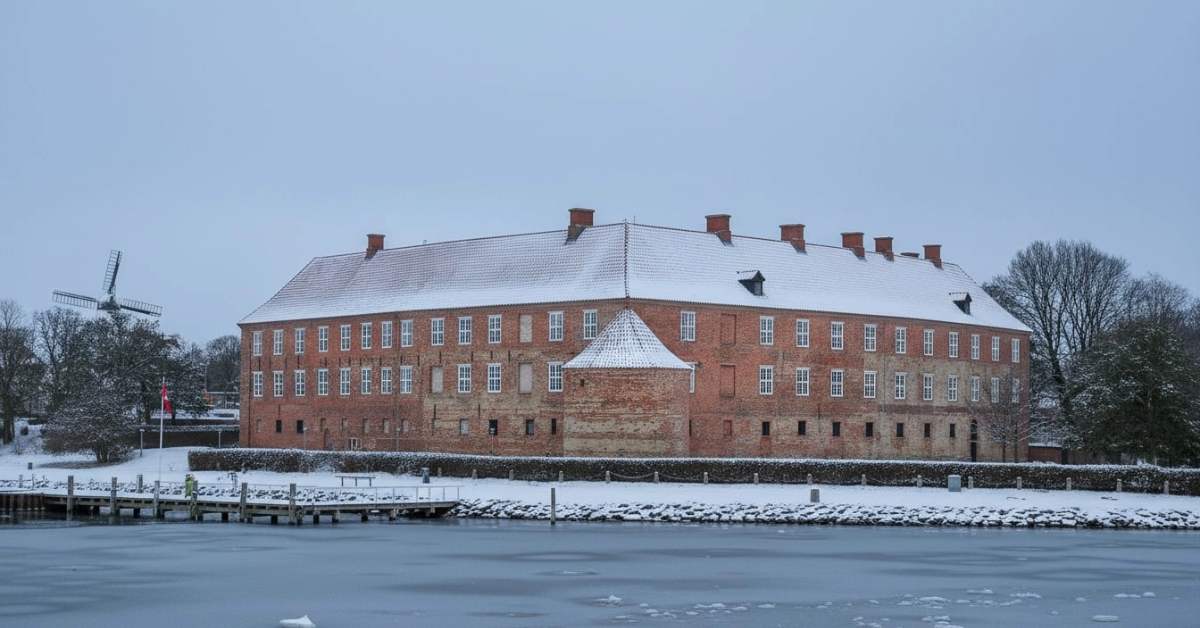
The Museum Sønderborg Castle on the island of Als packs 800 years of Danish history into one striking white complex. From a deposed king’s prison cell to a Reformation chapel and the bloody 1864 war, this is one of southern Denmark’s most rewarding museum visits for any expat.
Why The Museum Sønderborg Castle Belongs on Every Expat’s Map
The Museum Sønderborg Castle sits on the island of Als in southern Denmark. It overlooks the narrow waters of the Alssund, where Als meets the Jutland mainland. The white facade and squat corner towers dominate the harbour skyline of Sønderborg town.
I have visited this castle three times in the last decade. Each time, another layer of the story opened up. As stated on the official site of Museum Sønderjylland, the castle ranks among Denmark’s oldest royal residences still standing.
The first time I walked into the castle chapel, I stood silent for a full minute. The wooden gallery and the painted panels somehow survived almost five centuries. History here does not stay behind glass. It walks beside you through every corridor and stairwell.
For expats who want to understand Denmark beyond Copenhagen, this place is essential. It explains the border, the wars, and the quiet pride of Sønderjylland. You will leave with a different sense of what Denmark actually is.
A Fortress Through 800 Years of Danish History
The castle’s story tracks Denmark’s own. Few buildings carry this much weight in their walls.
Medieval Origins on the Alssund
The first fortress here was built around 1158 under King Valdemar I the Great. It guarded the strait between Als and the mainland. The location made it both a shield and a trophy worth taking.
For centuries, the castle changed hands between Danish kings and the dukes of Schleswig. It saw Hanseatic raids, dynastic feuds, and the long stitching together of Denmark. As reported on the Wikipedia entry for Sønderborg Castle, the building was already a royal residence by the 13th century.
The Prison Cell of King Christian II
One of the strangest stories at The Museum Sønderborg Castle involves a deposed king. King Christian II was held here from 1532 to 1549. He lost his crown after losing Sweden and falling out with the Danish nobility.
The famous legend says he wore a circular groove into a stone table by pacing for years. Historians now consider that story doubtful. Still, his cell draws curious visitors, and it remains a sobering reminder that royal blood was no shield in 16th century Denmark.
The Schleswig Wars and the Trauma of 1864
The Schleswig Wars of 1848 to 1864 mark the most painful chapter. During the Second Schleswig War, Prussian artillery shelled Sønderborg town from the heights of Broager. The castle itself served as a field hospital after the catastrophic Battle of Dybbøl on 18 April 1864.
As reported in the historical record of the Battle of Dybbøl, about 5,000 men died or were wounded that day. The 1864 exhibit here includes soldiers’ letters, uniforms, and a chilling collection of personal effects. For most Danes, this defeat still shapes how they think about national identity and small-state diplomacy.
Architecture: Renaissance Beauty Built on a Medieval Spine
The building tells the story of two Denmarks meeting in one structure. You can feel the shift as you walk room to room.
From Medieval Mass to Renaissance Proportion
The original medieval fortress was massive, blocky, and built for war. King Christian III rebuilt much of it after 1549 in early Renaissance style. His son, Duke Hans the Younger, finished the work in the late 16th century.
Hans added the four wings, the tall corner towers, and the famous chapel. The result is a rare blend of medieval mass and Renaissance proportion. Walking the outer wall, you can still trace the older fortress under the white plaster.
The thick walls speak of cannon fire. The bright interior speaks of a duke who wanted to show off his taste. That tension makes the building feel alive in a way Frederiksborg Castle never quite does.
The Chapel of 1570: A Reformation Treasure
The castle chapel, completed around 1570, is the real jewel inside. According to Museum Sønderjylland, it ranks among the oldest preserved Protestant princely chapels in Northern Europe. The pulpit, gallery, and altar have stood almost untouched for over 450 years.
The chapel reflects the spirit of the Danish Reformation of 1536 in physical form. Christian III made Denmark Lutheran, and this room shows what that decision looked like in wood and paint. As an expat, I see it as essential context for the famously secular Danish present.
What You Will See Inside The Museum Sønderborg Castle Today
The Museum Sønderborg Castle now belongs to the larger Museum Sønderjylland network. It holds the cultural history collections for the whole Sønderjylland region.
The 1864 Exhibition
The 1864 floor remains the most emotionally heavy section. You walk through dim rooms full of bullet-pierced helmets, field letters, and amputation tools. The pacing is slow and deliberate, and rightly so.
As noted by Museum Sønderjylland, the exhibition presents the war from Danish, German, and civilian perspectives. That balance is rare and important. The defeat at Dybbøl reduced Denmark to a small state, and the museum does not flinch from that fact.
The Border Story: 1864 to 1920
What I value most are the rooms about the years between 1864 and 1920. During that period, this part of Denmark belonged to the German Empire. The 1920 referendum brought Sønderjylland back to Denmark, and the museum tells that story with real care.
For expats trying to understand Danish identity, these rooms are gold. They explain why Sønderjylland still feels culturally distinct from Copenhagen. They also explain why the Danish minority in Germany and the German minority in southern Denmark still matter today.
Renaissance Rooms, Daily Life, and Maritime Heritage
The exhibits cover daily life, trade, war, faith, and the long shadow of the German border. You will find maritime objects from the Sønderjylland coast, Renaissance furniture, and detailed military dioramas. The collection runs into tens of thousands of artifacts.
The duke’s apartments give you a sense of 16th century aristocratic life. Heavy oak panelling, painted ceilings, and rooms designed to impress visiting ambassadors. It is a quieter contrast to the heavy 1864 floor downstairs.
Key Facts About The Museum Sønderborg Castle
A quick reference for planning, with the essentials in one place. As stated by Museum Sønderjylland and VisitSønderjylland, these are the figures you actually need.
| Detail | Information |
|---|---|
| Founded | Around 1158, under Valdemar I |
| Major rebuild | 1549 to 1570, under Christian III and Duke Hans the Younger |
| Location | Sønderbro 1, 6400 Sønderborg, island of Als |
| Operated by | Museum Sønderjylland |
| Notable feature | Chapel from 1570, prison of Christian II, 1864 exhibition |
| Typical opening | Tuesday to Sunday, 10:00 to 17:00 (check official site) |
Always check the official Museum Sønderjylland page for current prices and opening hours. Holiday weeks and Mondays in low season can affect access.
Practical Guide to Visiting The Museum Sønderborg Castle
A visit works best with a little planning. The town is small, the castle is compact, and the rewards grow with context.
Best Time to Visit
The castle opens all year, but seasons shape the experience. Summer brings the biggest school and tour groups. Shoulder seasons give you quieter halls and easier parking.
- Spring and summer (May to September): Long daylight hours, mild weather, busy halls.
- Autumn (October to November): Cool light, fewer crowds, great for the 1864 mood.
- Winter (December to February): Quiet, cosy, with shorter opening hours.
- Early spring (March and April): Sharp light off the Alssund, almost empty rooms.
My personal preference is late September. The summer rush is gone, but the light is still good for the castle park.
How to Reach The Museum Sønderborg Castle
Sønderborg is easier to reach than most expats expect. The town has its own small airport with direct flights to Copenhagen. Trains from Copenhagen take roughly four hours via Fredericia and Tinglev.
By car, the castle is about 25 minutes from the German border at Kruså. The official address is Sønderbro 1, 6400 Sønderborg. Parking sits beside the harbour, a two-minute walk from the entrance.
Tips for a Rewarding Visit
A few details can sharpen the experience considerably. I have learned these the hard way over multiple trips.
- Allow three hours. Two is not enough if you want the 1864 floor done properly.
- Start at the top floor. Work down chronologically through Reformation, royal apartments, and 1864.
- Read English captions slowly. Translations are good but dense.
- Combine with Dybbøl Banke. The battlefield site is 10 minutes away by car.
- Bring cash for the café. Card terminals can be slow during school visits.
- Skip Mondays in low season. Hours are reduced from October to March.
If you are travelling with kids, the dioramas and the prison cell hold their attention better than most museum content. Mine still talk about the groove on the stone table.
What to Combine With Your Visit on Als
The castle is the centrepiece, but Als and the Sønderjylland mainland reward a longer stay. Make it a weekend.
Dybbøl Banke History Centre
Dybbøl Banke is the battlefield where the Danish army was defeated in April 1864. The Dybbøl History Centre sits on the hill itself. Walking the redoubts after seeing the castle exhibit makes the whole story land properly.
The site also includes the famous Dybbøl Mølle, a windmill that became a national symbol. As reported by Historiecenter Dybbøl, the mill was destroyed and rebuilt several times during the war. It now stands as a quiet monument to a lost cause.
Sønderborg Town and the Harbour
The town itself is worth an afternoon. The harbour is lined with cafés, and the Alssund bridge frames every view. The pedestrian street has decent bookshops and the usual Danish chains.
For a bigger regional picture, drive on to Koldinghus or Schackenborg Castle. Both pair well with Sønderborg as part of a southern Denmark history trip. Anyone working through the country’s best castles should put this stretch high on the list.
How The Museum Sønderborg Castle Compares to Other Danish Castles
The site combines fortress, royal residence, prison, hospital, and modern museum into one experience. That layered identity makes it different from polished, restored sites like Frederiksborg or Kronborg. Here, the rough edges of history are part of the appeal.
Where Kronborg sells Shakespeare and Frederiksborg sells royal grandeur, Sønderborg sells consequence. You leave thinking about borders, defeat, and what small countries do after losing wars. That is, frankly, more useful for an expat trying to understand modern Denmark.
If you have visited other museums in southern Jutland, you will recognise the curatorial style here. As noted in coverage of Danish museum trends, regional sites like this have been quietly raising their game for a decade.
Frequently Asked Questions About The Museum Sønderborg Castle
These are the questions I get most often from expat friends planning a trip down to Als.
Where is The Museum Sønderborg Castle located?
The Museum Sønderborg Castle is located at Sønderbro 1, 6400 Sønderborg, on the island of Als in southern Denmark. It sits on the eastern shore of the Alssund strait, overlooking Sønderborg harbour. The castle is around 25 minutes by car from the German border.
How much does it cost to visit The Museum Sønderborg Castle?
Adult tickets typically cost around 95 DKK, with reductions for students and seniors. Children and young people under 18 enter free of charge. For the current prices, check the Museum Sønderjylland website before your visit.
How long does a visit to The Museum Sønderborg Castle take?
Plan on at least two and a half to three hours for a proper visit. The 1864 floor alone deserves a full hour, and the chapel rewards slow looking. If you bring children, factor in extra time for the prison cell and the dioramas.
Is The Museum Sønderborg Castle worth visiting for expats?
Yes, especially for expats who want to understand Denmark beyond Copenhagen. The castle explains the 1864 trauma, the German period, and the 1920 referendum in one place. These events shape Danish identity, politics, and even foreign policy to this day.
Can you visit the chapel and the prison cell of Christian II?
Yes, both are part of the standard museum route. The chapel from 1570 is one of the oldest preserved Protestant princely chapels in Northern Europe. The cell associated with King Christian II is on the lower level and is open during all standard opening hours.
What is the best time of year to visit The Museum Sønderborg Castle?
Late spring and early autumn offer the best balance of weather and quiet halls. Summer is the busiest period due to Danish school holidays and German tourism. Winter is calm and atmospheric, but opening hours can be reduced.
Is the castle accessible for visitors with reduced mobility?
The museum has worked to improve accessibility, with lifts to most floors and adapted toilets. Some of the medieval sections still involve uneven steps and narrow passages. Contact Museum Sønderjylland in advance if you need detailed accessibility information.
Final Thoughts: Why The Museum Sønderborg Castle Stays With You
Most Danish castles entertain. The Museum Sønderborg Castle teaches. It explains how a small kingdom lost a war, lost a region, and slowly rebuilt itself into the country expats now choose to live in.
I have walked out of this building three times feeling like I understood Denmark a little better. That is rare for any museum. For anyone serious about life here, this castle is not optional. It is part of the curriculum.