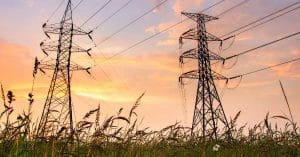
Around 4,000 Danish households are anxiously checking their digital mailboxes today as state-owned energy company Energinet reveals its final proposal for a 190-kilometer high-voltage power line stretching from Trige near Aarhus to Aabenraa. The controversial project has sparked 800 objections from residents, some of whom face losing their homes through expropriation.
Homeowner Faces Expropriation Over Power Line Route
Roberto Bentsen from Horsens is among those watching his inbox closely. If Energinet’s original plan remains unchanged, his family will need to find a new place to live. The proposed routing would place the high-voltage line directly over his house, making demolition necessary.
The stakes couldn’t be higher for families like the Bentsens. Roberto admits his family checks their e-Boks multiple times daily, waiting to learn their fate. If the final proposal doesn’t reflect changes in their favor, he plans to explore additional options for objections. Otherwise, he’ll have to wait for officials to determine what compensation they’ll receive for their property.

Massive Infrastructure Project Sparks Opposition
Denmark needs to transport larger amounts of green energy in the future, requiring a significant upgrade to the electrical grid. However, Energinet’s initial summer 2025 proposal would directly impact 4,000 households, triggering widespread protests across the region.
The project involves constructing new 44-meter-tall towers, slightly taller than most existing structures that range between 42 and 46 meters. Despite an existing high-voltage line already running along parts of the route to Aabenraa, many residents simply want the new lines to follow the old route as closely as possible.

Citizens Propose Alternative Routes
Energinet received more than 350 concrete proposals for both minor and major route modifications. Roberto Bentsen submitted one of these alternatives, suggesting the line be moved westward to affect fewer homes. His proposal would add approximately 300 meters to the total distance.
In fact, he believes this modest extension represents a fair compromise. Compared to a 190-kilometer stretch, Roberto argues that an additional 300 meters is insignificant if it results in fewer expropriations and reduced environmental impact.
Aarhus Officials Challenge Project Plans
Denmark’s second-largest municipality has expressed serious reservations about the ambitious project. In October 2025, the entire Aarhus City Council sent an appeal to Climate, Energy, and Supply Minister Lars Aagaard requesting a project review. City officials believe the new high-voltage connection creates problems for both nature and residents.
The municipality strongly urged Energinet to reconsider the proposed routing and investigate possibilities for additional underground cabling, particularly in areas near residential zones. Aarhus officials also expressed frustration that the power line placement interferes with solar panel installations critical to achieving the city’s climate goals.

Technical and Environmental Concerns
Nicolaj Bang, councilor for technology and environment in Aarhus Municipality, views the 800 objections as clear evidence that Energinet should reconsider its original proposal. He hopes the company will listen to the widespread resistance against the current routing.
Aarhus Municipality wants a larger portion of the route established with buried cables. Bang emphasized the desire to minimize the project’s footprint in the landscape while disturbing as few people as possible. If additional underground installation proves impossible, he hopes officials will move the lines as far from residential areas as feasible.
Balancing Green Transition With Community Impact
When questioned about whether municipalities should oppose projects needed for rising electricity demand, Bang defended the city’s position. Maintaining broad public support for the green transition requires implementation that minimizes disruption, he explained. Therefore, municipalities must object when proposals receive such widespread public opposition.
Surprisingly, the controversy highlights tensions between Denmark’s renewable energy ambitions and local community interests. While everyone acknowledges the need for expanded electrical capacity to handle green energy, the human cost of infrastructure projects remains a contentious issue.
Waiting for Final Decision
Energinet declined to comment on the situation until all affected residents receive notification through their e-Boks accounts. The company’s final proposal will reveal how much weight citizen objections and alternative suggestions carried in the planning process.
For Roberto Bentsen and thousands of other Danish households, today’s announcement will determine whether they can remain in their homes or must uproot their lives. The decision represents more than just infrastructure planning. It affects real families, real communities, and the future of Denmark’s energy landscape.
Meanwhile, the broader question remains whether Denmark can successfully balance its ambitious climate goals with the legitimate concerns of citizens whose lives will be fundamentally altered by the necessary infrastructure changes. The answer may set important precedents for future projects across the country.
Sources and References
The Danish Dream: Denmark Faces Worst Ocean Oxygen Crisis in Decades
The Danish Dream: Buying Property in Denmark for Foreigners