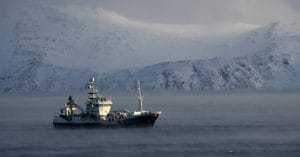
Denmark’s pollution-response environmental ships have been taken partially out of service because their diesel engines expose crews to dangerous pollution levels. With only one vessel fully operational, experts warn the country lacks capacity to handle oil spills while waiting for new ships expected in 2032.
Environmental Ships Create Health Hazards
The situation represents a troubling irony for Denmark’s marine protection efforts. Two of the Navy’s four environmental response vessels, Mette Miljø and Marie Miljø, are meant to protect the ocean from pollution. Instead, their own diesel engines produce so much harmful exhaust that the crew faces serious health risks.
Dangerous Particle Pollution Onboard
A report from the Center for Law and Working Environment revealed the severity of the problem. The diesel motors on these ships generate particle pollution at levels that constitute a workplace safety hazard. As a result, the vessels have been taken partially out of service since mid December.
The ships have only responded to one environmental incident since then. Their normal schedule of seven monthly routine voyages has been cancelled, according to reporting by the engineering publication Ingeniøren and maritime news outlet Olfi. The Navy confirmed in a statement that routine sailings have been cut but declined to comment further on readiness levels.
Only One Environmental Ship Remains Fully Operational
The reduced capacity leaves Denmark’s marine environmental response severely weakened. Only one ship, Gunnar Seidenfaden, remains fully operational for oil spill response. The fourth vessel in the fleet is currently in dry dock for maintenance.
These ships play a critical role when oil leaks into Danish waters. They deploy floating barriers to contain spills and prevent oil from spreading. The vessels also carry skimmers to collect oil from the water surface.
Untrained Crews Raise Safety Concerns
The decision to keep the ships docked creates cascading problems beyond just reduced capacity. Without regular voyages, crews lose the training and experience needed to handle dangerous equipment safely.
Former Ship Commander Warns of Risks
Kasper Thomassen served as ship commander on Marie Miljø until 2012. He describes the current situation as deeply problematic from an operational safety perspective. When crews do not regularly practice handling floating barriers and other heavy equipment, the risk of serious injuries increases significantly.
The environmental response ships carry specialized gear that requires constant practice to deploy safely. Floating oil barriers are particularly challenging to handle in rough seas. Without regular training exercises, even experienced sailors can make mistakes that lead to accidents.
Political Criticism Grows
Members of Parliament have begun raising alarms about the weakened response capacity. Bjarne Laustsen sits on the Environment and Food Committee for the Social Democrats. He warns that Denmark now lacks the ability to respond adequately to a major spill incident.
If a major environmental disaster occurs, the country simply does not have enough working ships to mount an effective response. Combined with untrained crews, Laustsen says the situation is destined to result in failure when Denmark faces its next serious oil spill.
Decades of Neglect Come to a Head
The current crisis represents the culmination of problems that have festered for years. Denmark’s environmental fleet has faced criticism for being outdated and insufficient for decades.
Ships Over 40 Years Old
The problematic vessels Mette Miljø and Marie Miljø belong to the Seatruck class. Both ships were built in 1979, making them over 45 years old. The larger vessels Gunnar Seidenfaden and Gunnar Thorsson date from 1980 and 1981 respectively.
The fleet has been officially considered obsolete since 1997. Inspections conducted in 2000 revealed significant age related deterioration. As the ships have continued operating well past their intended service life, maintenance problems and what experts call follow on ailments have multiplied.
Government Auditors Issue Harsh Criticism
The State Auditors recently issued a scathing assessment of the situation. Their review criticized the Ministry for Social Security and Emergency Management for giving up on finding temporary solutions. Instead of seeking interim measures, the ministry has simply accepted that Denmark will have inadequate response capacity until new ships arrive.
This approach means Denmark fails to meet its legal obligations. The country is not complying with national legislation or international commitments regarding marine pollution response. The State Auditors called this failure unacceptable, particularly given the long timeline before replacement vessels become available.

New Ships Not Expected Until 2032
The government has committed to acquiring new vessels, but the timeline offers little immediate relief. Under last year’s defense agreement, Denmark will purchase four new combined environmental and mine laying ships.
Contract Awarded to Danish Consortium
The contract for the new vessels has been awarded to a consortium called Danske Flådeskibe. The group includes defense contractor Terma, Odense Maritime Technology, pension fund PensionDanmark, and Semco Maritime. There are hopes the ships might be built in Denmark at Esbjerg, which could help revive domestic shipbuilding capacity.
The government has allocated 435.1 million kroner for the initial phase from 2023 to 2025. An additional 300 million kroner has been set aside for later stages. However, the first new ships are not expected to enter service until 2029 at the earliest, with some estimates pushing delivery to 2032.
Eight Year Gap in Adequate Protection
The long wait for replacement vessels creates a dangerous gap in Denmark’s environmental protection capabilities. For potentially eight more years, the country will operate with reduced capacity to respond to oil spills and chemical contamination in its waters. This period of vulnerability affects not just Danish territorial waters but also Denmark’s ability to fulfill commitments to neighboring countries in the Baltic Sea region.
The situation highlights broader challenges in maintaining aging defense and emergency response infrastructure. When critical equipment reaches the end of its service life, replacing it requires years of planning, procurement, and construction. Meanwhile, environmental risks in heavily trafficked shipping lanes remain constant.
Sources and References
The Danish Dream: Denmark Bans Trawling to Protect Danish Marine Life
DR: Miljøskibe ligger stille: Forurener for meget
DK Teknik og Miljø: Statsrevisorerne: Schack har opgivet at finde løsning på havforurening
OLFI: Miljøskibe ligger stille efter nyt direktiv om sundhedsrisiko for besætningen
Information: 25 år siden tilså Otto nedslidte danske miljøskibe
FAA: De nuværende miljøskibe er over 30 år gamle
Søfart: Aftalen er skrevet under: Arktiske skibe bygges i Danmark