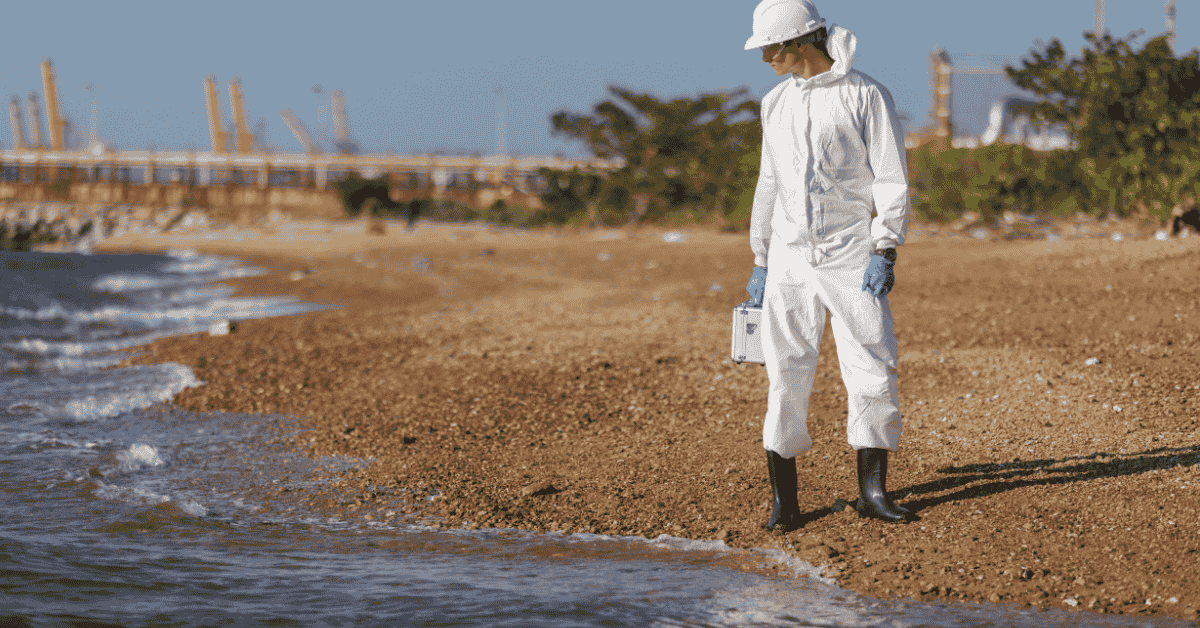
Danish environmental authorities knowingly withheld data about chemical pollution in coastal waters for years, prioritizing business interests over legal obligations to reveal the full extent of the contamination. Ministry officials warned for years that Danish coastal pollution were non-compliant with both domestic and EU rules.
Signs of Misconduct in the Ministry of Environment
Documents from Denmark’s Ministry of Environment indicate that officials factored in the potential financial impact on businesses when deciding whether to enforce environmental regulations regarding dangerous chemicals in coastal waters. This practice, known as “magtfordrejning” in Danish legal terms, refers to the misuse of administrative power by considering irrelevant factors, such as business interests, in decisions where environmental protection should be the sole priority.
Experts in Danish administrative law suggest that the government’s delay in setting mandatory pollution limits amounts to a probable breach of legal duty. Internal ministry documents reviewed by DR, Denmark’s public broadcaster, show repeated discussions about the impact stricter pollution controls could have on local industries, something that should not legally influence environmental decisions.
Danish Coastal Pollution Far Worse Than Publicly Reported
In June 2023, DR revealed that Denmark’s coastal waters are contaminated with twice as many environmentally hazardous substances as previously reported by the Ministry of Environment. Over the course of at least 14 years, ministry staff have repeatedly warned internally that the public has been misled about the true levels of marine pollution.
Despite this, the ministry consistently omitted binding pollution thresholds for key chemicals such as arsenic, lead, and PCBs, substances that can persist in the environment, accumulate in the food chain, and cause cancer, hormone disruption, and other severe health impacts. These limits are required under European Union environmental regulations.
Economic Considerations Over Environmental Law
Internal memos reviewed by DR show that over the past decade, ministry officials calculated and recorded the economic consequences for businesses if full environmental transparency were enforced. In multiple instances, documents stated that the “cost to industry” would be a determining factor in “whether” and “to what extent” the ministry implemented pollution limits.
Environmental law specialists say that such decisions must be based only on scientific and environmental assessments—not economic or political preferences. By incorporating business-related concerns into their official reasoning, the Ministry of Environment is suspected of repeatedly violating not only Danish legal principles but also EU environmental directives.
Officials Ignored Years of Internal Warnings of Danish Coastal Pollution
Since 2011, ministry officials have issued written warnings that the agency was in breach of its legal obligations by not releasing the full data on chemical pollution. These internal memos intensified between 2018 and 2023, emphasizing that Denmark’s environmental practices were non-compliant with both domestic and EU rules.
One particularly revealing 2018 internal report explicitly presented two choices to ministry leadership: either enforce pollution limits as regulations require or delay enforcement to avoid economic impacts on businesses. This conflict between legal duty and political convenience has led experts to call for accountability among both ministry leaders and elected officials.
Minister Acknowledges Policy Failures
Current Environment Minister Magnus Heunicke has admitted publicly that the ministry violated EU rules by failing to set mandatory thresholds for hazardous chemicals over multiple years. The minister has described the situation as a “political failure,” though he denies that economic concerns officially determined government inaction.
In December 2024, under Heunicke’s watch, the ministry presented only partial drafts of the required pollution limits, with full regulations expected to be introduced later. Critics argue this delay further compromises legal compliance and puts marine ecosystems at continued risk.
Long-Term Risks of Danish Coastal Pollution
Scientific data confirms that many of the contaminants in question, such as nickel, arsenic, and PCBs, are slow to degrade and can build up in marine life. This makes species like tuna especially vulnerable. While current pollution levels don’t pose immediate health risks to swimmers or seafood consumers, experts caution that long-term exposure could harm wildlife populations and present future public health challenges.
Parliament Steps In
Today, members of the Danish Parliament will question Minister Heunicke during a public hearing, seeking answers on why the missing pollution limits were not introduced earlier, and what knowledge current and former ministers had about the ministry’s legal missteps. The hearing is expected to be a key moment in determining accountability and restoring public trust in environmental stewardship.
These revelations mark a significant turning point in Denmark’s environmental governance, raising critical concerns over transparency, legal compliance, and the balance between economic growth and ecological responsibility.