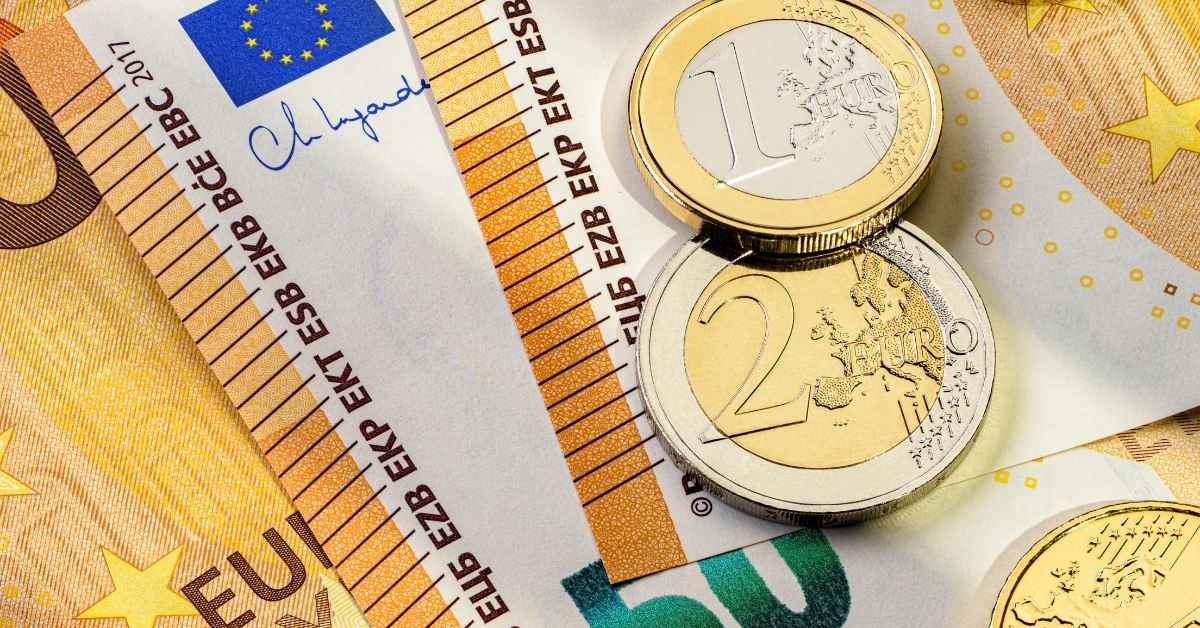
Denmark does not use the euro. The country uses the Danish krone (DKK), its national currency since 1875, and a 2000 referendum locked that choice in. But the krone is tightly pegged to the euro, which makes Denmark a fascinating monetary outlier inside the EU.
Does Denmark Use the Euro? The Short Answer
No, Denmark does not use the euro. The official currency is the Danish krone, abbreviated DKK and written as “kr.” in shops. You will see it on every price tag from Netto to Magasin du Nord.
Denmark is one of only two EU member states with a formal legal exemption from joining the eurozone. The other is, in practice, a country that never adopted it: Sweden. Denmark, however, is the only one with a written, binding opt-out.
I have lived here long enough to watch tourists fumble through their euros at a Copenhagen bakery. The cashier usually smiles politely and points at the card reader. Bring krone, bring a card, or expect a slightly awkward conversation.

The Danish Krone: A Currency Older Than Most Modern States
The Danish krone was introduced in 1875 when Denmark joined the Scandinavian Monetary Union with Sweden and Norway. That union collapsed during World War I, but the krone survived. It has been Denmark’s currency for 150 years.
One krone is divided into 100 øre, though the 50 øre coin was scrapped in 2008. Today the smallest coin in circulation is the 50 øre, technically, but most prices round to the nearest krone. The central bank, Danmarks Nationalbank, issues the notes and coins.
Where the krone is used
The krone is legal tender in Denmark, Greenland, and the Faroe Islands. The Faroese have their own banknotes, the føroyskar krónur, but they share the same value as the Danish krone. Greenland uses the standard Danish krone outright.
For expats, this means your Danish bank card works seamlessly across the Kingdom of Denmark. It also explains why banks in Denmark handle krone transactions for all three territories.
Why Doesn’t Denmark Use the Euro? The 2000 Referendum
On September 28, 2000, Danes went to the polls to decide. The question was simple: should Denmark adopt the euro as its currency? The answer was a clear no.
The result: 53.2% voted against, 46.8% voted in favour. Turnout was a remarkable 87.6%, higher than most Danish general elections. For comparison, the 2022 parliamentary election turnout was 84.1%.
The “no” campaign cut across traditional party lines. The Social Democrats and the centre-right Venstre officially backed the euro, yet many of their own voters defected. The Danish People’s Party, the Socialist People’s Party, and the Red-Green Alliance led the opposition.
What the no vote was really about
Talk to older Danes about that vote and you will hear the same themes. Sovereignty. Welfare state. Distrust of Brussels deciding interest rates from afar. The krone, in their telling, was never just about money.
As the BBC reported at the time, the rejection was widely interpreted as a verdict on the EU itself, not just the currency. The Maastricht Treaty had already been rejected once in 1992 before being approved in 1993 with opt-outs attached. The pattern was clear.
The Maastricht Opt-Out: Denmark’s Legal Shield
Denmark’s opt-out from the euro is not a polite request. It is a binding legal protocol attached to the EU treaties. It dates back to the Edinburgh Agreement of December 1992.
After Danes narrowly rejected the Maastricht Treaty in June 1992, the EU panicked. Denmark was given four opt-outs to get the treaty over the line: the euro, defence, justice and home affairs, and EU citizenship. The package was approved in a second referendum in May 1993.
This is unique. Most EU countries are legally obliged to adopt the euro eventually, once they meet the convergence criteria. Denmark is not. The opt-out can only be removed through another Danish referendum.
Sweden’s clever workaround
Sweden technically has no opt-out. It is supposed to join the euro. It simply refuses to meet the technical requirements, mainly by staying out of ERM II.
Denmark, by contrast, has chosen the opposite path. It joined ERM II voluntarily. The legal opt-out means it never has to take the final step, no matter how closely its economy converges with the eurozone.
ERM II: Why the Krone Feels Like the Euro Anyway
Here is where things get interesting for anyone moving money around. Denmark has been part of the Exchange Rate Mechanism II since January 1, 1999, the day the euro was born. The krone is pegged to the euro through this system.
The official ERM II band is ±15%. Denmark, however, has negotiated a much tighter unilateral band of ±2.25% around a central rate of 7.46038 DKK per euro. In reality, Danmarks Nationalbank keeps it even tighter, usually within ±0.5%.
According to the European Central Bank, Denmark is currently the only EU country participating in ERM II. The mechanism was designed as a waiting room for euro candidates. Denmark has been sitting in that waiting room, comfortably, for 26 years.
What this means for your wallet
If you move from Berlin to Aarhus, the exchange rate barely shifts. One euro buys roughly 7.46 krone, with movement of only a fraction of a percent in either direction. This is by design.
For expats, this peg has practical benefits. Cross-border salaries, EU pensions, and online purchases in euros are all predictable. The downside: the Nationalbank cannot really set its own interest rate. It tracks the ECB’s decisions closely to defend the peg.
Does Denmark Use the Euro in Practice? Cash, Cards, and Daily Life
Here is a question I get from new arrivals constantly. Will my euros work in Copenhagen? The honest answer: sometimes, sort of, but you will lose money.
Some larger shops and hotels in tourist zones accept euros as a courtesy. Think Tivoli, the airport, Strøget, and a few hotels in Indre By. The exchange rate they offer is usually terrible. You will get fewer krone than the official rate, and change is almost always returned in krone.
Cards, MobilePay, and the cashless reality
Denmark is one of the most cashless societies on Earth. Around 80% of all in-person payments are now made by card or phone, according to Danmarks Nationalbank data. Cash withdrawals have fallen by more than half over the last decade.
For most expats, this is the actual answer to “do I need cash?”. You do not. A Visa or Mastercard works almost everywhere, and locals swear by MobilePay, the Danish mobile payment app linked to your bank account.
Where the euro creeps in
There are pockets where the euro shows up. Border towns near Germany, like Padborg and Sønderborg, see euro transactions regularly. The Copenhagen Airport duty-free accepts both. And online retailers often list prices in both currencies.
If you are travelling between Denmark and the eurozone often, my advice is simple. Open a multi-currency account or use a card with no foreign exchange fees. Cash is rarely needed in Copenhagen these days, even for tips.
The Economic Case for Keeping the Krone
The numbers behind Denmark’s choice are striking. Denmark’s debt-to-GDP ratio sat at around 29.3% at the end of 2024, per Eurostat. The eurozone average was 87.4%. That gap matters.
Denmark also runs consistent budget surpluses. The 2024 surplus was 4.5% of GDP, one of the strongest in the EU. Unemployment hovers around 6.2% on Eurostat’s harmonised measure, slightly above the eurozone average but with high participation rates.
Inflation control without the ECB
When inflation spiked across Europe in 2022, peaking near 10.6% in the eurozone, Denmark experienced similar pressures. Danish inflation hit 8.7% that year. By 2024, however, it had fallen to around 1.4%, below the eurozone average.
The Nationalbank’s job is narrow and clear: defend the peg. It does not target inflation directly. That makes Danish monetary policy predictable, if a little boring, which is exactly how Danes like it.
Will Denmark Ever Adopt the Euro?
For two decades, the answer was a confident “not anytime soon.” Then Russia invaded Ukraine, and everything shifted. Danish support for the EU has hit record highs in recent years.
In June 2022, Danes voted to abolish the defence opt-out by a margin of 66.9% to 33.1%. That was the first opt-out Denmark has ever removed. It signalled something significant: Danes can change their minds.
Where polling stands now
Polls on the euro have edged towards yes since 2022, though support remains short of a majority. A 2024 Voxmeter poll for Ritzau found around 33% in favour of joining the euro, with roughly half still opposed. Compare that to 2017, when support was below 25%.
I would not bet on a referendum soon, but I no longer rule one out. The geopolitical mood in Copenhagen has shifted noticeably. Prime Minister Mette Frederiksen has repeatedly called for tighter European integration, especially since taking over the EU Council presidency in 2025.
What This Means for Expats Living in Denmark
If you are moving here, the krone is your daily reality. You will earn it, spend it, and pay income tax in it. Salaries are quoted in DKK, rent contracts are in DKK, and your home loan will be in DKK.
Because of the peg, your cost of living relative to the eurozone is stable. You will not wake up one morning to find your Berlin friends suddenly 15% richer. The Nationalbank ensures that does not happen.
Practical tips from someone who has lived it
Open a Danish bank account as soon as you have a CPR number. Get MobilePay set up the same day. Keep a small stash of krone for parking meters, flea markets, and the occasional cash-only food truck.
If you receive a salary or transfers in euros, use a fintech account like Wise or Revolut. Traditional Danish banks charge meaningful conversion fees. Over a year, those fees add up to real money, especially with the cost of living in Denmark being what it is.
Denmark and the EU: A Reminder of the Bigger Picture
Denmark joined the European Economic Community in 1973, alongside the UK and Ireland. It has remained an active, sometimes prickly, member ever since. The country sits inside the EU’s single market and Schengen zone, but outside the eurozone.
This is not contradiction. It is calibration. Denmark wants the trade, the freedom of movement, and the security cooperation. It does not want to surrender monetary policy to Frankfurt. That balance defines Denmark’s relationship with the EU.
Frequently Asked Questions About Denmark and the Euro
Does Denmark use the euro?
No, Denmark does not use the euro. The official currency is the Danish krone (DKK). The krone has been Denmark’s currency since 1875 and is issued by Danmarks Nationalbank.
Why does Denmark not use the euro?
Denmark holds a legally binding opt-out from the euro, negotiated as part of the Edinburgh Agreement in 1992. In a 2000 referendum, 53.2% of Danes voted against adopting the euro. The opt-out can only be removed by another national referendum.
Can I pay with euros in Denmark?
Sometimes, but it is not recommended. Tourist shops, Copenhagen Airport, hotels, and a few border towns accept euros. The exchange rate they offer is poor, and change comes in krone.
What is the exchange rate between the krone and the euro?
The Danish krone is pegged to the euro at a central rate of 7.46038 DKK per euro. Denmark allows a maximum fluctuation of ±2.25%, but in practice it stays within ±0.5%. This makes the rate one of the most stable in the world.
Is Denmark in the European Union?
Yes, Denmark has been an EU member since 1973. It participates fully in the single market and Schengen zone. It has opted out of the euro and certain justice and home affairs measures.
Will Denmark ever adopt the euro?
Possibly, but not soon. Public opinion has shifted modestly since Russia’s invasion of Ukraine, with around 33% in favour in 2024. Any change would require a new referendum, and no Danish government has scheduled one.
Do I need cash in Denmark?
Rarely. Denmark is one of the most cashless societies in Europe, with over 80% of in-person payments made by card or MobilePay. Cards and contactless work in virtually every shop, café, and transport service.
What currency do Greenland and the Faroe Islands use?
Both use the Danish krone, though the Faroe Islands issue their own banknotes called føroyskar krónur. The Faroese notes have the same value as Danish krone. Greenland uses Danish krone directly.
Is the Danish krone a strong currency?
Yes, the krone is considered very stable. Its peg to the euro and Denmark’s strong fiscal position, including a low debt-to-GDP ratio of around 29%, give it solid backing. Major credit agencies consistently rate Denmark AAA.
Does using the krone affect my salary or taxes as an expat?
Yes, in practical terms. Your salary, taxes, and rent will be denominated in krone. Because of the euro peg, conversions to euros are predictable. For non-euro currencies like USD or GBP, exchange rates fluctuate normally.