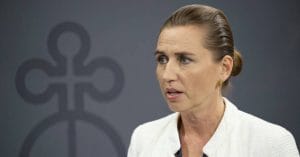
Danish Prime Minister Mette Frederiksen presented Denmark’s EU agenda for its presidency in Strasbourg, emphasizing unity, security, and climate action—but her balancing act revealed deep ideological divides in the European Parliament.
Frederiksen Takes Center Stage in EU Parliament
Danish Prime Minister Mette Frederiksen appeared before the European Parliament in Strasbourg on Tuesday to outline Denmark’s priorities during its rotating presidency of the Council of the European Union. With the backdrop of multiple global crises—from the war in Ukraine to climate change and migration issues—Frederiksen pressed for unity and pragmatic policymaking across ideological lines. Mette Frederiksen’s speech made it clear how much is at stake.
She acknowledged a daunting task: to appeal to both right- and left-leaning members of the parliament while advocating for a shared European direction. While security, competitiveness, and climate leadership were at the top of her agenda, Frederiksen also called for tougher migration measures, a move that pleased right-wing politicians but frustrated her allies on the left. It’s not easy to balance different opinions, and people will be watching closely to see how Frederiksen deals with this in the coming weeks.
A Call for Unity in a Divided Chamber
Mette Frederiksen urged lawmakers to set aside party divisions and focus on what she described as the urgent, collective good for Europe. Her speech stressed the need for bold and coordinated responses to the defining challenges facing the continent today. While polite applause followed her address, the parliament’s entrenched ideological differences were on full display during the debate.
Her message emphasized that tackling issues like climate crisis, European defense, and migration cannot be managed in silos. She stated that no European country is capable of handling these issues alone, and a powerful, unified EU response is necessary.
A Shift in Tone on European Cooperation
Frederiksen’s strong endorsement of European integration and cooperation marks a notable shift from her earlier, more critical stance. In 2018, she criticized the European Commission’s proposal to increase the EU’s budget, calling it “completely insane.” However, with the advent of the COVID-19 pandemic, the Russian invasion of Ukraine, rising authoritarianism, and global economic instability, her tone has become markedly more pro-European.
During her address, she made it unmistakably clear that, in her view, Europe is the only viable path forward. Her three-word refrain—“Europe, Europe, Europe”—underscored a sense of urgency to strengthen the EU both politically and defensively in a changing geopolitical landscape.
Security and Migration Take Center Stage
Security and defense are top priorities in Denmark’s EU agenda presidency, and Frederiksen connected these themes directly to migration policy. Emphasizing the need for stricter border controls and streamlining the process of deporting rejected asylum seekers, she aligned Denmark with the EU’s more restrictive member states on immigration.
Denmark has long been one of Europe’s strictest countries on immigration. In 2023, the country received fewer than 2,500 asylum applications—a figure significantly lower than France and Germany, which received over 120,000 and 250,000 applications respectively. Frederiksen argued that sustaining public trust requires enforcement mechanisms that ensure national and regional security.
Divisions Within the Social Democratic Family
Frederiksen’s conservative migration stance drew some criticism from her fellow Social Democrats in the European Parliament. Her positions diverge from the platform of the Socialists & Democrats (S&D) group, which generally supports a more humanitarian approach to asylum and migration.
While S&D leadership avoided direct confrontation during the debate, this ideological rift highlights a broader tension within center-left politics across Europe. Although Denmark remains under Social Democratic leadership, its tough stance on migration places it closer to center-right governments on this issue.
Nonetheless, Frederiksen claimed there is growing interest among other European center-left leaders to adopt similar policies. She framed this as a pragmatic shift in response to the pressures of globalization, war, and migration.
A Rare Cross-Party Appreciation
Despite disagreements among the center-left, Frederiksen found praise from unexpected quarters. Members of the European People’s Party (EPP), the largest center-right group in the Parliament, commended her for what they viewed as a pragmatic and responsible leadership style.
The ongoing challenge for Frederiksen will be steering Denmark’s EU agenda presidency through a legislative body marked by ideological fragmentation. While her comprehensive plan touches on crucial European priorities, her ability to bridge divides and translate ideas into actionable policies will be the true test of Denmark’s leadership in the second half of 2025.
Looking ahead, stability and security—both border and climate-related—will remain at the heart of what Frederiksen called Europe’s shared destiny. Her message to the Parliament was clear: Europe needs to act together, or risk drifting apart in the face of mounting global pressures.