Kim Fournais, the billionaire co-founder of Saxo Bank, says he’s spent 300 million kroner on the tiny Danish island of Vejrø since buying it in 2005 for 25 million. He admits he’s “almost embarrassed” by the sum but insists the investment goes beyond money, driven by a boyhood dream and a vision of sustainability in an unstable world.
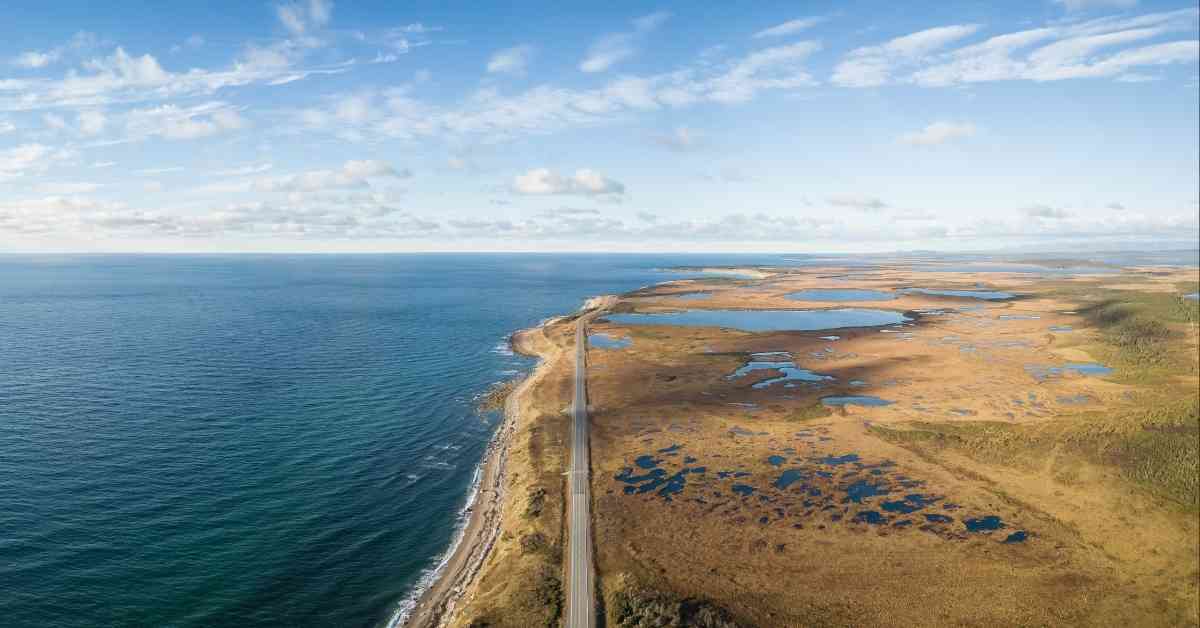
Three hundred million kroner. That’s what Kim Fournais has poured into Vejrø, a 155-hectare island north of Lolland that he bought two decades ago. He calls it one of his worst investments in pure financial terms. He also says he’d rather own it than a penthouse in Dubai.
As reported by Børsen, Fournais made the remarks during a podcast about investment strategy. The sum sounds staggering because it is. For context, Fournais paid just 25 million kroner for the island itself. The other 275 million? That went into cleanup, infrastructure, renewable energy systems, and trying to turn a neglected piece of Danish coastline into something resembling a working, self-sufficient outpost.
The Drengedrøm That Became a Money Pit
Vejrø wasn’t pretty when Fournais arrived. The island had no power, no ferry service worth the name, and roughly 100 tons of trash littering the ground. It was, by all accounts, a mess. But it was also remote and wild, and Fournais had wanted an island since he was a boy.
He bought it from two brothers on Lolland in autumn 2005. Then he got to work. Buildings were renovated. Jobs were created. An electric miniferry replaced the old diesel boat. The island now runs almost entirely on renewable energy. According to Statistics Denmark, four people live there permanently.
The project fits a pattern among Denmark’s ultra-wealthy. Henrik Frederiksen, the Matas magnate who died recently, owned a vintage car collection valued at around 300 million kroner. These are not diversified portfolios. They are passion projects that bleed cash and rarely make financial sense. Fournais knows this. He says so himself.
More Than the Math
Fournais does not pretend Vejrø will pay off if he sells tomorrow. He frames the investment differently. It’s about meaning, he says, not just returns. Per his own account, walking around the island relaxes him in a way that spreadsheets never will. He values the autonomy, the fact that Vejrø produces its own energy and food on 155 hectares that depend on no one.
He calls it a statement. In a Europe that struggles to agree on anything, in a geopolitical climate where energy dependence has real consequences, self-sufficiency matters. That’s his pitch, anyway. Whether it justifies 300 million kroner is another question.
I’ve watched enough Danish tycoons chase similar dreams to know the script. They make fortunes in finance or retail, then sink money into projects that satisfy something other than profit motive. Sometimes it’s legacy. Sometimes it’s ego. Often it’s both. Fournais seems self-aware enough to know the economics don’t work. He’s betting on intangible returns.
What It Means for Denmark
Vejrø is not alone. Denmark has several privately owned islands, and wealthy Danes have long used them as retreats or experiments. The question is whether these projects contribute anything beyond personal satisfaction. Fournais employs people on Vejrø. He’s cleaned up pollution. He’s demonstrated that small-scale renewable energy can work. Those are public goods, even if unintentional.
But 300 million kroner is also a reminder of scale. That’s roughly what Iranian-Danish millionaire Djaffar Shalchi donated to his Human Act Foundation in 2015. Shalchi has argued for a global wealth tax of one percent on billionaires to fund the UN’s development goals. His point: philanthropy can’t solve structural problems, and neither can vanity projects.
Fournais doesn’t pretend Vejrø will change the world. He says he’ll keep fighting to make the investment work. That suggests he knows the battle isn’t won. The island offers overnight stays and hosts events now, but it’s unclear whether that generates enough revenue to cover maintenance, let alone recoup the original outlay.
Denmark abolished its wealth tax in 1997. High earners pay steep income taxes, but fortunes like Fournais’s compound largely untouched. Vejrø represents one way that money gets spent: on private dreams with limited spillover. Whether that’s better than a Dubai penthouse depends on your values. Whether it’s the best use of 300 million kroner is harder to argue.
The Verdict
Fournais will likely never see a return on Vejrø in monetary terms. He seems fine with that. The island is nearly self-sufficient, which counts for something in 2026. It’s also a luxury few Danes can afford. Most people don’t get to spend 300 million kroner chasing a childhood fantasy.
He calls himself almost embarrassed by the figure. Almost. The fact that he’s still talking about it suggests he thinks the story is worth telling. Maybe it is. Vejrø proves that Denmark’s richest can afford to lose nine figures and keep going. That’s not an investment lesson. That’s a wealth lesson.
Sources and References
TV 2: Dansk ø har kostet rigmand 300 millioner kroner
The Danish Dream: Vejle Ådal 32 kilometer long river in Denmark
The Danish Dream: Samsø Island sustainability natural beauty
The Danish Dream: Endelave Island Denmarks hidden gem
The Danish Dream: Buying property in Denmark for foreigners
SN.dk
Ugebrev.dk
Altinget.dk