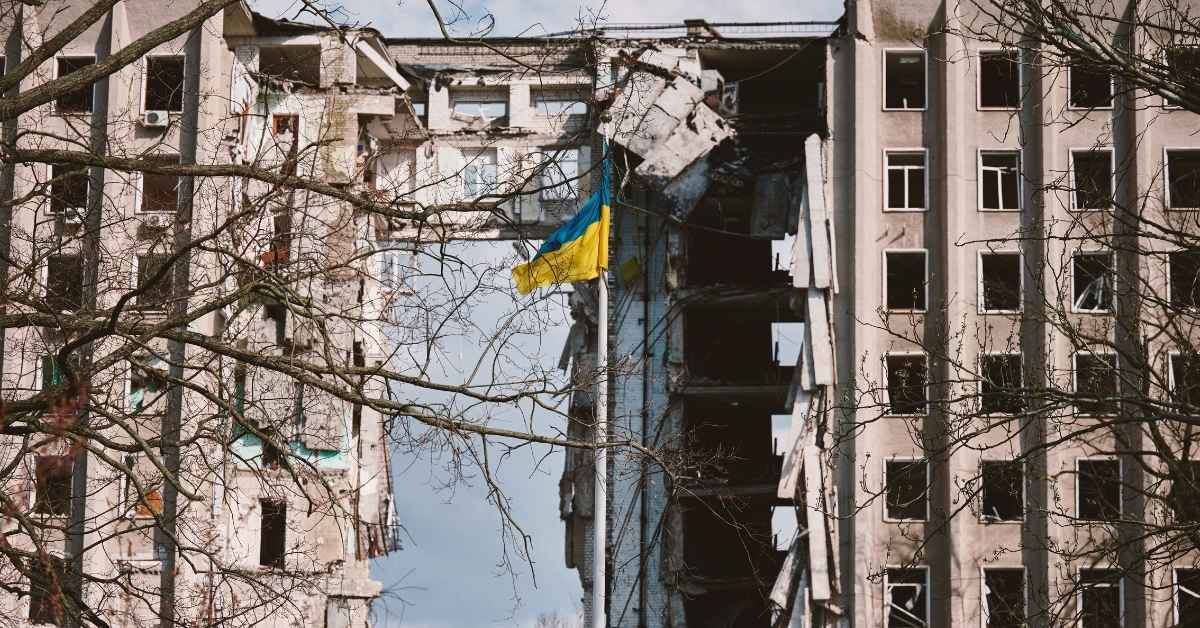
Ukrainian soldiers describe operations near the frontline as approaching suicide missions as Russia’s drone and artillery dominance has fundamentally shifted the war’s momentum by spring 2026. After early territorial gains, Ukraine now faces relentless attrition that experts warn could lead to collapse without a dramatic increase in Western military support.
The phrase that keeps appearing in reports from the Ukrainian front is chilling in its simplicity. Operating near the battle lines has become close to pure suicide, according to Ukrainian commanders speaking to TV2 and other outlets this week. One brigade commander put it bluntly on April 17: maneuvering in those zones now means almost certain destruction.
This represents a stark reversal from the optimism of 2022, when Ukrainian forces pushed Russian troops back from Kharkiv and Kherson. Now the tables have turned. Russia has adapted, refined its drone warfare tactics, and established a killing field where Ukrainian soldiers cannot move without detection. The psychological weight is crushing morale across the eastern front.
Drone Warfare Changes Everything
Russia’s deployment of FPV and Lancet drones has created permanent surveillance over Ukrainian positions. Every advance risks immediate artillery response. Every supply run becomes a calculated gamble with death. The technology is not particularly sophisticated, but the volume is overwhelming. Ukraine simply cannot match the production capacity or the willingness to throw wave after wave of munitions at defensive positions.
I have watched Denmark increase its support package to 1.8 billion kroner this year, focusing on artillery shells and defensive systems. It is necessary but insufficient. The entire European aid architecture, now exceeding €118 billion since 2022, has not stopped this battlefield deterioration.
Danish military analysts, including Thomas Ahm from the Danish Institute for International Studies, have warned that without air superiority, the frontline situation remains suicidal for Ukrainian forces. The F-16s Ukraine finally received arrived too late and in too few numbers to change the calculus. President Zelenskyy acknowledged as much on April 18, saying Ukraine cannot win without dramatically expanded air support.
The Human Cost Mounts
Leaked figures from the Zelenskyy administration suggest Ukrainian losses exceeded 50,000 in 2026 alone. Unverified but cited across multiple outlets, these numbers reflect a meat grinder dynamic that Russia, with its larger population, can sustain longer than Kyiv. Total casualties since February 2022 now exceed one million when both sides are counted.
The psychological toll manifests in grim statistics. Ukrainian soldier suicides rose 20 percent between 2025 and 2026, according to Ministry of Defense data. Desertion rates in eastern units hit 15 percent by April. A psychiatrist in Kyiv told reporters this week that soldiers increasingly choose death over returning to what they describe as endless hell. This is not rhetoric. This is clinical observation from trauma wards.
From an expat perspective, living in Copenhagen while watching this unfold creates a particular dissonance. Denmark feels secure, insulated by NATO membership and Baltic Sea geography. But the Nordic security calculus changed fundamentally when Finland and Sweden joined the alliance in 2023 and 2024. Ukraine’s collapse would push Russian influence directly against expanded NATO borders, making the Baltic Sea a frontline rather than a buffer zone.
What Collapse Looks Like
Russian forces claimed over 1,000 square kilometers in gains during the first quarter of 2026, encircling Pokrovsk by March and consolidating control over roughly 40 percent of Ukrainian territory. Commander-in-Chief Syrskyi warned on April 15 of an existential crisis if the current trajectory continues through summer. Experts from RAND and the International Institute for Strategic Studies predict a 20 percent degradation in Ukrainian force capability within months without intervention.
The arguments for escalation center on preventing wider war. Arming Ukraine now costs less than fighting Russia later across the Baltics or Poland, according to this logic. The counterargument from some German CDU figures and other European voices emphasizes negotiation over prolonged stalemate. Danish public support for aid has dropped from 75 percent in 2024 to 60 percent this April, per Eurobarometer polling, reflecting war fatigue even in committed NATO countries.
The conscription age in Ukraine dropped to 25 in 2024, scraping deeper into the population to find replacement troops. Russia bolstered its forces with North Korean soldiers deployed since October 2025, adding another layer of international complexity. The war that began with tanks and artillery has evolved into a drone surveillance state where movement equals death. Ukrainian forces need 500,000 additional troops just to maintain current defensive lines, a number that seems increasingly impossible to recruit or retain given frontline conditions.
Denmark has trained over 10,000 Ukrainian soldiers since 2022 and delivered more than 200 artillery systems. The commitment is real, the investment substantial. Whether it will be enough to prevent the collapse analysts now predict by summer remains the urgent question facing European capitals this spring.
Sources and References
TV2: Krigslykken er vendt i Ukraine: Tæt på det rene selvmord at operere ved fronten
The Danish Dream: Denmark’s Role in Potential Ukraine Peacekeeping Efforts
The Danish Dream: Denmark Donates Two Billion to Ukraine with New Aid Package
The Danish Dream: Denmark Ready to Support Peacekeeping Efforts in Ukraine