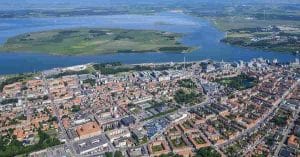
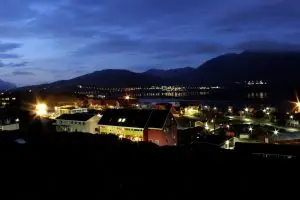
Vejle Fjord cuts deep into eastern Jutland, mixing steep forested hills, bold modern architecture, and a serious climate fight all in one place. For expats who think Denmark is just flat farmland, this is the corner that proves otherwise.
I still remember my first drive over the Vejle Fjord bridge. Denmark is famously flat, yet here the land folds into hills and woods. Vejle Fjord stretches roughly 22 kilometers inland from the Kattegat to the city of Vejle. It is one of the few places in the country where the scenery actually rises around you. For anyone living in Denmark and craving real terrain, this is the easy answer.
Where Is Vejle Fjord, and Why It Stands Out
Vejle Fjord sits in eastern Jutland, in the Region of Southern Denmark. The city of Vejle hugs the western end, where the fjord narrows to a working harbor. The E45 motorway crosses the water on a long, sweeping bridge.
What makes the fjord different is the geology. Glacial meltwater carved deep tunnel valleys here at the end of the last Ice Age. The result is steep slopes, hidden creeks, and ridges that feel almost un-Danish. As described on Wikipedia, the fjord drains a large catchment fed by the Vejle and Grejs river valleys.
The Nature Around Vejle Fjord
This is hiking and cycling country, and locals know it.
Forests, Hills, and Trails
The southern shore climbs into Munkebjerg, a thick beech forest above the water. Trails wind through the trees and open onto sudden fjord views. In autumn the colors here rival anything I have seen in Scandinavia.
Inland, the landscape continues along the Vejle river valley. Cyclists love the marked routes, and the gradients give your legs an honest workout. If you like lakes too, the nearby Silkeborg Lakes make a strong day trip.
Wildlife and the Fight to Save the Fjord
Roe deer, foxes, and seabirds are common along the shore. The woods shelter buzzards, and the shallows once held thriving eelgrass meadows. That last part is where the honest story begins.
Vejle Fjord has suffered serious oxygen depletion for years, driven by farm runoff and warming water. A major restoration project is now rebuilding eelgrass, stone reefs, and mussel beds. As reported by the regional tourism board, it ranks among Denmark’s largest marine recovery efforts. I find it one of the most quietly important environmental stories in the country.
Architecture That Made Vejle Famous
Few small Danish cities punch this far above their weight in design.
Fjordenhus
Fjordenhus rises straight out of the harbor on the waterline. It was designed by artist Olafur Eliasson and opened in 2018 as the headquarters of Kirk Kapital. The building uses nearly a million bricks in curved, almost liquid forms.
It is the first building Eliasson designed in full, and it shows. You can visit parts of it, and the official site lists opening details. Standing below it, the line between art and architecture simply dissolves.
The Wave, Bolgen
A short walk along the waterfront brings you to Bolgen, “The Wave.” Five undulating peaks of white apartments mimic the hills across the fjord. Henning Larsen Architects designed it, and it has collected international awards.
According to Henning Larsen, the form deliberately echoes the surrounding landscape. It has become the postcard image of modern Vejle. For more on the city itself, see this guide to Vejle’s architecture and nature.
The Vejle Fjord Bridge
The Vejlefjordbroen carries the E45 motorway high above the water. It opened in 1980 and runs 1,712 meters, making it one of Denmark’s longest bridges. The view from the deck is the best free attraction in the area.
History From Vikings to Jelling
Vejle grew as a trading town where the river met the fjord. Burial mounds dot the surrounding hills, marking settlements that go back to the Bronze Age. The harbor handled goods for centuries before tourism arrived.
The biggest history lesson sits just northwest. The Jelling runestones, a UNESCO World Heritage Site, are often called Denmark’s birth certificate. Pair that with the Vejle Art Museum and the old Vejle windmill for a full day.
The Flooding Problem Nobody Talks About
Here is the part the glossy brochures skip. Vejle sits at the lowest point of the fjord, where river and sea meet. That makes the city one of the most flood-exposed places in Denmark.
Storm surges and heavy rain now threaten the center regularly. The municipality has floated bold ideas, including buying and deliberately flooding upstream farmland. You can read the details in our coverage of the land seizure plan and the wider flood-the-farms strategy. For expats weighing a move here, climate risk is a real factor, not a footnote.
When and How to Visit Vejle Fjord
Vejle Fjord rewards visitors in every season, but timing changes the experience a lot.
The Best Time to Visit
Late spring to early autumn, roughly May to September, is the sweet spot. Temperatures sit between 15C and 22C, and daylight stretches long into the evening. The forests are green, and the water is warm enough for a swim.
Winter brings a quieter, moodier fjord, sometimes dusted with snow. I actually prefer the empty trails then. Just dress for wind and the famously unpredictable Danish weather.
Getting to Vejle Fjord
The nearest airport is Billund, about 29 kilometers away and growing fast with new routes. Vejle station sits on the main rail line, so trains from Copenhagen, Odense, and Aarhus run frequently. Driving is simple too, thanks to the E45.
If you are coming with kids, you can easily combine the trip with Legoland Billund nearby. A rental car opens up the whole coastline and the hill country behind it. Public transport covers the city well, but trails need wheels or good legs.
Where to Stay and Unwind
Vejlefjord Hotel, perched above the water, runs one of Denmark’s largest spas. Munkebjerg Hotel, deep in the forest, even has a casino. Both trade on the view, and both are worth the splurge.
Budget travelers will find guesthouses, holiday cabins, and campsites along the shore. Book early for July, when Danish families take their summer holidays. Prices climb sharply in peak weeks.
Best Things to Do Around Vejle Fjord
If you only have a weekend, here is where I would point you.
- Hike the Munkebjerg forest trails for the best fjord panoramas.
- Tour Fjordenhus and walk the harbor to see Bolgen up close.
- Kayak or paddleboard from the calm inner fjord on a still morning.
- Cycle the Vejle river valley toward the Jelling runestones.
- Book a spa afternoon at Vejlefjord Hotel.
- Sample smoked fish and Danish seafood at a harborside restaurant.
- Day-trip to Skamlingsbanken or the nearby Kolding Fjord.
For a wider plan, our full guide to exploring nature in Denmark ties these spots together. Vejle Fjord works best as a slow trip, not a checklist. Give it two days and let the hills do the rest.
Frequently Asked Questions About Vejle Fjord
Where is Vejle Fjord located?
Vejle Fjord lies in eastern Jutland, in the Region of Southern Denmark. It runs about 22 kilometers from the Kattegat sea inland to the city of Vejle. The fjord sits within easy reach of Billund, Kolding, and Aarhus.
What is the best way to get to Vejle Fjord?
Trains stop directly in Vejle from Copenhagen, Odense, and Aarhus. Billund Airport is the closest airport, around 29 kilometers away. Drivers reach the fjord via the E45 motorway and its landmark bridge.
Is there an entrance fee for Vejle Fjord?
No. The forests, trails, and shoreline are free to enjoy year round. Specific attractions, such as the Vejlefjord Hotel spa or guided tours, charge their own fees.
What are the must-see sights at Vejle Fjord?
Start with Fjordenhus and the Bolgen waterfront buildings. Add the Munkebjerg forest trails and the Vejle Fjord bridge view. History lovers should drive to the Jelling runestones nearby.
Can you swim or kayak in Vejle Fjord