Donald Trump’s obsession with Greenland is not a real estate joke. It is a calculated bid for Arctic minerals, missile defense, and global power, and it has rattled Denmark to its core.
I have lived in Denmark long enough to remember the first time Donald Trump floated buying Greenland in 2019. Danes laughed. Then Prime Minister Mette Frederiksen called the idea “absurd,” and Trump cancelled his state visit in a huff.
Six years on, nobody in Copenhagen is laughing. Trump returned to the White House in January 2025 and immediately reopened the file. So why does Trump want Greenland, and why should anyone living in Denmark actually care?
Why Does Trump Want Greenland? The Short Answer
Trump wants Greenland for three overlapping reasons: military dominance in the Arctic, control of rare earth minerals, and leverage over new shipping lanes opened by melting ice. Each one alone would justify American interest. Together, they explain the obsession.
As reported by Reuters, Trump has refused to rule out military or economic force to acquire the island. That alone marks a major shift in US-Denmark relations. It also reframes Greenland as a frontline in a new Arctic Cold War.
Greenland’s Strategic Position in the Arctic
Look at a polar projection map, and Greenland’s importance becomes obvious. The island sits directly between North America and Europe. Any missile fired from Russia toward the US east coast flies near or over Greenlandic airspace.
This is why the United States has operated military bases on the island since World War II. The Pentagon does not want anyone else within that radar arc. Trump’s team wants that buffer expanded, not just preserved.
Pituffik Space Base and Missile Defense
The old Thule Air Base was renamed Pituffik Space Base in 2023. It hosts the 821st Space Base Group and feeds data into US Space Force missile warning systems. Without it, America’s Ballistic Missile Early Warning System loses a critical eye.
According to Pentagon planners, Pituffik is also central to Trump’s proposed Golden Dome missile shield. The project mimics Israel’s Iron Dome but on a continental scale. Greenland is the only place where the US can detect threats from the polar north early enough.
China and Russia in the Arctic
Russia has reopened more than 50 Soviet-era Arctic bases since 2014, per a CSIS analysis. It now operates the world’s largest icebreaker fleet, including nuclear-powered vessels. The Kremlin sees the Arctic as both a buffer and a resource bonanza.
China is more subtle. It calls itself a “near-Arctic state” and has invested in Greenlandic mining and infrastructure since the early 2010s. As covered in our piece on China’s Arctic ambitions, Beijing tried to fund three Greenlandic airports in 2018 before Washington pressured Copenhagen to block the deal.
Why Does Trump Want Greenland’s Natural Resources?
This is where the answer to “why does Trump want Greenland” gets concrete. Beneath the ice lies one of the planet’s richest mineral storehouses. The US currently imports most of these materials from China.
For Trump, who has built his second term around supply-chain nationalism, that dependency is unacceptable. Greenland offers a way out. The numbers are staggering.
Rare Earth Minerals
A 2023 survey by the Geological Survey of Denmark and Greenland (GEUS) identified 25 of the 34 minerals classified as “critical raw materials” by the European Union. Greenland’s Kvanefjeld deposit alone is one of the world’s largest rare earth resources. It holds an estimated 38.5 million tonnes of rare earth oxides.
These elements power smartphones, F-35 fighter jets, wind turbines, and electric vehicles. China currently controls about 70 percent of global rare earth mining and 90 percent of processing. Trump wants to break that grip, and Greenland is his shortcut.
Oil, Gas, and Uranium
The US Geological Survey estimates the Arctic holds up to 13 percent of the world’s undiscovered oil and 30 percent of undiscovered natural gas. Greenlandic waters could harbor 50 billion barrels of oil. Greenland banned new oil exploration in 2021, but a Trump-aligned government could push to reverse that.
Uranium is another card. Kvanefjeld also sits on massive uranium reserves. As detailed in our coverage of Trump-linked mining investments, American capital is already flowing into Greenlandic exploration licenses.
Climate Change and the New Arctic Trade Routes
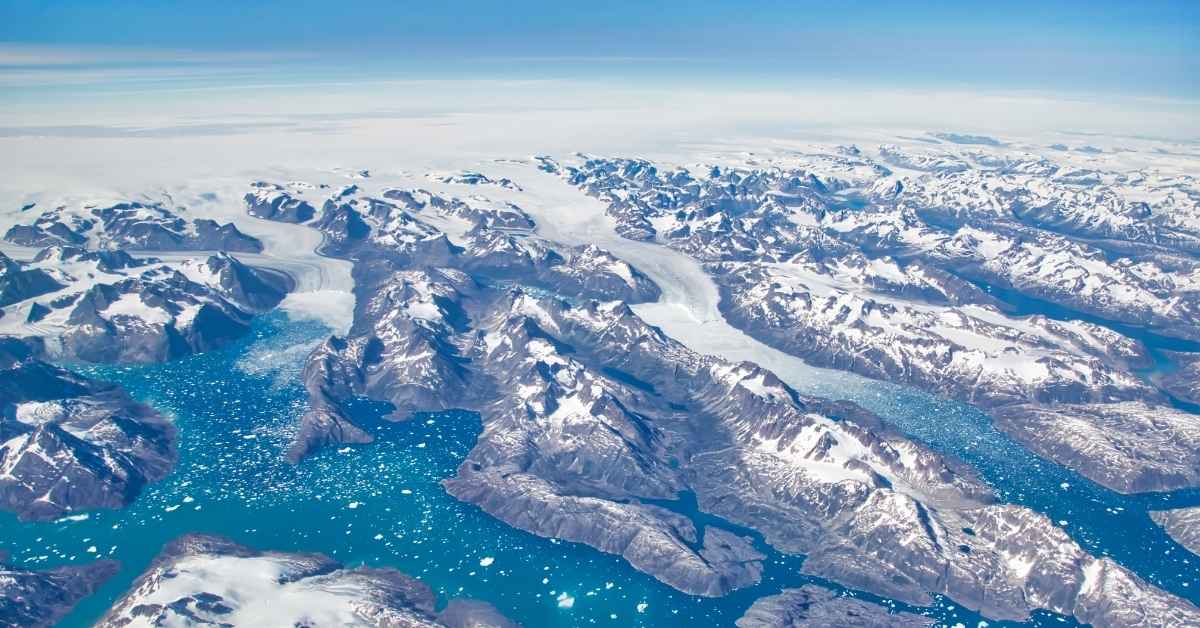
Greenland’s ice sheet loses about 270 billion tonnes of mass per year, according to NASA’s GRACE satellite data. The retreat is reshaping global shipping. The Northwest Passage and the Northern Sea Route could cut transit times between Asia and Europe by up to 40 percent.
Whoever controls the chokepoints controls 21st-century trade. The Davis Strait, between Greenland and Canada, is one of those chokepoints. Trump understands real estate, and he understands that this Arctic real estate is appreciating fast.
A History of US Interest in Greenland
Trump did not invent this idea. In 1867, US Secretary of State William Seward, fresh off buying Alaska, drafted a report recommending Washington also acquire Greenland and Iceland. The deal never happened, but the file never closed.
In 1946, the Truman administration secretly offered Denmark $100 million in gold for the island. Denmark refused but allowed the US to expand its military presence under the 1951 defense treaty. That agreement is still in force and still shapes the current standoff.
The Monroe Doctrine Revival
Trump’s team frames Greenland as a Western Hemisphere asset, invoking the spirit of the 1823 Monroe Doctrine. As explored in our piece on Trump’s Greenland gambit, this framing treats European powers in the Arctic as intruders. Denmark, a NATO ally, finds this deeply insulting.
The framing also flatters American voters who view Europe as freeloading. It is classic Trump messaging. It is also a serious geopolitical doctrine being revived in cabinet meetings.
How Denmark and Greenland Have Reacted
Denmark’s response has shifted from disbelief to defiance. In early 2025, the government announced an 8 billion kroner boost to Arctic defense. Frigates, F-35 patrols, and long-range drones are now standard talk in the Danish parliament.
Per the Danish Ministry of Foreign Affairs, Frederiksen flatly rejected any negotiation over sovereignty. King Frederik X posted a redesigned royal coat of arms giving Greenland and the Faroe Islands more prominence. That was not subtle.
Greenlandic Voices
Greenland itself is not a passive prize. The island has roughly 57,000 inhabitants, mostly Inuit, with their own parliament and prime minister. Premier Múte Egede has been clear: “Greenland is not for sale.”
The 2025 election saw the centrist Demokraatit party win in a surprise. As we covered in Greenland’s election results, voters chose a slower path to independence over rapid alignment with Washington. That was a quiet rebuke to Trump’s pressure campaign.
What This Means for Expats Living in Denmark
If you live here, you have already felt the ripple effects. Danish supermarkets stock fewer Coca-Cola products, and Salling Group flagged American goods with a black star on price tags. Over 112,000 Danes have joined Facebook groups dedicated to boycotting US brands.
American expats I know report awkward dinner-party silences. Some have stopped wearing US sports gear in public. As one couple told me in Aarhus, “We did not vote for him, but we still have to explain him.”
Defense, Jobs, and Daily Life
Defense spending is rising sharply, which means more jobs at Danish firms like Terma and at the Arctic Command in Nuuk. If you work in green tech, watch Ørsted carefully. Trump has already blocked several of its US offshore wind projects, as covered in our piece on Ørsted’s lawsuit against Trump.
The political mood has hardened. Trust in the United States among Danes dropped from 63 percent to 20 percent in one year, per a Berlingske poll. That is a generational realignment, and expats should not underestimate it.
Could Trump Actually Take Greenland?
Legally, no. Greenland is part of the Kingdom of Denmark, a NATO member, and Article 5 of the NATO treaty would in theory apply. The 2009 Self-Government Act also gives Greenlanders the right to decide their own future through referendum.
Practically, the pressure campaign is real and ongoing. As reported by the BBC, Trump has dispatched envoys, opened an expanded US consulate in Nuuk, and floated tariffs on Denmark. He has also reportedly offered direct payments to individual Greenlanders, as noted in our piece on the mystery man offering $200,000 for signatures.
The Hybrid Pressure Playbook
Per a Danish intelligence assessment released in May 2025, the US is running a “hybrid influence campaign” in Greenland. This includes social media operations, financial offers, and political lobbying. Trump allies are openly courting Greenlandic politicians.
The goal is not annexation tomorrow. The goal is independence from Denmark followed by a “free association” agreement with Washington. That model already exists with Palau and the Marshall Islands.
Why Greenland Matters Beyond Trump
Strip away the personality and the headlines, and you are left with a structural shift. The Arctic is becoming the world’s next contested frontier. Trump is the symptom, not the cause.
As the Arctic Institute noted in a 2024 report, every major power now has an Arctic strategy. The US, Russia, China, and the EU all want a piece. Greenland, with its location and minerals, sits at the center of all of it.
What Comes Next
Watch three things in the coming months. First, the next Greenlandic referendum on full independence, expected within five years. Second, the renegotiation of the 1951 US-Denmark defense agreement, which Trump’s team wants reopened.
Third, watch NATO. If alliance solidarity holds, Denmark wins. If it cracks, Greenland becomes a test case for a more transactional world order. Living here, I am cautiously optimistic but not naive.
Frequently Asked Questions
Why does Trump want Greenland so badly?
Trump wants Greenland for its strategic Arctic location, vast rare earth and oil reserves, and control over new shipping routes opened by melting ice. He also sees it as a personal legacy purchase, comparable to Alaska. National security advisors back the strategy for missile defense and counter-China reasons.
Can the United States legally buy Greenland?
No, not without consent from both Denmark and Greenland. Greenland’s 2009 Self-Government Act requires a referendum for any change in status. Denmark’s constitution treats Greenland as part of the realm, and a sale would require Folketing approval, which is politically impossible.
What is Pituffik Space Base and why is it important?
Pituffik Space Base, formerly Thule Air Base, is the US military’s northernmost installation. It hosts ballistic missile early warning radar and satellite tracking systems. The base is essential to NORAD and Trump’s proposed Golden Dome missile shield.
How has Denmark responded to Trump’s Greenland demands?
Denmark has flatly refused to sell and ramped up Arctic defense spending by 8 billion kroner. Prime Minister Mette Frederiksen has called the demands unacceptable. King Frederik X redesigned the royal coat of arms to emphasize Greenland and the Faroe Islands.
What do Greenlanders actually think about joining the US?
A January 2025 Verian poll found 85 percent of Greenlanders oppose joining the United States. Only 6 percent supported the idea. Most want full independence from Denmark on their own terms, not a switch to American control.
How does climate change factor into Trump’s Greenland push?
Melting ice is opening new shipping lanes and exposing previously inaccessible minerals and hydrocarbons. The Northwest Passage could shorten Asia-Europe trade by 40 percent. Whoever controls Greenland gains leverage over these emerging routes.
Will Trump’s tariffs on Denmark actually happen?
Trump has threatened tariffs as leverage but has wavered repeatedly. Danish exporters like Novo Nordisk, Lego, and Grundfos face real risk if tariffs hit. Several Danish CEOs have already restructured US operations to hedge against the threat.
How does this affect American expats in Denmark?
American expats report increased awkwardness in social settings and pressure to distance themselves from Trump’s rhetoric. Some have faced cooler treatment in workplaces. Trust in the US among Danes has dropped sharply, reshaping how Americans navigate daily life here.