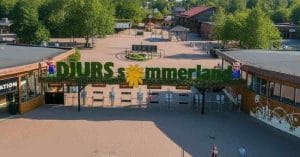
Two Danish schoolboys are attempting to ride the same high-speed rollercoaster 200 times in eleven hours at Djurs Sommerland, subjecting themselves to up to around 4.6 g at the peak on each run — a load equivalent to the child briefly feeling about 4.6 times their body weight pressing them into the seat, roughly 160 kg-equivalent for a 35 kg child, repeated hundreds of times without clear medical guidance or regulatory limits.
The marathon is unfolding on Piraten, a steel coaster that hits 90 kilometres per hour and is reported in technical ride data to reach up to about 4.6 g at its first drop. That means a child weighing 35 kilograms briefly feels an apparent weight of around 160 kg-equivalent pressing them into the seat. And they are doing it 200 times.
No rules on how many rides is too many
Denmark has no statutory limit on how many consecutive rides a guest can take or how long they can stay strapped into a rollercoaster. According to Retsinformation, the country’s amusement device rules require rides to meet recognised technical standards, primarily the European norm EN 13814. That standard focuses on design, lap bar strength, track integrity and emergency systems.
It does not define hard limits on how many times in a row a healthy person can safely be exposed to those loads. Each Piraten cycle lasts about one minute and 20 seconds from dispatch to brake run. At 200 rides, that totals around 4.5 hours of actual motion, with the remaining 6.5 hours spent stationary in the train or station between dispatches.

What the rules actually say
According to the Danish executive order on amusement devices, operators must ensure that people who do not meet a ride’s physical requirements are prevented from using it. Warnings for cardiovascular, musculoskeletal and pregnancy-related risks must be visibly posted. But there is no clause addressing cumulative g-force or extended continuous use.
EN 13814 is designed around typical use — individual ride cycles — and does not address marathon-style continuous riding, according to safety-engineering commentary. Lateral g-forces should generally not exceed 1.5 g, and vertical forces on coasters like Piraten commonly peak around three to five g for very short durations. According to European Committee for Standardization commentary, the standard gives requirements for design and manufacture, but the operator has the responsibility to ensure the ride is used safely by passengers.
From one-off stunt to recurring event
In 2023, Djurs Sommerland promoted an adult riding Juvelen all day as a quirky one-man record attempt, as reported by TV 2 Østjylland. In 2026, the park has expanded this into a six-day marathon concept involving multiple participants, including children, across different rides. The change suggests the park views extreme ride endurance as a recurring attraction rather than a one-off gimmick.
Danish amusement ride regulation has not been updated in response. The main framework stems from transposed European standards and technical executive orders issued in the 2010s, according to Retsinformation. The Danish Safety Technology Authority, Sikkerhedsstyrelsen, oversees ride safety but focuses on technical inspections and incident reporting, not marathon-style usage or permitting for such events.

The data Denmark doesn’t track
Very few and no widely reported fatal accidents on fixed amusement rides have occurred in recent years, according to Sikkerhedsstyrelsen statistics. That compares favourably to several serious and fatal incidents in Germany and the UK over the same period. But that data offers little insight into what repeated high-g exposure does to a child over eleven hours.
International medical literature notes that repeated high-g rides can produce short-term symptoms such as nausea, headaches and temporary visual disturbances. In predisposed people, they may trigger cardiac arrhythmias or exacerbate hypertension. There is little research on children doing hundreds of high-g cycles in one day.
What this means for expat families
According to VisitDenmark and Djurs Sommerland tourism partnership materials, roughly 15 to 20 percent of the park’s guests are international visitors, primarily from Germany, Norway, Sweden, the Netherlands and the UK. The park attracts around 850,000 visitors per season, up from roughly 650,000 a decade ago, an increase of about 30 percent as the park has expanded its ride portfolio and marketing.

Foreign visitors may assume Scandinavian parks are subject to uniform EU-level rules. In reality, rollercoaster regulation is handled nationally, and practices differ considerably between Denmark, Germany and Sweden. Park marketing frames these marathons as harmless fun, but no official Danish guidance explains in plain English what repeated g-force means for a young child’s body, such as a seven- or 11-year-old.
Medical advice fills the gap
Most healthy children can safely enjoy roller coasters, but repeated rides that expose them to high g-forces in a short period have not been systematically studied, according to a paediatric cardiology review article. Caution is warranted, especially if the child reports dizziness, chest pain or palpitations. Medical bodies recommend taking breaks of at least 15 to 30 minutes after several intense rides, hydrating and eating, and stopping immediately if symptoms appear.
For expats with chronic conditions or children under specialist care, contacting a Danish general practitioner before participating in extreme events is advised. Travel insurance and expat health plans often include clauses about injuries during extreme activities, so internationals should check whether marathon rides fall under exclusions.

A regulatory blind spot
Standards assume typical use, meaning a few rides per visit, not marathon challenges, as one safety engineer specialising in amusement rides noted in a professional journal. If a park encourages extreme usage, it should revisit its risk assessments and consider additional controls. Denmark’s regulatory approach relies heavily on industry standards and self-regulation, reflecting a broader trust in technical expertise and local operator responsibility.
This may differ from what expatriates from more prescriptive regimes such as France or Italy are used to, where detailed health disclaimers are common. As Denmark looks to grow tourism in Jutland’s coastal and rural areas, eye-catching content from parks like Djurs Sommerland plays into regional branding. But it also sets informal benchmarks for what is considered normal fun, potentially nudging other parks to devise similar endurance challenges.