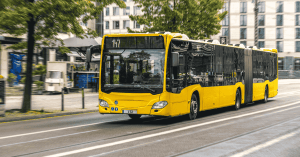
A bus driver was stabbed in the chest during a robbery attempt by a passenger on Monday afternoon in Højbjerg near Aarhus. The incident marks the second major violent attack on a flex-traffic driver in less than a year, reigniting safety concerns in Denmark’s flexible public transport sector.
Attack Details and Police Response
The stabbing occurred around 4:07 PM on Axel Gruhns Vej in Højbjerg when a passenger attempted to steal money from the bus. The driver was stabbed in the chest region but survived the attack. Police, ambulance crews, and a canine unit responded to the scene, which was cordoned off for forensic investigation.
Driver Condition and Emergency Response
The injured driver sustained chest wounds but was not critically injured according to police watch commander Peter Tolstrup of East Jutland Police. Medical personnel treated the driver at the scene before transport. Authorities have not disclosed the driver’s current condition or hospital status.
No Arrests Made
Police have not apprehended any suspects in connection with the attack. Investigators are working to secure evidence at the crime scene but have declined to release details about the assailant. The watch commander cited concerns that releasing suspect information could compromise the ongoing investigation.
Pattern of Violence Against Flex-Traffic Drivers
This attack follows a fatal stabbing of a 27-year-old flex-traffic driver in March 2025. That earlier incident involved a psychiatric patient who killed the driver during transport in Roskilde. The death marked a turning point in public awareness of safety risks facing drivers in Denmark’s flexible transport system.
Fatal Precedent from March 2025
The March 2025 killing exposed systemic vulnerabilities in flex-traffic operations. The victim was transporting a mentally unstable passenger without advance warning about potential danger. The case galvanized labor unions and transport operators to demand structural safety improvements that had previously been resisted by government authorities.
Structural Safety Deficiencies
Flex-traffic drivers operate without basic safety infrastructure common in other transport sectors. Vehicles lack emergency alarm buttons and onboard surveillance cameras. Drivers receive no information about passenger medical history or behavioral risks before pickup. They cannot refuse passengers without facing financial penalties, even when they perceive a threat.
Industry Demands and Political Response
The March 2025 fatality prompted unified demands from trade unions and transport management for mandatory safety equipment. The 3F trade union and Movia transport operator both called for emergency alarms and vehicle surveillance systems in all flex-traffic vehicles.
Movia Safety Requirements
Movia announced plans to require emergency alarm systems and surveillance cameras following the March killing. However, implementation timelines remain unclear. The transport operator manages flexible public transit services across much of eastern Denmark, including the Copenhagen metropolitan area.
Government Resistance to Safety Mandates
Transport Minister Thomas Danielsen from the liberal Venstre party previously declined to mandate safety improvements for flex-traffic vehicles. Political resistance to required safety measures has frustrated both labor representatives and transport management who see eye to eye on the need for protective infrastructure.
Driver Coping Strategies and Risk Management
In the absence of mandated safety systems, individual drivers have developed informal protective measures. Some refuse routes to psychiatric facilities despite potential fines. Others control where passengers sit, requesting they avoid seats directly behind the driver.
Informal Coordination with Health Facilities
Some drivers report that psychiatric facility staff provide unofficial warnings about dangerous patients. This ad hoc information sharing can help drivers avoid risk but operates outside any formal protocol. The arrangement demonstrates both the reality of risk and the inadequacy of official safety systems.
Occupational Vulnerability in Flex-Traffic Model
The flex-traffic system transports diverse passenger groups including schoolchildren, elderly patients with mobility issues, and individuals with psychiatric conditions. Drivers must manage these varied groups in small vehicles with limited visibility and no backup. The business model prioritizes flexibility and cost efficiency over driver security.
Ongoing Investigation
East Jutland Police continue gathering evidence at the Højbjerg crime scene. Investigators have not provided a timeline for when the area will reopen or when they expect to make arrests. The hunt for the suspect who attacked Monday’s driver continues.
Sources and References
The Danish Dream: Danish Bus Driver Stabbed in Robbery
TV2: Buschauffør stukket ned af passager
BT: Buschauffør stukket ned af passager
Presse-fotos.dk: Lige nu: Buschauffør stukket ned under røveri
Stiften: Massivt til stede: Buschauffør stukket ned
Fagbladet 3F: Knivdrab på chauffør har sat tanker i gang hos Lars
Fagbladet 3F: Efter flextrafik-chauffør blev dræbt: Nu kræver Movia nødknap og overvågning i vognene