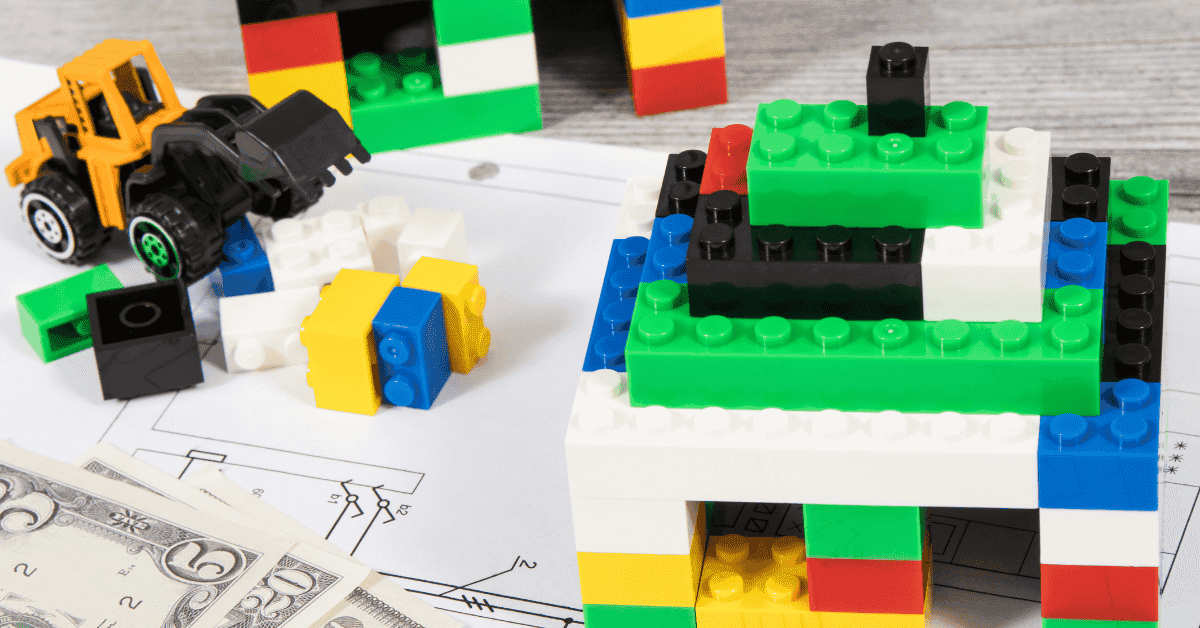
Lego continues to soar on the global market, reporting a 12% revenue increase in the first half of 2025. As a result, Lego expands in U.S, its largest market, with a nearly $1.4 billion investment in a new factory in Virginia, despite growing tensions between Denmark and the U.S.
Lego Defies Market Uncertainty with Record Growth
Danish toy giant, Lego expands in U.S in an era marked by geopolitical tension and trade policy instability and charting its own path – upward. The company posted an impressive 12% increase in revenue during the first half of 2025, totaling 34.6 billion Danish kroner (approximately $5 billion USD). Despite global economic challenges and escalating concerns among Danish businesses about the American market, Lego is thriving, particularly in the United States.
Lego’s CEO attributes the success to the brand’s broad appeal, spanning both age and interest groups, and an expanded product range that continues to capture consumer imagination. The company has seen growth in all global markets, but its performance in the U.S. stands out as a cornerstone of its current strategy.
Lego expands in U.S With Massive Investment
To meet growing demand and secure its position in its largest market, Lego is constructing a new manufacturing and distribution hub in Chesterfield County, Virginia. The 2 million-square-foot (roughly 185,000 square meters) facility is set to become operational in 2027. The construction and setup are expected to cost nearly 9.7 billion Danish kroner, or around $1.38 billion USD.
The company is also expanding its workforce in the United States. Lego has recently established a new American headquarters in Boston, home to 800 employees. This move underscores its intention to maintain strong ties and proximity to its fastest-growing customer base.
While other businesses are pulling back amidst fluctuating U.S. trade policies and political uncertainty, Lego is leaning in. The company’s strategy focuses on long-term gains rather than short-term political headwinds, reinforcing its confidence in the U.S. as a vital engine for future growth.
Optimism Driven by Sustained Momentum
Lego’s recent track record in the U.S. has been more than promising. Over the past seven to eight years, the company has experienced consistent growth, becoming the dominant player in the American toy market. With this momentum, Lego is betting big that now is the time for strategic expansion.
The Virginia factory is envisioned not just as a production site but as a central logistics hub that will streamline distribution across the continent and ensure product availability on store shelves. According to market experts, Lego’s outsized growth in comparison to competitors gives it a competitive edge that it intends to preserve and expand.
Scrutiny Over Diversity and Inclusion Policies
Even as Lego’s financial outlook shines, the company has found itself under scrutiny for internal policy changes. Earlier this year, Danish media reported that Lego’s 2024 annual report had notably downplayed mentions of diversity, equity, and inclusion—topics that had previously received regular emphasis.
Where the word “diversity” had appeared 19 times in the 2022 report and 6 times in 2023, it was entirely absent in the 2024 version. Similarly, the company’s stated “target” of achieving gender balance was softened to merely an “ambition.” Critics argue these changes reflect a broader trend of Danish firms preemptively aligning with the changing political climate in Washington, D.C., especially under a potential second Trump administration.
The U.S. has seen increasing political resistance toward DEI (Diversity, Equity, and Inclusion) initiatives. Public agencies were ordered to halt diversity programs early in Trump’s previous term, and private corporations, especially foreign ones, now find themselves navigating similar pressures.
Lego Expands in U.S Despite Criticism
Despite criticism, Lego remains focused on its core mission: delivering products that consumers of all ages desire. The company stresses that it is monitoring political developments while remaining committed to its internal strategy. Executives emphasize that success in the present gives them confidence and the capital to invest further in long-term market positioning, especially in key regions like the U.S.
Looking Ahead
With a high-performance first half of 2025 and a bold expansion plan in place, Lego is strategically positioned to consolidate its success. Whether the company’s low-key approach to politically charged topics like diversity will affect its reputation long-term remains uncertain. What is clear, however, is that Lego is building more than toys, it’s building dominance in a complex global market.