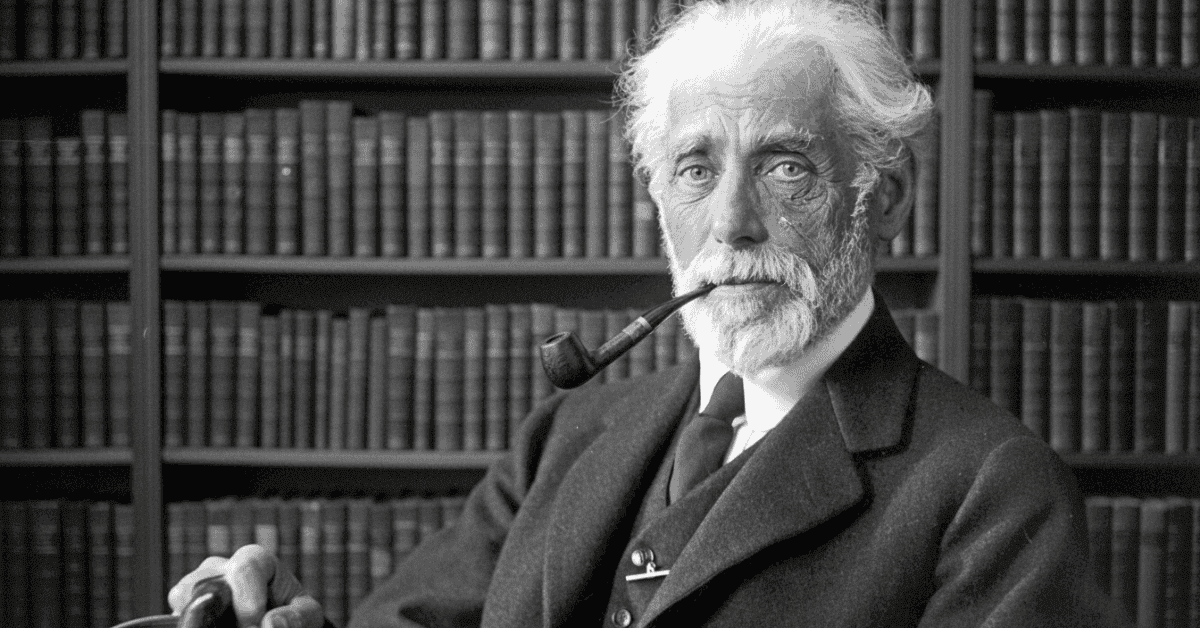
Henrik Pontoppidan didn’t set out to become Denmark’s great realist. He started in engineering, abandoned it, and wound up writing stories that laid bare a country in transition—socially, politically, spiritually. His best novels read like autopsies of idealism: cool, detailed, and unflinching. For that, and more, he was awarded the Nobel Prize for Literature in 1917 for “his authentic descriptions of present-day life in Denmark.” Not bad for the son of a clergyman who grew up quietly in Fredericia.
- Henrik Pontoppidan’s Literary Recognition: He was awarded the Nobel Prize in 1917 for his authentic descriptions of Denmark’s present-day life, highlighting his impact on realism in literature.
- Early Life and Career Shift: Born in 1857 in Fredericia to a religious family, he initially studied engineering before shifting focus to writing, influenced by urban streets and societal debates.
- Themes and Style of His Works: Pontoppidan’s novels often dismantle societal illusions, depict social progress conflicts, and delve into identity, morality, and realism.
- Major Works and Autobiographical Elements: His most famous novel, Lykke-Per, is a semi-autobiographical exploration of identity, freedom, and failure, with no neat resolution.
- Legacy and Influence on Danish Literature: Grounding Danish literature in social realism and psychological depth, his work influenced future writers and remains relevant for its honest portrayal of societal questions.
The Early Life of Henrik Pontoppidan
Born in Fredericia in 1857, Pontoppidan was steeped in a particular kind of Danish order: faith, family, duty. His father was a pastor, and the Pontoppidan name already carried weight in religious and academic circles. But early on, Henrik showed signs of friction with that inheritance. He wasn’t a firebrand, but he wasn’t content, either.
He studied engineering in Copenhagen starting in 1873, but it didn’t take. What he found more compelling were the streets, the people, and the intellectual debates shaping the city. While his peers sketched out machines, Pontoppidan wrote quietly and observed the Denmark around him—the tension between the old rural world and the modern one pressing in. By 1879, he’d dropped engineering for good.
For a while, he taught in primary schools to get by. Eventually, he worked as a freelance journalist and full-time writer. He didn’t rush things. Pontoppidan’s early short stories, like Fra Hytterne, were lean, observational, and unadorned. They were also blunt, especially about class and the hypocrisy of rural piety—subjects he knew intimately.

Writing the Nation
Henrik Pontoppidan’s novels don’t flatter. They “reflect the social” is one way of putting it. Another is that they dismantle illusions, especially the self-serving kind. His characters often chase social progress but end up colliding with reality—or themselves. That’s the tension that runs through everything he wrote.
His early critical success came with Sandinge Menighed (1883), which targeted religious conformity in small-town Denmark. But it was Det Forjættede Land (1891–95) that solidified his position. Over three volumes, he told the story of Emanuel Hansted, a pastor’s son who rebels against his upbringing only to fall into another kind of illusion. The novel is heavy with symbolism but anchored in real life, and it paints a picture of Denmark in the era of the constitutional struggle and awakening revolutionary movements.
In 1890, Pontoppidan published Skyer (Clouds), a short story collection that criticized Denmark’s conservative government. That same year, he also released a piece called Den gamle Adam (The Old Adam)—anonymously. Along with another earlier article, Messias, it was accused of blasphemy. The authorities charged his publisher, Ernst Brandes, with the offense. Brandes was fined in 1891 and died by suicide the next year. The case didn’t damage Pontoppidan directly, but it showed how politically charged—and risky—his writing had become.
Pontoppidan’s Lykke-Per
Lykke-Per (1898–1904), his eight-volume masterwork, remains his most famous novel for good reason. It’s also the most personal.
Per Sidenius is another son of a clergyman, another gifted young man trying to break free. He leaves home, studies engineering in Copenhagen, and dreams big—only to discover the cost of chasing a self he doesn’t fully understand. The story is partly autobiographical, partly a philosophical reckoning. It moves between city salons, intellectual debates, and raw spiritual doubt.
Lykke-Per is a fortunate man, in some ways. But Pontoppidan is not interested in triumph. He’s interested in what it means to live meaningfully, and whether freedom can exist inside a world shaped by family, class, and inherited guilt.
The novel endures because it doesn’t resolve neatly. Per walks away from everything—career, love, ambition—and the final chapters offer no answers. Only silence, and a cold wind.
The book has been republished in English by New York Review Books and included in the Everyman’s Library Contemporary Classics series. In 2018, it was adapted into a critically acclaimed film, giving new life to its questions about identity and modernity.
The Prize and the Distance
Pontoppidan is the realist writer who shared with Karl Gjellerup the 1917 Nobel Prize in Literature. Gjellerup was another Danish novelist, but the two had little in common. The citation praised Pontoppidan’s “authentic descriptions of present-day life in Denmark.” By then, he’d already stepped back from public life, publishing less and retreating from literary debates.
The prize was deserved, but it didn’t change him. He wasn’t chasing recognition. He was trying to make sense of his country and his time—and maybe himself.
Conclusion and FAQs About Henrik Pontoppidan
Conclusion
Pontoppidan’s impact on Danish literature is understated. His novels and short stories carved out a new space for narrative realism, free of romanticism but rich in psychological complexity. He influenced writers like Johannes V. Jensen and Martin Andersen Nexø—not by preaching a style, but by showing what was possible when you stopped writing for applause.
He wrote about Denmark, but not just for Danes. His novels hold up because the questions they ask haven’t gone away: What do we owe to the world we came from? How do we know who we are? Can progress be trusted?
He died in 1943, largely out of the spotlight. But his work still circulates—in schools, in translations, in conversations about what literature can do when it’s honest.
Summary
- Background: Born in 1857 in Fredericia to a pastor’s family, Pontoppidan was raised in a strict religious environment he later questioned in his writing.
- Early studies: He began studying engineering in Copenhagen in 1873 but dropped out to pursue writing, teaching, and journalism.
- First stories: His early fiction, including Fra Hytterne, exposed rural class divides and religious hypocrisy with a realist, unsentimental tone.
- Breakthrough novel: Det Forjættede Land (1891–95) marked his rise. It followed a disillusioned pastor’s son and examined the cost of idealism.
- Political risk: His 1890s fiction drew government scrutiny for blasphemy; a publisher was charged after printing his work.
- Major work: Lykke-Per (1898–1904) is his best-known novel. Loosely autobiographical, it explores identity, freedom, and failure through the life of Per Sidenius.
- Nobel Prize: Pontoppidan shared the 1917 Nobel Prize in Literature for his realist portrayals of modern Denmark. By then, he had retreated from public life.
- Legacy: He grounded Danish literature in social realism and moral complexity, influencing writers like Johannes V. Jensen and Nexø.

Frequently Asked Questions
What is Henrik Pontoppidan best known for?
Henrik Pontoppidan is best known for his realistic portrayals of Denmark’s social, political, and spiritual life, which earned him the Nobel Prize for Literature in 1917.
How did Henrik Pontoppidan start his career?
He began studying engineering but abandoned it to focus on writing, journalism, and teaching, driven by his interest in the streets, people, and societal changes in Denmark.
What are the main themes in Pontoppidan’s works?
His works often dismantle illusions about society, explore the tension between idealism and reality, and examine questions of identity, progress, and morality.
Why was Henrik Pontoppidan’s novel Lykke-Per significant?
Lykke-Per is significant because it is his most personal, autobiographical work that explores themes of identity, freedom, and failure, and it remains a major influence in Danish literature.
What does Henrik Pontoppidan’s legacy tell us about his contribution to literature?
His legacy lies in pioneering social realism in Danish literature, inspiring future writers by illustrating the complexities of modern life and challenging idealistic illusions.