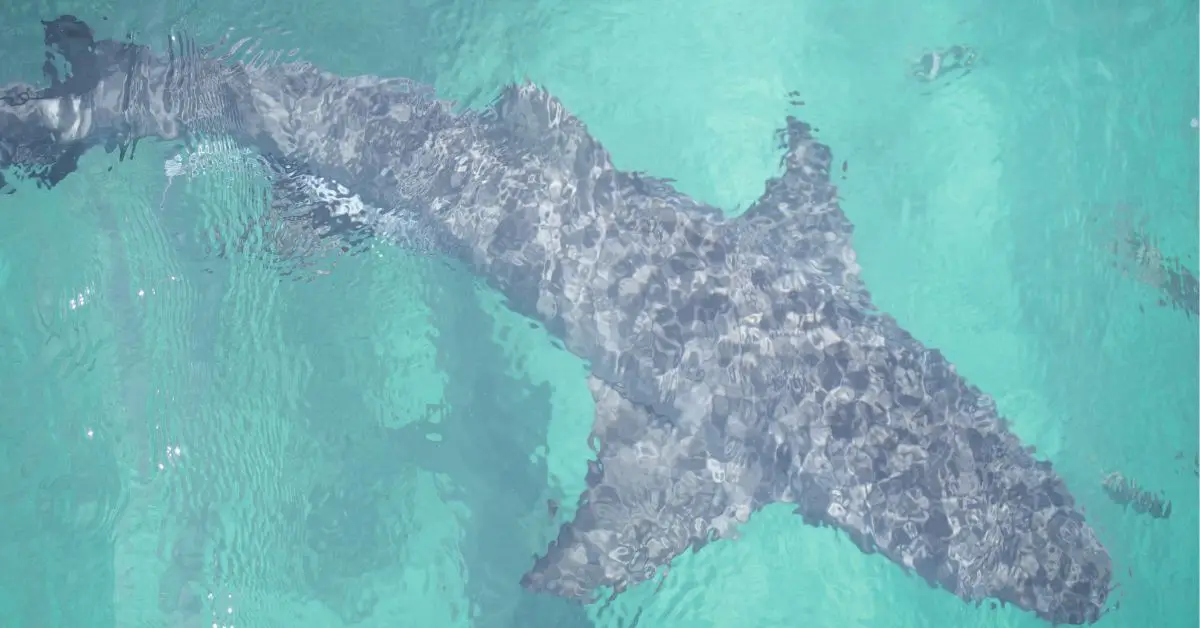
New research led by Danish and Greenlandic scientists reveals that the mysterious Greenland shark, often associated with the icy Arctic, may spend its formative years in Denmark’s Skagerrak, a deep sea area nestled between Denmark, Norway, and Sweden.
Greenland Shark’s Surprising Teenage Habitat
The Greenland shark, one of the world’s largest and longest-living vertebrates, typically inhabits the frigid depths of the Arctic. However, fresh findings from an international research team led by the University of Copenhagen and Greenland Institute of Natural Resources suggest that Skagerrak may serve as a vital juvenile habitat, akin to a “daycare center” for adolescent sharks.
The study reviewed data from more than 1,600 Greenland sharks caught throughout the North Atlantic. Results showed a particularly high concentration of young sharks—ranging from 90 to 200 centimeters—in the deep waters of Skagerrak. This makes the region stand out as one of the most important known habitats for young sharks in the species’ elusive life cycle.
Clues to a Mysterious Birthplace
For decades, biologists have puzzled over where Greenland sharks give birth. Despite extensive monitoring, newborn sharks—measuring around 40 centimeters at birth—have never been observed in Greenland, Norway, Canada, Russia, or even Iceland’s coastal regions.
By analyzing unused data from scientific databases and marine museum collections in Denmark, Norway, Germany, and Russia, along with field data from Iceland and the Irminger Sea, researchers have now found likely evidence pointing further south. These findings suggest that Greenland sharks may give birth in the remote depths near the Mid-Atlantic Ridge, far away from human fishing zones.
Danish Waters More Important Than Previously Thought
Although adult Greenland sharks are typically found in colder Arctic waters such as Southwest Greenland and the southern Arctic Canada, Skagerrak—Denmark’s deepest marine region at over 700 meters—now appears crucial in the species’ development stage.
The best evidence of this comes not just from oceanographic studies but from 150 years of historical records collected by Denmark’s Natural History Museum. Interestingly—and unexpectedly—the latest data highlight the contributions of recreational anglers in Sweden, who have routinely documented juvenile Greenland shark catches in Skagerrak deep waters.
Unlike elsewhere in the North Atlantic, Skagerrak harbors a remarkably high rate of young sharks, yet very few mature individuals, suggesting it’s primarily a growth zone rather than a breeding or adult territory.
Conservation Insights and Cross-border Challenges
The Greenland shark is listed as “vulnerable” on the IUCN Red List, with increasing concerns about its risk of extinction due to bycatch in commercial deep-sea fisheries across the North Atlantic. These include longline, trawl, and gillnet fishing operations targeting other species, such as halibut and cod.
As a result, detailed geographic knowledge of the shark’s different life stages—in this case, their nursery areas in Skagerrak and likely birthing zones further down the Mid-Atlantic Ridge—has critical implications for ocean conservation efforts. These findings add new urgency to improve international collaboration in marine protections for the Greenland shark across the Arctic and North Atlantic regions.
One Creature, Centuries of Travel
With lifespans that can reach 400 years and lengths up to 5.5 meters, Greenland sharks have among the longest life cycles in the animal kingdom. Over centuries, individuals may traverse nearly the entire North Atlantic, spending different life stages in various regions—from remote deep-sea birthing zones, to their teenage years in the relative shallows of Skagerrak, and adulthood in the Arctic’s cold embrace.
Though this latest study lays important groundwork, researchers note that further insights—particularly from shark tagging and satellite tracking—are essential to fully map the movements and ecological preferences of this enigmatic deep-sea dweller.
The full findings are published in the peer-reviewed scientific journal Ecology and Evolution.