Denmark’s top politicians clashed in a heated televised debate over soaring housing prices and the struggle of young people trying to buy or rent homes in major cities.
Fierce Exchange at Christiansborg Debate
Sunday night’s national debate turned lively as party leaders at Christiansborg faced off over the housing crisis gripping Denmark’s largest cities. With housing prices continuing to climb, few participants were spared sharp criticism.
Younger voters were a major focus of the discussion. Many struggle to find affordable homes in Copenhagen and Aarhus, where apartments have become nearly unreachable for most who are not high earners. Meanwhile, Airbnb rentals and creative sales tactics in the cooperative housing market have added fuel to frustration.

Homes Only for the Wealthy?
The numbers tell the story. In Copenhagen, the price of a 100-square-meter apartment has more than doubled over ten years, from 3.2 million kroner in 2015 to 6.6 million in 2025. In Aarhus, similar apartments have jumped from 2.8 to 4.1 million kroner in the same period.
Critics from across the political spectrum debated whether the Danish capital is now a city “only for the rich.” Some argued that the market failed long ago, while others said regulation and bureaucracy are keeping new housing projects from being built.
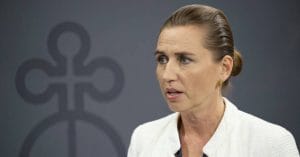
Several party leaders called for stricter rent control, while the government insisted on expanding housing construction. Prime Minister Mette Frederiksen reminded her opponents that her government’s efforts to build new housing have repeatedly been blocked by those now calling for change.
Political Fire Between Rivals
Tensions rose again when Alternativet’s Franciska Rosenkilde accused the Social Democrats of neglecting low-cost housing and instead focusing on expensive projects like the Copenhagen metro and Lynetteholm. Venstre’s leader, Troels Lund Poulsen, snapped back, saying opposition parties often talk about more housing but vote against concrete proposals when they appear.
The debate quickly escalated into finger-pointing and interruptions, drawing amused reactions from several moderators and commentators.

Differing Visions for the Future
The Conservative People’s Party called simply for increasing supply to meet demand. The leader of the Radical Left, Martin Lidegaard, suggested investing in better public transportation so people can live farther from city centers. He warned that the housing divide has created a growing generational gap where older Danes can own property while younger ones rent indefinitely.
Liberal Alliance’s leader Alex Vanopslagh appeared unimpressed, rolling his eyes at what he viewed as unrealistic proposals.
Political analysts observed that the sharp exchanges between Prime Minister Frederiksen and Enhedslisten’s Pelle Dragsted reflected local power struggles ahead of Tuesday’s municipal elections in Copenhagen. After more than a century of Social Democratic control, the city’s leadership could change.
What Lies Ahead
The question now is how parliament and local governments will respond to rising pressure from voters. Multiple parties agree that the current situation can no longer continue, yet they remain divided on solutions.
Some want more regulation and stronger limits on speculative ownership. Others argue for freeing up construction and allowing market forces to restore balance.
Without a doubt, the housing crisis will remain one of Denmark’s key political battlegrounds well into next year. Whether through new laws or shifts in policy, the need for affordable housing is clear. But as the debate showed, consensus is still far away, and tension between parties only seems to grow stronger.

Sources and References
The Danish Dream: Danish House Prices Expected to Rise in 2025
TV2: Stikpiller og rullende øjne i heftig debat om skyhøje boligpriser