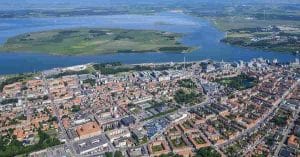
Thousands of Danish homeowners with gas boilers are abandoning plans to switch to district heating as political uncertainty over the gas phase-out deadline stalls major infrastructure projects. In Holbæk, Denmark’s largest gas-dependent city, the lack of a firm end date for natural gas has left residents and housing associations choosing heat pumps instead, threatening the future of collective heating solutions.
Political Delays Derail District Heating Plans
The promise seemed clear in 2022. As gas prices soared and Russia’s war in Ukraine threatened energy security, a broad political majority agreed to phase out natural gas for home heating by 2035. The goal was to move Danish households to cheaper district heating or heat pumps. But four years later, the political commitment has weakened.
Several parties have backed away from setting a firm deadline. Venstre and Dansk Folkeparti now oppose any end date. Moderaterne says the timeline is outdated. Even the Social Democrats refuse to commit to a specific year, though they maintain the original ambition remains. Only Konservative, Enhedslisten, SF, and Radikale Venstre still support a binding deadline.
Homeowners Left in Limbo
Jesper Dissing lives in Holbæk with an aging gas boiler that could fail any day. He hoped to connect to district heating when the city launched its conversion project. But as the May 1 deadline approaches, only 10 percent of eligible households have signed up. The project needs 70 percent participation to proceed.
Dissing plans to install a heat pump instead. His boiler is old and he cannot wait indefinitely for politicians to clarify the future of gas heating. He worries about contributing to the project’s failure but feels he has no choice. Without political certainty, individual homeowners are making decisions that undermine collective solutions.
District Heating Projects Collapse Nationwide
Holbæk is not alone. Since 2023, thousands of planned conversions from gas to district heating have been abandoned. In 2023, projects covering 20,000 households were cancelled. That number fell to 13,000 in 2024 and 8,000 in 2025, according to Dansk Fjernvarme.
The utility company FORS has already scrapped district heating plans in Osted, Tølløse, and Svinninge due to low signup rates. Jens Ole Pihl-Andersen, district heating manager at FORS, blames the lack of political clarity. Without a firm gas phase-out date, households see no urgency to commit. If the Holbæk project fails, the opportunity may never return.

Economic Barriers Block Housing Associations
Cost is another major obstacle. The two largest housing associations in Holbæk, representing 2,200 apartments, have rejected district heating. Residents would face heating bill increases of 25 to 30 percent compared to current gas costs.
Retrofitting Costs Push Tenants Away
Holbæk Boligselskab would need to spend around 30 million kroner to replace all radiators for district heating compatibility. Uffe Frejdal Nielsen, deputy chairman of the housing association, says tenants cannot afford the combined cost increase. Many residents live paycheck to paycheck. Higher heating bills would push them into financial hardship.
FORS acknowledges district heating is currently more expensive than gas. Pihl-Andersen argues the comparison is shortsighted. He expects district heating to match or beat gas prices within two to three years. But for housing associations managing tight budgets, long-term projections are not enough. They need affordable solutions today.
National Data Shows Widening Gap
The pattern in Holbæk reflects a national trend. Since late 2022, approximately 72,000 households have switched from gas to district heating or heat pumps. But at the same time, Danish homeowners installed thousands of new gas boilers in 2025, matching the installation rate from 2024. The contradiction reveals a market failure driven by policy uncertainty.
Meanwhile, government projections show a massive gap between promises and reality. The 2022 agreement targeted zero gas boilers by 2035. But the Ministry of Climate, Energy and Utilities now projects 120,000 households will still rely on gas in 2035. Complete phase-out is not expected until after 2050 under current policies.
Industry Demands Political Action
Dansk Fjernvarme and energy sector leaders are calling for urgent government intervention. Pihl-Andersen says municipalities and utilities launched feasibility studies in 2022 as requested. But political follow-through never came. Without a legislated end date for gas, households have no reason to abandon working boilers.
Government Shifts Its Justification
The government has changed its rationale for slowing the gas phase-out. Officials argue the original driver, ending dependence on Russian gas, is no longer relevant. Europe now imports liquefied natural gas from the United States instead of pipeline gas from Russia. The strategic threat has diminished, according to ministers.
Dansk Fjernvarme disputes that logic. Senior consultant Søren Magnussen says Denmark has simply traded dependence on Putin for dependence on another unpredictable supplier. Relying on imported LNG does not improve long-term energy security or address climate goals. Opposition politicians echo that critique, emphasizing that ongoing district heating projects need government backing to succeed.
Parliament Begins Renegotiation
On March 3, 2026, the Danish Parliament held its first reading of Bill B 23, proposed by Enhedslisten. The bill calls on Climate Minister Lars Aagaard to introduce legislation establishing a clear plan for shutting down gas supply to homes in areas with approved district heating. The debate marks the formal start of renegotiations around the 2022 climate agreement.
Under the proposed framework, households would receive eight to ten years’ notice before gas supply is cut off in their area. That timeline mirrors past Danish practice for mandatory district heating connections. However, without a legislated deadline and area-by-area shutdown schedule, the notice mechanism remains theoretical. Political negotiations must conclude before Grundlovsdag on June 5, 2026, to avoid delays from a potential election cycle.
Economic Benefits of Faster Phase-Out
A Deloitte analysis commissioned by Green Power Denmark found that completing the gas phase-out by 2035 would generate 6.4 billion kroner in societal gains. The majority of that benefit, 5.3 billion kroner, comes from reduced heating costs for consumers. Households switching to heat pumps would save approximately 10,000 kroner per year on average.
Health and Climate Co-Benefits
The remaining 1.1 billion kroner in benefits stems from improved public health. Phasing out gas boilers reduces air pollution from combustion. Fewer respiratory illnesses and related healthcare costs add up to significant savings. The economic case counters concerns about upfront conversion costs and supports arguments for government subsidies.
Green Power Denmark is also advocating for a binding national electrification plan. The organization proposes sourcing 60 percent of Denmark’s energy consumption from electricity by 2035. Heat pumps, which run on electricity, offer a decentralized alternative to district heating. Parliament is scheduled to discuss electrification mid-2026 following a May 2025 offshore wind agreement.
Diverging Technical Pathways
The debate reveals tension between two technical solutions. District heating relies on centralized infrastructure and collective investment. Heat pumps offer individual flexibility but require grid upgrades and coordinated tariff design. Both pathways can achieve the same climate and energy security goals. But policy clarity is needed to avoid fragmentation and wasted investment.
Municipalities Struggle with Implementation
Danish municipalities are responsible for district heating planning under national climate policy. But local capacity and political will vary widely. Of 70 district heating projects approved by 40 municipalities in 2024, 21 were later postponed or cancelled.
Local Governments Face Competing Priorities
Municipalities must balance district heating investments against other infrastructure needs, from schools to elder care. Some lack technical expertise to navigate complex energy planning. Others face opposition from vocal homeowner groups resistant to mandatory connections or cost increases. The result is uneven progress that undermines national climate goals.
District heating rollout has slowed significantly since 2023. The slowdown directly threatens the 2035 timeline. Without large-scale district heating expansion, Denmark cannot remove gas boilers at the pace required. The gap between national ambition and local implementation is widening.
Holbæk Residents Await Decision
On Wednesday evening, Holbæk hosted a major information meeting for potential district heating customers. Residents faced a choice. Sign up and commit to higher upfront costs with uncertain long-term savings. Or install a heat pump and move forward independently. The outcome will determine whether Denmark’s largest gas city can escape its dependence on fossil fuels.
Dissing remains frustrated by the lack of political leadership. The original promise was clear, he says. Denmark would become independent of gas for climate reasons and to avoid funding authoritarian regimes. But the push for district heating has gone cold. Without a firm deadline, the transition remains voluntary. And voluntary transitions are failing.
Sources and References
The Danish Dream: Denmark Eases Climate Costs for Farmers
The Danish Dream: Denmark Faces Worst Ocean Oxygen Crisis in Decades
The Danish Dream: Denmark Cuts Danish Electricity Tax to Save Households Money
The Danish Dream: Energy Electricity in Denmark for Foreigners
DR: Jesper og tusindvis af andre med gasfyr dropper at få fjernvarme
Dansk Fjernvarme
Klima-, Energi- og Forsyningsministeriet
Green Power Denmark