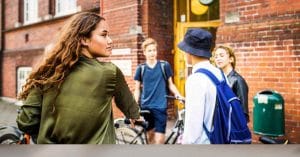
For the first time in years, student well-being in Danish schools has improved, showing signs of recovery after years of decline post-COVID. The current trend suggests a broader shift in how both educators and students view emotional challenges in school. Instead of framing students as passive victims of stress or hardship, Danish schools are increasingly focusing on helping children develop the tools they need to cope with difficulties.
Student Well-Being Improves Across Danish Schools
After a decade of decline in student satisfaction, Denmark’s public school system is finally registering an upswing in student well-being. According to new data from the Danish Ministry of Education’s Educational Statistics unit, students in Denmark reported improved feelings about Danish schools in 38 out of 40 survey questions – a significant turnaround following years of deteriorating mental health and motivation.
This notable improvement follows a particularly dismal report in the summer of 2023, when student well-being reached its lowest point in ten years. At the time, Danish schools nationwide reported higher levels of boredom, lack of engagement, and reduced enthusiasm for learning among children.
Effects of COVID-19 Still Lingering, But Decreasing
Much of the decline in student well-being can be traced back to the COVID-19 pandemic, which closed schools for extended periods and forced students into remote learning environments. During these years, school communities dissolved, and educators across the country observed growing levels of anxiety, isolation, and academic disengagement.
However, experts now believe that Danish schools are emerging from the long shadow of the pandemic. Restored routines and face-to-face communities are playing a vital role in helping students return to a sense of normalcy, emotionally and academically.
Classroom Reforms Contributing to Better Mental Health in Danish Schools
Educational leaders attribute the recent increase in student happiness to several reforms implemented across many schools. A key change has been a more deliberate restriction of mobile phone use during school hours. By limiting screen time, schools have created opportunities for more face-to-face social interaction, helping students build stronger friendships and develop a sense of community. Also the introduction of shorter school days could be a contributing factor, although this measure received criticism earlier this year.
Educators argue that these initiatives support not only emotional well-being but also increase students’ motivation to learn. The shift emphasizes social learning, focusing on how children respond to group challenges and build resilience in a collaborative environment.
A Changing Mindset on Student Resilience
According to several education experts, the current trend suggests a broader shift in how both educators and students view emotional challenges in school. Instead of framing students as passive victims of stress or hardship, Danish schools are increasingly focusing on helping children develop the tools they need to cope with difficulties.
New thinking suggests that well-being is not just a condition passively experienced, but something that can be shaped by an individual’s attitude and coping strategies. Schools are thus beginning to prioritize teaching life skills such as resilience, cooperation, and emotional intelligence alongside traditional academic subjects.
Challenges Remain for a Minority of Students
Despite the positive trend, not all students are thriving. Official data still shows that a significant number of children remain at risk for long-term disengagement from school. Areas such as chronic absenteeism and school phobia remain critical challenges for education policymakers.
In 2023, more than 12 percent of Danish students reported missing school for extended periods due to emotional or psychological difficulties — a number that shows only slight improvement from previous years. Additionally, while satisfaction with classmates and school environment has improved, progress on deeper issues such as self-esteem and academic pressure continues to be modest.
New School Law and Virtual Solutions Offer Hope
As part of a broader national strategy to improve student well-being, the Danish Parliament has enacted a new education law that takes effect this week. The legislation encourages schools to implement initiatives targeting both academic performance and mental health support.
One of the innovative components being introduced is a state-supported virtual school platform designed for students who are unable to attend physically due to mental health challenges. This online model allows students to remain part of a formal school setting, attending digital classes with peers either from their own district or from across Denmark. The goal is to maintain the student’s connection to the education system and ease their eventual return to a physical classroom.
Continued Focus on Anti-Bullying and Screen Reduction
Policymakers also continue to stress the urgency of combating bullying, both in schools and online. Digital hostility has become a growing concern, and Danish schools are actively working to teach students how to navigate social media in healthy and respectful ways. Simultaneously, reducing reliance on digital devices during classroom time remains a high priority.
With the new data showing visible improvement in school satisfaction, educational leaders in Denmark are cautiously optimistic that they are moving in the right direction. Yet, they maintain a persistent focus on ensuring all children — not just the majority — can thrive in the Danish school system.