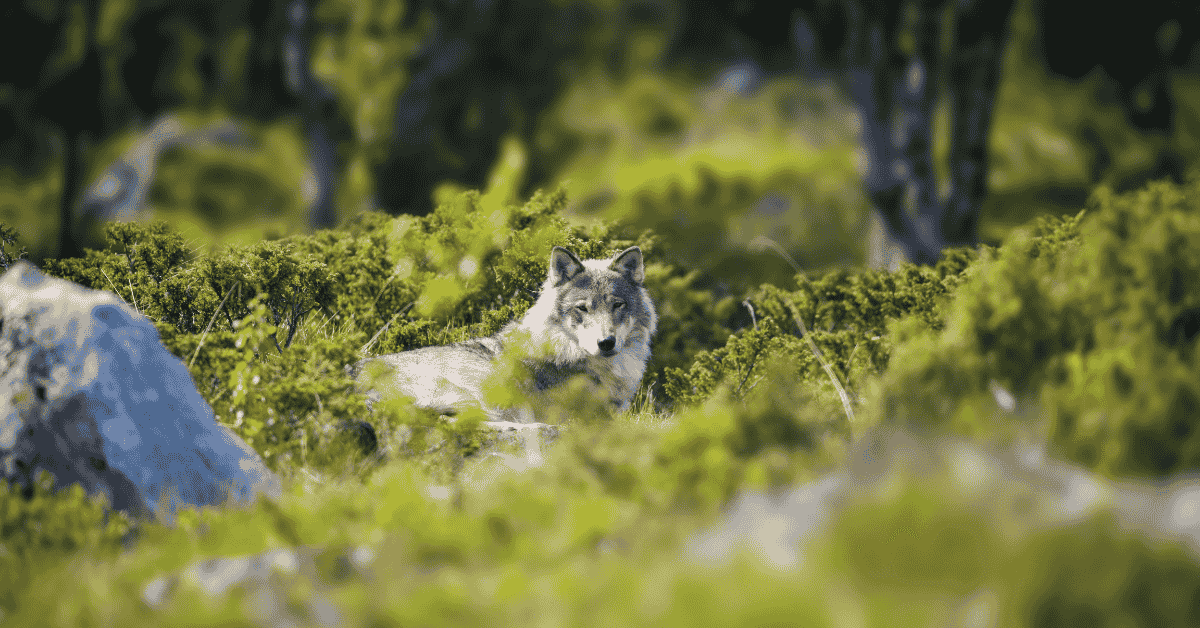
A group of wolf advocates has filed a police report against members of the Danish Parliament, accusing them of breaking EU nature protection laws by supporting a new wolf management plan that makes it easier to shoot the animals.
The police report, filed by supporters of Denmark’s tiny wolf population, raises an unusual question: can lawmakers be held criminally responsible for passing policies that may violate EU environmental rules? According to DR, the complaint centers on the government’s revised wolf plan and its looser criteria for when a wolf can be classified as a “problem wolf” and shot. The activists argue the plan breaches the EU Habitats Directive, which strictly protects wolves across member states.
A Small Population Under Pressure
Denmark is home to roughly 40 to 50 wolves, spread across nine breeding pairs and some solitary animals, mainly in Jutland. That makes it one of Europe’s smallest wolf populations. The species returned naturally in 2012 after nearly 200 years of absence. The last Danish wolf was shot near Skive in 1813.
Wolves crossed into Denmark from Germany, settling in forests and heathlands where deer and wild boar are plentiful. Aarhus University and the Natural History Museum track the population through DNA samples, camera traps, and field observations. Their data suggests the population is small but growing. In 2024 alone, at least seven pairs had pups, with 44 cubs counted.
A Contested Management Plan
The government recently changed the rules on when wolves can be legally shot. The new plan broadens the definition of “unacceptable behavior,” allowing authorities to kill wolves more easily if they approach humans or repeatedly attack livestock. The government argues this is necessary to protect farmers and maintain local support for wolves.
Nature organizations disagree. Danmarks Naturfredningsforening and groups like Ulvens Venner say the criteria are vague and open to political manipulation. They warn the plan allows shooting before non-lethal measures like electric fencing are fully tried. That, they argue, violates Article 16 of the Habitats Directive, which permits killing protected species only under strict conditions: no alternative exists, the species’ survival is not threatened, and the action serves specific purposes like public safety.
The EU Reporting Dispute
Justice Minister Jeppe Bruus added fuel to the fire by reporting Denmark’s wolf status to the EU as “unknown.” That contradicts Danish scientists, who say the population and trends are well documented. Bruus’s classification matters because an “unknown” status can justify more flexible management. Researchers at Aarhus University argue they have solid data on territories, reproduction, and population growth. The discrepancy between political and scientific assessments feeds suspicions that the government is bending facts to suit policy.
EU Law and Political Discretion
Denmark has launched a nature crime police force and promised to crack down hard on nature crimes. But the wolf case shows that enforcement can cut both ways. The police report against MPs tests whether lawmakers themselves can be held accountable for policies that may break EU rules. The outcome is uncertain. Danish police may decide there is no plausible criminal offense. Or the case could prompt deeper scrutiny from Brussels.
Wolf supporters have other tools. They can file complaints with the European Commission, which can launch infringement proceedings against Denmark. They can also challenge specific shooting permits in Danish courts, arguing they violate EU law. The police report is part of a broader trend of strategic litigation by environmental NGOs. Even if it goes nowhere, it raises the legal stakes.
Urban Dreams, Rural Fears
Public opinion on wolves is sharply split. Urban Danes tend to support the return of a native species. Rural residents, especially in West Jutland where wolves actually live, are less enthusiastic. They worry about children, pets, and livestock. Some feel that Copenhagen politicians are imposing wolves on them without understanding the impact. There have been wolf attacks on sheep, though the total number of animals killed annually remains modest compared to losses from disease or accidents. The state compensates farmers for documented losses, but many say that does not cover the full cost.
Conspiracy theories persist. Despite DNA evidence showing all Danish wolves descended from German and Polish populations, some locals believe authorities secretly released the animals. That distrust shapes the political climate and explains why some citizens are willing to take legal action against their own Parliament.
Testing the Limits
I have covered Denmark long enough to recognize the pattern. When it comes to nature law, there is often a gap between what the science says and what the politics demands. The wolf debate is a microcosm of a bigger tension: how much room does a small democracy have to adjust EU rules to fit local realities?
The police report will likely go nowhere. But it serves a purpose. It signals that some citizens are watching, and they are willing to use every legal tool available to hold power to account. Whether you see that as democratic activism or obstructionist litigation probably depends on where you stand on wolves. Either way, Denmark’s 40 wolves have become a test case for how far national politics can bend European environmental law.
Sources and References
The Danish Dream: Denmark Launches Nature Crime Police Force
The Danish Dream: Denmark Cracks Down Hard on Nature