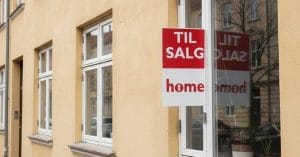
Denmark’s Financial Supervisory Authority warns that housing prices in Copenhagen are rising at an unhealthy pace and could soon face a sharp correction. The warning comes after a year of double-digit price growth in the capital.
Regulator Raises Alarm on Housing Market
Denmark’s Financial Supervisory Authority (Finanstilsynet) has issued a strong warning about the ongoing price surge in Copenhagen’s housing market. In its recent risk report, the authority described the trend as unsustainable and said that the situation carries a high risk of a significant price drop in the near future.
As noted in the report, prices for owner-occupied apartments in Copenhagen have risen steeply during the past year. New homeowners in the area generally face tighter budgets than the rest of the country, partly due to the city’s rising cost of living. According to earlier analyses, condominium prices in Copenhagen have more than doubled over the last decade, creating affordability challenges for first-time buyers.
Because of that, authorities fear that many homebuyers are purchasing properties based on expectations that prices will keep rising, which can push values up even further and fuel speculation. The report warns that such a cycle often ends abruptly.

Market Drivers and Potential Impact
The regulator acknowledged that stronger incomes and a more stable interest rate environment have influenced the rise in housing prices. However, these factors do not fully justify the current high price levels in Copenhagen and Frederiksberg. The agency called on mortgage lenders to act cautiously when granting loans and reminded buyers to assess their financial stability before taking on large debts.
Surprisingly, the current situation shares certain traits with the period leading up to the 2008 financial crisis, when credit growth became unsustainable. Back then, Danish banks faced significant losses, and total national lending exceeded 2.5 times the gross domestic product. Today, that ratio has been reduced to below 1.8, but household debt levels remain high compared with other countries.
Because of these high debt ratios, Finanstilsynet stated that it will monitor the housing market closely over the coming year. It will also keep an eye on other risk factors, such as the evolving trade conflict with the United States and vulnerabilities in Denmark’s digital infrastructure.

National Bank Shares Concerns
The Danish National Bank (Nationalbanken) also voiced concern after data showed a 20 percent rise in Copenhagen apartment prices over the past year. From October to November alone, prices rose 2.4 percent. For a five‑million‑kroner apartment, that means an increase of 120,000 kroner in just one month. The bank called the development “worrying” and pointed out that the capital is now moving out of sync with the rest of Denmark.
Interestingly, this sharp growth also diverges from trends seen in other European capitals, where housing prices have leveled off or risen more moderately. The National Bank warned that prolonged periods of rapid price growth can create overconfidence and eventually lead to sharp corrections.
Even though both authorities observe accelerating prices, the National Bank does not see an immediate housing bubble forming. Yet it emphasized that the rapid rise requires ongoing attention. If expectations of continuous price jumps grow stronger, it could easily become a self-reinforcing cycle similar to those seen in past boom‑and‑bust periods.

What Comes Next
While Copenhagen’s market keeps attracting new homeowners and investors, the warnings suggest that buyers should proceed carefully. Interest rates, wage trends, and credit standards will determine whether prices stabilize or continue upward. Analysts agree that the coming year will be crucial to test how resilient the housing market really is.
For foreigners hoping to enter the Danish property market, there are specific regulations to understand. Helpful insights can be found in guides about buying property in Denmark for foreigners, which outline the country’s approval and financing rules.
Ultimately, Denmark’s financial supervisors are preparing to keep a tighter watch on household debt and balance sheets. Their goal is to prevent another housing bubble and protect both families and lenders from a potential price collapse that could ripple through the entire economy.
Sources and References
The Danish Dream: Copenhagen Condominium Prices Double in Ten Years
The Danish Dream: Buying Property in Denmark for Foreigners
DR: Finanstilsynet kalder prisfest i København usund: Spår stor risiko for prisfald