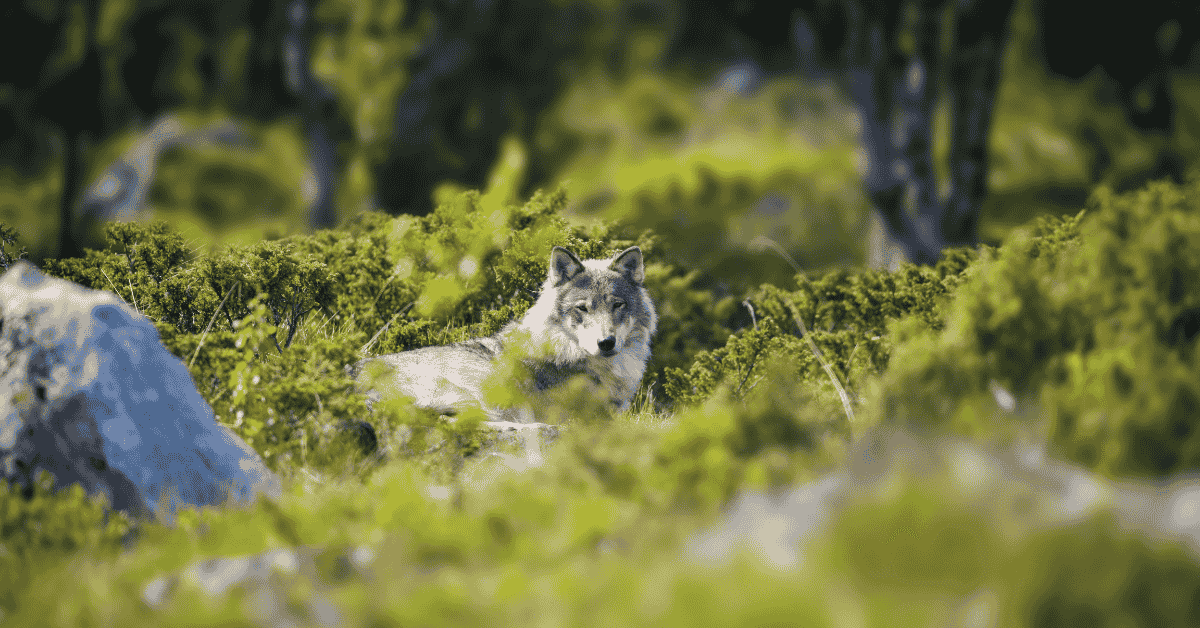
Police and nature officials are investigating whether wolves attacked horses near Klosterhede in West Jutland, but DNA results are still pending and the perpetrator could just as easily be dogs.
A horse owner in the Klosterhede area of Struer municipality discovered several of her animals badly bitten on Tuesday morning. The injuries were severe enough to prompt an immediate call to both Midt‑ og Vestjyllands Politi and Naturstyrelsen Vestjylland. As reported by DR, the owner suspects a wolf was responsible. Authorities are now waiting for DNA analysis to confirm what actually happened.
Not the first incident in the area
This is not the only disturbing animal story from Klosterheden recently. Days earlier, a walker found a skinned carcass without head or hooves behind a bench at a parking area on Klosterhedevej. That case looks more like illegal dumping of a slaughtered animal than predation. But the timing has rattled locals and intensified fears about what is happening to animals in the forest.
The horse incident follows a pattern seen elsewhere in Jutland. Multiple confirmed wolf attacks on sheep and cattle have been documented in recent years. Near Kolding, a forester lost seven sheep in a single attack. Another case involved nine cattle attacked just 100 metres from a summer house area.
Horses are rare targets
What makes the Klosterhede case unusual is the target. The vast majority of confirmed wolf attacks in Denmark since 2012, when wolves returned to the country, have involved sheep. Calves and young cattle are sometimes attacked. Full‑grown horses are rare victims. When horses do get hurt by wolves, they are usually ponies or foals.
That rarity is exactly why experts are cautious about attribution. Large dogs can inflict serious bite wounds that look wolf‑like to untrained eyes. According to official wolf monitoring data, many suspected wolf attacks turn out to be dogs once DNA comes back. It happens often enough that responsible reporting requires hedging until the forensics are done.
Forensics take time
The National Veterinary Institute at DTU and wolf specialists from Aarhus University typically handle these investigations. They examine bite patterns, collect saliva and tissue samples, and wait for lab results. Deep puncture wounds on neck and hindquarters suggest wolf. Chaotic tearing can point to dogs. But without DNA, even experts cannot be certain. That process can take days or weeks.
A small population, big conflicts
Denmark has only a handful of wolves, probably in the low double digits. They are concentrated in West and Central Jutland, exactly where Klosterhede sits. The population is tiny compared to Germany or Poland. But conflicts are frequent relative to numbers because wolves home in on unprotected livestock. A single pack can kill or injure many animals in one night.
Wolves are strictly protected under EU law and Danish nature regulations. Killing one without official permission is illegal. Lethal control is only allowed in extraordinary situations and Denmark has been reluctant to grant such permissions. That legal shield frustrates farmers and horse owners who feel powerless to protect their animals.
Compensation exists but complaints persist
The government offers compensation for verified wolf damage. The scheme covers sheep and, under some conditions, horses. But compensation requires official confirmation, which means waiting for DNA. Many farmers complain the process is slow and does not cover indirect costs like stress and breeding disruptions. Subsidies for protective fencing are available but uptake has been uneven.
Proximity to people fuels fear
Attacks near summer houses or parking areas get special attention. The Netnatur report of cattle attacked close to recreational homes taps into a deeper anxiety. People worry that if wolves will attack horses or cattle near where families relax, maybe they pose a risk to children. Wildlife experts repeat that wolf attacks on humans in modern Europe are extremely rare. Denmark has never recorded one. Wolves are naturally shy and avoid people.
I have lived here long enough to see this dynamic play out. Each incident triggers the same cycle. Dramatic photos spread on social media. Local politicians demand action. Conservationists cite EU obligations. The facts get lost in emotion. It is hard to blame horse owners for being upset when their animals are bitten and bleeding. But it is equally hard to justify policy based on unconfirmed suspicions.
European tensions echo in Denmark
Denmark is not alone in this struggle. Germany, France and Sweden are all debating whether to loosen wolf protections. Some EU member states are lobbying the Commission to downgrade the species’ legal status. Any change at European level would reshape what Denmark can and cannot do. For now, coexistence models in places like Lower Saxony emphasize high electric fencing and livestock guardian dogs. Those measures work, but they cost money and require farmers to adapt traditional grazing.
Until DNA results come back from Klosterhede, we are left with uncertainty. Maybe it was a wolf. Maybe it was not. What is certain is that this case will fuel the same arguments Denmark has been having since wolves came back. The question is whether we can have that debate with the facts in hand rather than jumping to conclusions every time an animal gets hurt.