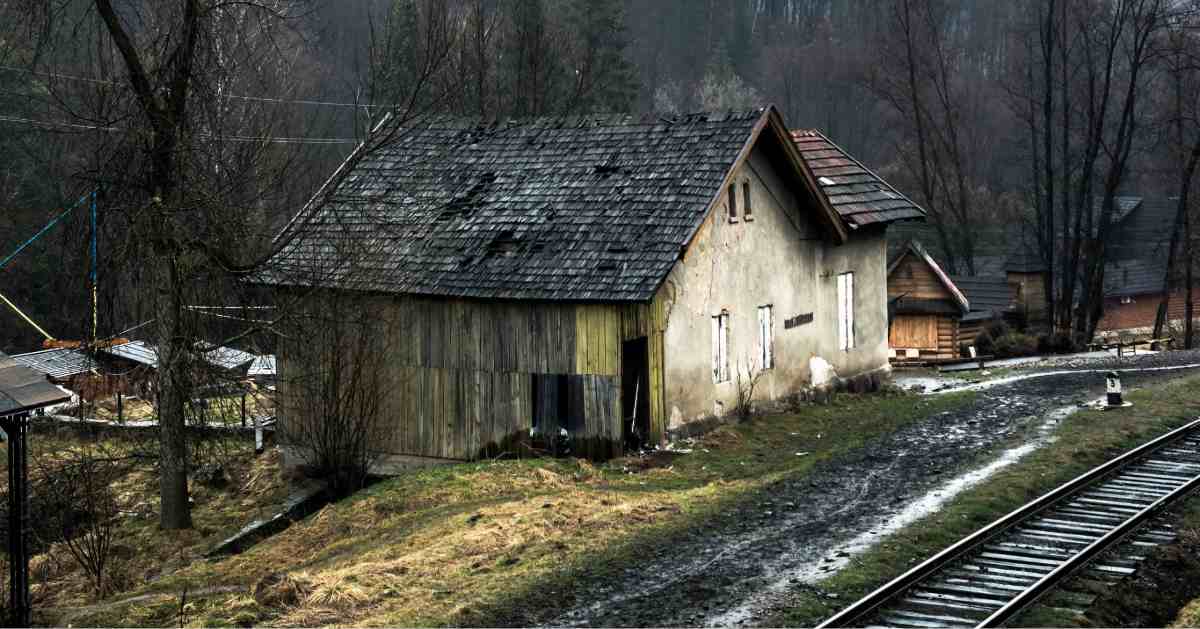
A decades-long dispute over a caravan and garage built on railway land is heading to Denmark’s Supreme Court, where judges will decide whether a Horsens resident can claim ownership of a 400-square-meter plot through adverse possession despite a 1988 law barring such claims on railway property.
Railway Land Dispute Reaches Supreme Court
A property conflict in Horsens has escalated to Denmark’s highest court after Banedanmark demanded rent and removal of structures on land owned by the state railway agency. Michael van der Aa Kühle, a disability pensioner who bought his house near the railway in 1994, faces the Supreme Court on February 27 over land he believed was part of his property for three decades.
Unexpected Claim After 30 Years
Banedanmark sent a letter in 2021 informing van der Aa Kühle that his garden, garage, and old caravan sit on nearly 400 square meters of railway-owned land. The agency demanded 6,000 kroner in annual rent and removal of all structures. Van der Aa Kühle said he thought the claim was absurd after using the land for 30 years without objection.
The railway agency discovered the encroachment through aerial photography during railway electrification work. Similar demands went to other residents along the railway line, including some of van der Aa Kühle’s neighbors, though their cases did not reach court.
Decades of Undisputed Use
Van der Aa Kühle moved into the house in 1994 and said he always assumed the land belonged to his property. The garage already stood on the plot when he arrived, filled with mahogany wood. He built the caravan workshop himself many years ago, and it now sits firmly embedded in the soft soil, making removal nearly impossible.
The area has functioned as part of the residential property for far longer than van der Aa Kühle’s ownership. Previous residents used the land for play areas, keeping chickens, and planting gardens extending down to the railway tracks.
Legal Battle Over Adverse Possession Rights
The case centers on whether long-term use of land can transfer ownership rights even when state railway property is involved. Lower courts have already weighed in, but the Supreme Court must resolve conflicting interpretations of Danish property law.
Landmark Ruling From Appeals Court
Vestre Landsret, the Western High Court, ruled in van der Aa Kühle’s favor, finding that adverse possession had been established. This legal principle, known as hævd in Danish, allows someone to claim ownership of adjacent land after using it openly and continuously for at least 20 years. The concept traces back to medieval Danish law, with roots in the Jutlandic Code from 1241 and Danish Law from 1683.
Defense attorney Jens Glavind represents van der Aa Kühle with a court-appointed mandate. He argues that evidence from previous owners and residents, along with historical aerial photographs, proves continuous use of the land as a garden long before 1988. This timeline becomes crucial because of legislative changes that year.
Railway Protection Law Creates Conflict
Banedanmark bases its case on a 1988 amendment to the Railway Act that explicitly prevents adverse possession claims on land registered as railway property in official records. Since van der Aa Kühle purchased his house in 1994, the agency argues the protective law applies. The Supreme Court must determine whether adverse possession rights established before 1988 remain valid despite the legislative change and subsequent property transfers.
The dispute highlights tensions in Danish property ownership, where boundary uncertainties can persist for generations. Glavind noted that many landowners gave up property during railway expansion without understanding their legal rights or potential adverse possession claims.
Broader Implications for Property Owners
The Supreme Court’s decision will affect more than one Horsens resident. Legal experts and other property owners await the ruling to understand how it reshapes boundaries between private rights and state infrastructure needs.
Pattern of Similar Claims Nationwide
Glavind has received inquiries from multiple people facing comparable situations with Banedanmark. He knows of several cases that could be reopened if the Supreme Court upholds the appeals court decision. Railway expansion over the past century created numerous boundary situations where residents incorporated adjacent land into their properties without formal transfers.
These cases often involve structures like sheds, garages, and gardens that gradually extended onto railway property over decades. Property owners typically had no knowledge of the technical boundary locations, especially when physical markers like fences sat far from registered property lines.
Silence From Railway Agency
Banedanmark declined interview requests, stating it would not comment before the Supreme Court issues its ruling. The agency chose to appeal after consulting with the Office of the Attorney General, indicating the government views the case as having significant precedential value. The decision to pursue the matter through all court levels suggests concern about potential claims on railway land across Denmark.
The structures in question include a garage filled with materials and a workshop caravan that has become a permanent fixture. Van der Aa Kühle uses these buildings regularly, and their removal would eliminate functional space he has relied on for decades.
Historical Context of Adverse Possession Law
Danish adverse possession rules balance property stability against formal registration systems. The principle recognizes that long-term, open use of land creates legitimate expectations and practical realities that deserve legal protection.
Requirements for Adverse Possession
To establish hævd, a person must use land continuously for at least 20 years in a manner visible to others, including the legal owner. The use must be without permission or rental agreements. Adverse possession rights can transfer between property owners, meaning the 20-year period can span multiple residents of the same house.
Sporadic or occasional use does not qualify. The claimant must treat the land as an owner would, making improvements, maintaining boundaries, and excluding others. Historical evidence like photographs, witness testimony, and physical improvements helps prove continuous possession.
Protection for Railway Infrastructure
The 1988 Railway Act amendment aimed to protect state transportation infrastructure from ownership claims. As railway networks expanded and modernized, legislators worried that adverse possession could fragment critical corridors or create maintenance complications. The law drew a bright line protecting registered railway land from such claims.
However, the statute did not explicitly address situations where adverse possession had already begun before 1988. This gap creates the legal uncertainty the Supreme Court must resolve. The decision could either grandfather pre-1988 possession or apply the prohibition retroactively.
Sources and References
The Danish Dream: How to Buy a House in Denmark
The Danish Dream: Best Property and Real Estate Lawyers in Denmark for Foreigners
TV2: Gammel strid om skurvogn og garage havner i Højesteret
TV2: Nyheder
University of Copenhagen Faculty of Law