A West Jutland man has been confined to his fourth-floor apartment for four months following back surgery in October, unable to leave due to wheelchair dependency and lack of elevator access. Despite his pleas for municipal assistance to access fresh air, local officials cite that Danish service law does not guarantee such support for temporary conditions.
Trapped Inside After Back Surgery
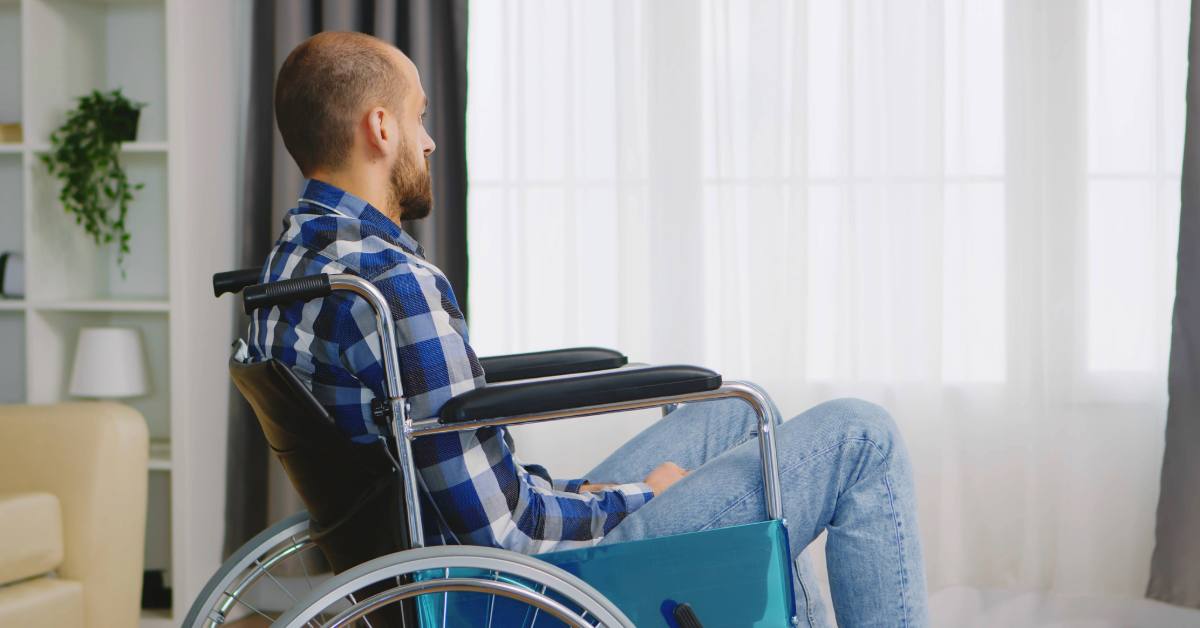
Claus Christensen sits in frustration, his world reduced to three spots in his living room: a wheelchair, an armchair, and a bed moved from the bedroom. Since October, when he suffered a herniated disc compounded by an old back injury, he has been unable to stand or walk. The pain keeps him wheelchair-bound, and the stairs outside his first-floor apartment in Ringkøbing-Skjern Municipality have become an insurmountable barrier.
For four months, he hasn’t felt sunlight on his face or breathed outdoor air without risking his life by attempting the stairs alone. Naturally, the isolation weighs heavily on him. Meanwhile, he cannot afford the deposit for a ground-floor apartment, leaving him stuck in a situation he compares unfavorably to prison.
Municipal Support Falls Short
Claus receives daily visits from home care workers who assist with personal hygiene, practical tasks, and meal delivery. However, this help does not extend to getting him outdoors. According to Anja Thoft Bach, health and care manager for Ringkøbing-Skjern Municipality, Denmark’s service law does not include provisions for ensuring access to fresh air. The legislation covers personal care, practical help, meal services, and emergency call systems, but nothing more.
Interestingly, this legal framework leaves gaps for people in Claus’s position. Without a permanent disability diagnosis, his situation is classified as temporary, even though he faces months more in the wheelchair. He won’t have an MRI scan until late March, meaning at least six months will pass since his injury before he receives a full diagnosis. Recovery could take up to a year.
Political Sympathy Without Solutions
Lennart Quist, chairman of the Health Committee in Ringkøbing-Skjern Municipality, expressed sadness over Claus’s predicament. While he acknowledged the municipality’s desire to help as much as possible, he emphasized the need for a sustainable long-term solution rather than a temporary fix. Despite the political will, no concrete action has been promised.
The Danish healthcare system provides many services, but navigating bureaucratic limitations can leave individuals stranded. For foreigners and locals alike, understanding what support exists and what doesn’t becomes critical in moments of crisis.
Mental Health Crisis Emerges
The physical confinement has taken a severe psychological toll. In mid-December, after falling while trying to move to his armchair, Claus called his doctor for an appointment. The earliest available slot was in January. Overwhelmed by frustration and powerlessness, he made a desperate decision: he swallowed two hobby knife blades in what he describes as pure desperation over his situation.
TV Midtvest verified medical documentation of his herniated disc, previous back injury, and the incident involving the blades. This extreme act highlights the mental health dangers of prolonged isolation and lack of support. Obviously, situations like this demand more than just physical care. They require attention to the broader well-being of vulnerable individuals.
Support Resources Available
Anyone experiencing suicidal thoughts or self-harm urges should seek help immediately. Livslinien offers anonymous support by phone at 70 201 201, available daily from 11 a.m. to 5 a.m., and chat counseling on weekdays from 5 p.m. to 9 p.m. and weekends from 1 p.m. to 5 p.m. For acute emergencies, call 112. The Association for Eating Disorders and Self-Harm provides free, anonymous assistance at 7010 1818 or through selvskade.dk.
What Defines Temporary Versus Permanent?
The municipality’s position hinges on the classification of Claus’s condition as temporary. Bach explained that the assessment involves collaboration between the citizen, their doctor, or hospital staff to determine needs. However, there is no defined number of weeks or months that transitions a situation from temporary to permanent. At that point, the ambiguity leaves room for individuals to fall through administrative cracks.
Given that Claus faces potentially a full year before regaining mobility, the question arises: when does temporary become permanent enough to warrant intervention? Quist suggested that if a resident faces an extended period unable to live in their home due to stairs, finding something more suitable could be beneficial. Yet no formal policy change has been proposed.
Financial Barriers to Relocation
When asked why he doesn’t simply move, Claus points to financial reality. He lacks the funds for a security deposit on a new apartment. Without municipal assistance or alternative temporary housing, he remains stuck. This situation reflects broader challenges in Denmark’s housing market, where upfront costs can prevent necessary moves even when health demands it.
Strangely enough, he notes that prison inmates have guaranteed outdoor access, while his situation denies him that basic need. The comparison underscores his desperation and the perceived injustice of his circumstances.
Healthcare System Under Strain
This case illuminates systemic challenges within Danish healthcare, particularly regarding post-operative support and wait times. Claus’s six-month wait for an MRI scan reflects broader capacity issues affecting surgical patients across Denmark. Region Syddanmark, which includes Ringkøbing-Skjern, has faced ongoing difficulties with surgical backlogs and staffing shortages.
In recent years, the region has struggled to recruit specialized surgeons. For example, in 2023, breast cancer surgeries were relocated from Sygehus Sønderjylland in Aabenraa to facilities in Vejle and Esbjerg due to staffing challenges. The region even explored cross-border cooperation with German hospitals in Flensburg to ease capacity strains.
These developments point to nationwide pressures including nursing shortages, growing waitlists, and an aging population. Initiatives like Rigshospitalet’s “Operation Færre operationer” aim to reduce unnecessary procedures, but fundamental capacity issues persist. Unfortunately, individuals like Claus bear the consequences of these systemic problems.
Looking Ahead
As Claus awaits his MRI and eventual treatment, his daily reality remains unchanged. He moves between wheelchair, armchair, and bed, watching the outside world from his window. The frustration he feels is visible, and the months ahead promise more of the same isolation.
Whether municipal policies will adapt to address cases like his remains uncertain. For now, the letter of the law provides no pathway for the help he seeks. Eventually, his condition may improve enough to regain independence, but the psychological scars of this period will likely last much longer than the physical recovery.
Sources and References
The Danish Dream: Danish Healthcare Explained for Tourists & Expats
The Danish Dream: Best Therapists in Denmark for Foreigners
TV2: Rygopereret vestjyde har siddet i sin lejlighed i fire måneder