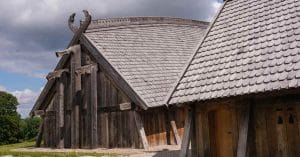
Greenland was “discovered” by Norse Viking Erik the Red around 982 AD, but Indigenous peoples like the Saqqaq, Dorset and Thule Inuit had lived there for over 4,500 years before any European set foot on its shores.
Living in Denmark for years, I have watched Greenland slide from a footnote in school history books to the front page of every newspaper. Tourists ask me about it. Colleagues debate it over Friday beers. The question I hear most often is simple. Who discovered Greenland, really?
The textbook answer is Erik the Red. The honest answer is more complicated, and far more interesting. Let me walk you through what I have learned from the archives, the sagas, and a few long conversations with Danish historians.
Who Discovered Greenland? The Short Answer
Norse explorer Erik Thorvaldsson, known as Erik the Red, is credited with discovering Greenland around 982 AD. He established the first European settlements there by 985 AD. That is the version most history books still teach.
But the longer answer is that Greenland was never “empty” when Erik arrived. Indigenous Arctic peoples had been hunting, fishing, and burying their dead on the island since roughly 2500 BC. The Norse were latecomers by several thousand years.
Why the Question Matters Today
This is not just a pub quiz topic. Greenland sits at the heart of one of today’s biggest geopolitical fights, as covered in our piece on why the US wants Greenland. Who got there first shapes how Greenlanders frame their independence claims.
As an expat, I have learned that Danes treat this history seriously. Bring it up at a dinner party in Copenhagen, and you will get strong opinions. Greenland is not a curiosity here, it is family.
Erik the Red: The Viking Who “Discovered” Greenland
Erik Thorvaldsson was born in Norway around 950 AD. His nickname came from his red hair and, according to Britannica, his red-hot temper. He was banished twice for killing men, first from Norway, then from Iceland.
That second exile in 982 AD pushed him west. He had heard of land sighted decades earlier by a sailor named Gunnbjörn Ulfsson, blown off course on the way to Iceland. Erik decided to find it.
Three Years of Exploration
Erik spent three years mapping Greenland’s southwestern fjords. He named landmarks, scouted grazing land, and identified two viable regions for farming. Then he sailed back to Iceland to recruit colonists.
According to the Saga of Erik the Red, he chose the name “Greenland” deliberately. As reported by historians at the Smithsonian, Erik believed an attractive name would lure more settlers. It was Iron Age marketing, and it worked.
The First Norse Settlement
In 985 AD, Erik led 25 ships from Iceland to Greenland. Only 14 made it through the brutal North Atlantic. The survivors founded Brattahlíð, Erik’s farmstead, in what became the Eastern Settlement.
At its peak, the Norse population reached around 2,500 to 3,000 settlers across two main colonies. The Eastern Settlement, Eystribyggð, held most of the people. The Western Settlement, Vestribyggð, sat further north near modern-day Nuuk, the capital of Greenland.
The People Who Discovered Greenland First
Here is where the standard narrative cracks. Erik the Red did not discover an empty land. He discovered a place where humans had been adapting to the Arctic for over four millennia.
Archaeological evidence shows at least four distinct Indigenous cultures preceded or coexisted with the Norse. Each crossed from North America in separate waves. Each left tools, dwellings, and graves scattered along the coast.
The Saqqaq Culture (c. 2500–800 BC)
The Saqqaq were Greenland’s first known inhabitants. They arrived from Arctic Canada around 2500 BC, hunting seals, reindeer, and seabirds. Their tools, found at sites near Qeqertarsuaq, were small, sharp, and made for ice.
In 2010, scientists sequenced the genome of a 4,000-year-old Saqqaq man nicknamed “Inuk.” As noted by the journal Nature, his DNA showed he was genetically closer to Siberians than to modern Inuit. Greenland’s human story is older and more tangled than Viking sagas suggest.
The Dorset Culture (c. 500 BC–1500 AD)
The Dorset people followed the Saqqaq. They were skilled carvers and built semi-subterranean homes from stone and turf. They survived in northern and eastern Greenland long after the Norse arrived in the south.
Norse sagas mention encounters with people they called Skrælingar, likely the Dorset or early Thule Inuit. These meetings were rarely friendly. The Saga of Erik the Red describes trade and skirmishes alike.
The Thule Inuit (c. 1200 AD onward)
The Thule are the direct ancestors of today’s Greenlandic Inuit. They migrated east from Alaska around 1200 AD, equipped with dog sleds, kayaks, and harpoons designed for whale hunting. They moved fast and adapted faster.
By 1400 AD, the Thule had spread across Greenland. The Norse settlements were already collapsing. The Inuit stayed. They are still here.
How the Vikings Got to Greenland
Sailing 1,500 kilometres of open Arctic ocean in an open wooden boat sounds suicidal. The Norse made it look routine. Their seafaring skill was the real reason Erik the Red could “discover” anything at all.
Longships and Knarrs
Forget the dragon-prowed warships. The boats that crossed to Greenland were knarrs, broader cargo vessels built for the open ocean. They carried families, livestock, timber, and seed.
Clinker-built with overlapping oak planks, knarrs flexed in heavy seas. They could sail close to the wind and survive North Atlantic storms. Without them, no Norse Greenland.
Navigation Without a Compass
The Vikings had no magnetic compass. They navigated by the sun, the stars, bird flight patterns, and ocean currents. On cloudy days, some sagas claim, they used a “sunstone,” likely Iceland spar, a crystal that polarises light and reveals the sun’s position.
They also used latitude sailing. Keep the North Star at a fixed angle and you stay on the same parallel. Crude, brilliant, and good enough to find a continent.
What Life Was Like in Norse Greenland
I once visited Hvalsey Church in southern Greenland, the best-preserved Norse ruin on the island. Standing inside roofless stone walls 1,000 years old, the scale of what these settlers built hit me hard. This was not a camp. It was a civilisation.
Farms, Churches and Bishops
The Norse built around 500 farms across Greenland. They raised sheep, goats, cattle, and a few pigs. They imported grain when they could, but mostly lived on dairy, seal meat, and caribou.
By the 12th century, Greenland had its own Catholic bishop, based at Gardar. A cathedral was built. The settlement at Kujataa is now a UNESCO World Heritage Site, recognised for this fusion of Norse and Inuit agricultural landscapes.
Trade with Europe
Greenland’s Norse were not isolated. They exported walrus ivory, polar bear furs, narwhal tusks, and the occasional live falcon to European royal courts. Walrus ivory was Greenland’s oil.
Then ivory from African elephants flooded European markets in the 13th century. Demand for walrus tusks collapsed. Greenland’s economy never recovered.
Why the Norse Disappeared
This is the part of the story I find most unsettling. By around 1450 AD, the Norse settlements were gone. No final battle, no recorded evacuation, just silence in the historical record.
The Little Ice Age
The Norse arrived during the Medieval Warm Period, roughly 950 to 1250 AD. Temperatures dropped sharply after that. The Little Ice Age, as covered by National Geographic, made farming and sea travel brutal.
Ice clogged the fjords. Crossings to Iceland became impossible for years at a time. The bishop’s seat sat vacant after 1378. Rome forgot about them.
Multiple Causes, One Outcome
Modern researchers point to several overlapping factors:
- Climate collapse killed pastures and froze trade routes
- Soil erosion from overgrazing destroyed farmland
- The walrus ivory market crashed, gutting the economy
- The Black Death in Europe cut off shipping
- Inuit expansion increased competition for hunting grounds
- Young people left for Iceland and Norway in search of opportunity
As reported by archaeologist Thomas McGovern of Hunter College, the Norse did not die out so much as drift away. The last ones probably packed up and sailed home. Greenland was not abandoned by accident, it was given up.
The Inuit Inherited Greenland
While the Norse failed, the Thule Inuit thrived. They hunted ringed seals through breathing holes in winter ice. They built kayaks no European could replicate. They turned the cold into an ally.
This is the part Danish school curricula have only recently started to teach honestly. For centuries, the dominant story credited Erik the Red and quietly skipped over the people whose descendants still live on the island. That has shifted, slowly. You can see it in our coverage of Denmark’s formal apologies for colonial harms.
Rediscovery: How Greenland Returned to European Maps
After the Norse vanished, Europe basically forgot Greenland. The island faded into rumour. Then in 1721, a Dano-Norwegian Lutheran missionary named Hans Egede sailed west to find the lost Norse Christians.
Hans Egede and the Modern Era
Egede did not find Norsemen. He found Inuit. He founded the modern colony of Godthåb, now Nuuk, and brought Greenland firmly into the Danish realm. That colonial relationship still defines the island’s status, as I explored in our guide to Greenland’s connection to Denmark.
Egede’s arrival in 1721 is, in many ways, the second discovery of Greenland. From an Inuit perspective, it was the start of colonisation. From the Danish state’s perspective, it was the founding of a 300-year political relationship.
A Quick Timeline: Who Discovered Greenland and When
- c. 2500 BC: Saqqaq people arrive from Arctic Canada
- c. 500 BC: Dorset culture begins to settle Greenland
- c. 900 AD: Gunnbjörn Ulfsson sights Greenland from his ship
- 982 AD: Erik the Red sails west and explores the coast
- 985 AD: Erik leads 25 ships to colonise Greenland
- c. 1200 AD: Thule Inuit migrate east from Alaska
- 1261 AD: Norse Greenland accepts Norwegian rule
- c. 1450 AD: Norse settlements abandoned
- 1721 AD: Hans Egede establishes the modern Danish colony
- 1953 AD: Greenland becomes a Danish county
- 2009 AD: Greenland gains self-government under Danish realm
What Greenland’s Discovery Means Today
I will be honest. The “who discovered Greenland” question feels heavier now than it did five years ago. Donald Trump’s repeated bids to buy Greenland have forced everyone to ask deeper questions about ownership, history, and sovereignty.
The Inuit answer is clear. Greenland belongs to Greenlanders. As covered in our reporting on Greenlanders rejecting US takeover plans, that view has hardened across political lines on the island.
The Climate Connection
The island’s ice sheet is melting at record speed. As reported by NASA, Greenland loses around 270 billion tonnes of ice every year. That meltwater is reshaping global sea levels.
Climate change is also exposing Norse and Inuit archaeological sites buried for centuries. Ironically, the same warming threatening modern Greenland is teaching us more about who discovered Greenland in the first place.
Frequently Asked Questions About Who Discovered Greenland
Who discovered Greenland first?
The Saqqaq people discovered Greenland around 2500 BC, more than 3,400 years before any European arrived. Among Europeans, Norse explorer Erik the Red is credited with discovering Greenland around 982 AD, founding the first colonies by 985 AD.
Did Erik the Red really discover Greenland?
Erik the Red discovered Greenland for Europeans, but the island had been inhabited by Indigenous Arctic peoples for thousands of years. A Norwegian sailor named Gunnbjörn Ulfsson actually sighted Greenland decades before Erik landed there.
Why did Erik the Red name it Greenland?
According to the Saga of Erik the Red, he chose the name to attract settlers from Iceland. He believed a “pleasing name” would convince people to follow him to the colony. It was likely the world’s first real estate marketing campaign.
Who lived in Greenland before the Vikings?
Three Indigenous cultures preceded the Vikings in Greenland: the Saqqaq (c. 2500–800 BC), the Independence I and II cultures, and the Dorset (c. 500 BC–1500 AD). The Thule Inuit, ancestors of modern Greenlanders, arrived around 1200 AD.
What happened to the Norse Vikings in Greenland?
The Norse settlements collapsed around 1450 AD. Climate cooling during the Little Ice Age, the crash of the walrus ivory market, and the Black Death in Europe all contributed. Most surviving Norse likely sailed back to Iceland and Norway.
How long did the Vikings stay in Greenland?
The Norse settled Greenland for roughly 465 years, from 985 AD to around 1450 AD. At their peak, around 2,500 to 3,000 Norse lived across two main settlements in southern Greenland.
Are modern Greenlanders descended from the Vikings?
No. Modern Greenlanders descend from the Thule Inuit, not the Norse. Genetic studies show no significant Viking ancestry in today’s Greenlandic Inuit population, despite some overlap in settlement periods.
Who owns Greenland today?
Greenland is a self-governing territory within the Kingdom of Denmark. It has its own parliament, prime minister, and control over most domestic affairs. For more on its political status, see our guide to who owns Greenland.
Is Greenland the world’s largest island?
Yes. Greenland covers about 2.16 million square kilometres, making it the world’s largest island that is not also a continent. Learn more in our piece on whether Greenland is an island.
Why does the discovery of Greenland still matter?
The story of who discovered Greenland shapes today’s debate over sovereignty, Indigenous rights, and Arctic geopolitics. With renewed US interest in the island, understanding its layered history is essential for anyone watching the region.
Final Thoughts From an Expat
After years in Denmark, I have come to believe the “who discovered Greenland” question reveals more about the asker than the answer. Vikings, Saqqaq, Dorset, Thule, Egede, modern Greenlanders. Each chapter is real, and each deserves attention.
If you find yourself in Copenhagen, visit the National Museum’s Greenland collection. Walk past the kayaks and the Norse artefacts side by side. Then ask yourself, again, who discovered Greenland. The answer will not be simple. That is exactly the point.