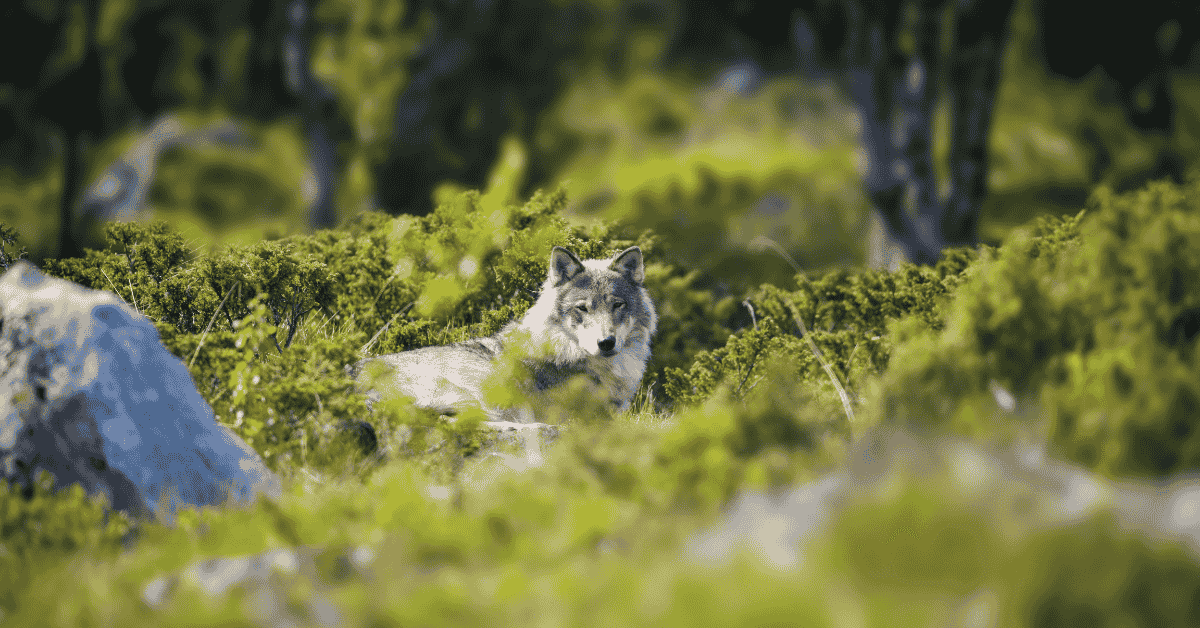
A wolf attack on seven hobby sheep in Struer this week has reignited tensions over who bears the real cost of Denmark’s strict EU wildlife protection rules, with compensation schemes and complex fencing subsidies leaving many small keepers — including internationals — trapped between bureaucracy and mounting losses.
Two brothers in Struer lost their entire flock of seven sheep to a suspected wolf attack overnight this week. The animals had been their hobby for twenty years. A wildlife consultant confirmed that the attack was highly likely the work of a wolf, and samples were taken for DNA analysis. The brothers now face paperwork, modest compensation and a choice: install expensive wolf-proof fencing or quit.
This is not an isolated case. It is part of a pattern accelerating across western Jutland.
The Numbers Behind the Headlines
In 2025, Naturstyrelsen registered 72 officially confirmed wolf attacks on livestock in Jutland. That works out to roughly one compensated animal loss every five days. Five years earlier, in 2020, the figure was 39 cases. The increase is 85 percent.
Yet fewer than half of eligible small hobby keepers in the same regions had applied for state subsidised wolf-safe fencing by the end of 2025. The disconnect is striking. Wolves are multiplying faster than fence applications.

The most recent published national monitoring report, from 2023, listed 23 to 25 individual wolves present in Denmark. Almost all were in Jutland. That compares with just five to eight individuals in 2018. No official 2024 or 2025 population figure has been released yet, but attacks continue to climb.
EU Law Meets Danish Backyards
Denmark strictly protects wolves under the EU habitat directive. Shooting one without explicit prior authorisation can lead to prosecution and prison time, even if you are defending your own animals. The directive requires member states to prevent deliberate killing and to protect breeding and resting areas.
For owners, the practical result is a choice between expensive prevention and after-the-fact compensation. Neither option is straightforward. SGAV’s 2025 guidance requires wolf-safe fencing to be at least 120 centimetres high, with gaps no larger than 20 centimetres and at least one electrified wire at 20 to 30 centimetres height. The state subsidises up to 25 kroner per running metre. For a typical small hobby enclosure of 500 metres, the total cost is around 12,500 kroner before subsidy. That is roughly 1,800 kroner per animal for a seven-sheep flock.
Compensation rules updated in 2024 include a self-risk deductible of 2,000 to 3,000 kroner per incident for non-commercial owners. A hobby keeper losing five sheep in one attack might receive 4,500 to 8,000 kroner, not full market value. Using average slaughterhouse prices from 2024, five adult sheep are worth 7,500 to 10,000 kroner before the deductible. For households treating livestock as a side interest, the shortfall adds up.
The Expat Angle
Foreign-born residents now account for 11 to 13 percent of the population in several Jutland municipalities with known wolf territories, including Holstebro, Herning and Ikast-Brande. A decade ago, in 2015, the figure was seven to eight percent. That growing pool of internationals is increasingly exposed to rural wildlife management issues they never anticipated.
Neither Naturstyrelsen nor DCE publishes attack or subsidy statistics broken down by owner nationality. There is no official data on how many non-Danish residents are affected. But anecdotal reports from municipal newcomer services and expat support organisations suggest that internationals face particular challenges navigating the system. Application forms and technical guidance remain primarily in Danish. Deadlines are tight. Missing documentation can delay or reduce compensation.

For expats who moved to Jutland for a quiet rural life, wildlife policy is now felt very directly. Many never imagined they would be on the front line of EU conservation law.
Bureaucracy and Frustration
In practice, owners who suspect a wolf attack must contact the local wildlife consultant or Naturstyrelsen office immediately, ideally within 24 hours. Samples and photographs must be taken before carcasses deteriorate. Moving bodies or cleaning the area before official documentation can destroy trace evidence needed to confirm a wolf.
Once the case is assessed, owners submit a compensation application detailing the number, age and value of lost animals. Vet reports or slaughterhouse price documentation must be attached. For internationals, using a local adviser or municipal newcomer service can reduce the risk of mistakes. The forms are dense and unforgiving.

Defensive shooting of a wolf is not automatically legal, even during an attack. Calling police or Naturstyrelsen and documenting the incident is safer than acting first and risking prosecution. SGAV’s behavioural guidance advises people living near known wolf territories to keep dogs on leash, avoid feeding wild animals and report unusually bold wolf behaviour.
What Happens Next
The Struer brothers are waiting for DNA results. If confirmed as a wolf attack, they will likely receive some compensation. But the emotional loss of twenty years of work cannot be measured in kroner. They are also considering whether to rebuild their flock or walk away.
Sheep farmers’ associations and some rural municipalities argue that compensation is too slow, too low and too bureaucratic. They say that technical fencing standards are unrealistic for small flocks and weekend farmers. Critics also contend that emotional attachment to animals is not acknowledged in current schemes, which treat animals as fungible units.

Conservation groups and the Ministry of the Environment counter that the wolf’s return is a major biodiversity success. They point out that attacks on humans are extremely rare and that robust fencing combined with compensation can practically eliminate economic risk. EU officials emphasise that Denmark, like Germany and Poland, has a legal duty to maintain favourable conservation status for wolves.
EU-level discussions on revising the wolf’s conservation status, including a 2023 European Commission call for updated data, could eventually give Denmark more room to balance protection with rural concerns. But no concrete legal change has been implemented in Danish law as of 2026. For now, the Struer brothers and others like them are left navigating a system designed for commercial operations, not twenty-year hobbies.