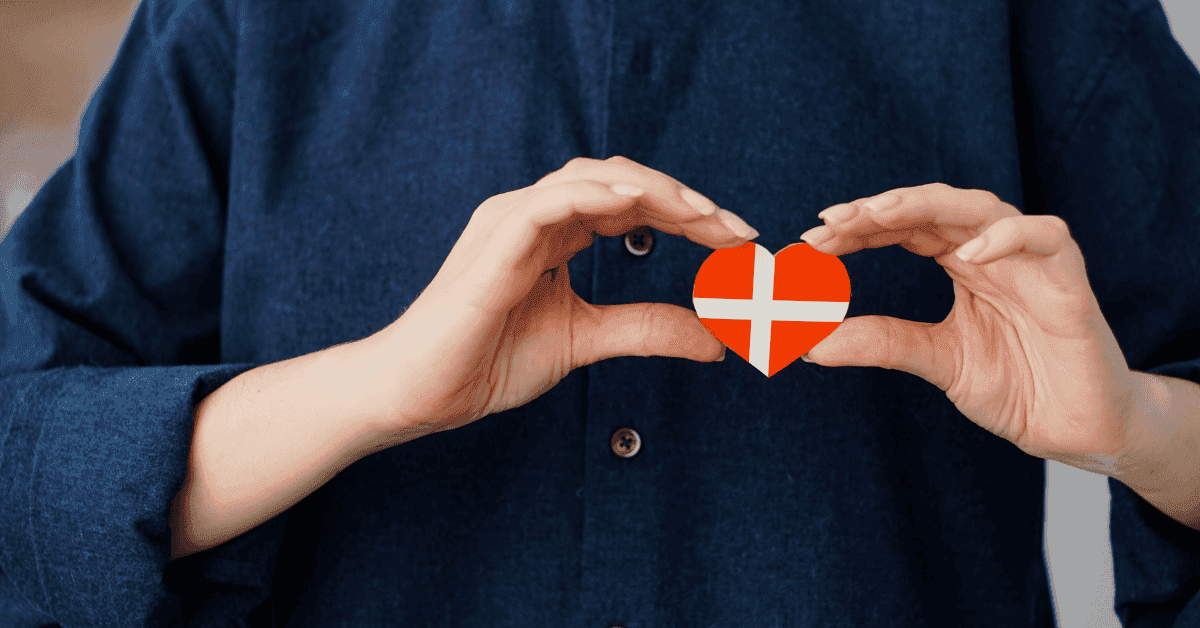
Who speaks Danish? Around six million people, almost all of them in Denmark, plus pockets in Greenland, the Faroe Islands, northern Germany, and emigrant communities abroad. Here is the full picture, with the history, the dialects, and what it means if you live here.
I have lived in Denmark for years. The question I hear most from newcomers is simple. Who actually speaks this language, and do I need it? Let me answer both, properly.
Danish is a North Germanic language, a cousin of Swedish and Norwegian. It sits in the same family as English and German. That family link is why some words feel oddly familiar to expats.
Who Speaks Danish? The Short Answer
Danish is the national language of Denmark. It is spoken by roughly 5.5 to 6 million people worldwide. The vast majority live in Denmark itself.
- Denmark: around 5.5 million native speakers.
- Greenland: taught and used widely, alongside Greenlandic.
- Faroe Islands: a compulsory second language for roughly 50,000 people.
- Southern Schleswig, Germany: a recognized minority language.
- Abroad: emigrant communities, notably in the United States, Canada, and Argentina.
As reported by Ethnologue, Danish counts close to six million speakers in total. The number barely moves because the language is tied so tightly to one small nation. That makes Danish compact, but far from irrelevant.
Where Is Danish Spoken Around the World?
When people ask who speaks Danish, they usually picture Copenhagen. Fair enough. But the language stretches across the whole Kingdom of Denmark and beyond.
Denmark and the Danish Realm
Denmark is the heartland, and Danish is its de facto official language. It runs everything here, from the Folketing to the local bakery queue. If you want to know what country speaks Danish, this is the obvious answer.
Greenland and the Faroe Islands are self governing parts of the realm. Both teach Danish in schools, though each has its own language too. In Greenland, the debate runs hot, and lawmakers have even proposed removing Danish from the education system.
Germany, the United States, and Beyond
In Southern Schleswig, just south of the border, Danish holds protected minority status. Around 50,000 people there identify with the Danish community. They run their own schools and newspapers, a quiet legacy of shifting borders.
Further afield, Danish survives in emigrant families. Waves of Danes settled in the American Midwest in the 1800s. Their descendants kept words, hymns, and surnames, even as fluency faded. You can read more about where Danish people come from and how they spread.
A Short History of the Danish Language
Danish did not appear fully formed. It grew over a thousand years, shaped by Vikings, monks, and printing presses.
Origins and Old Danish (800 to 1100 AD)
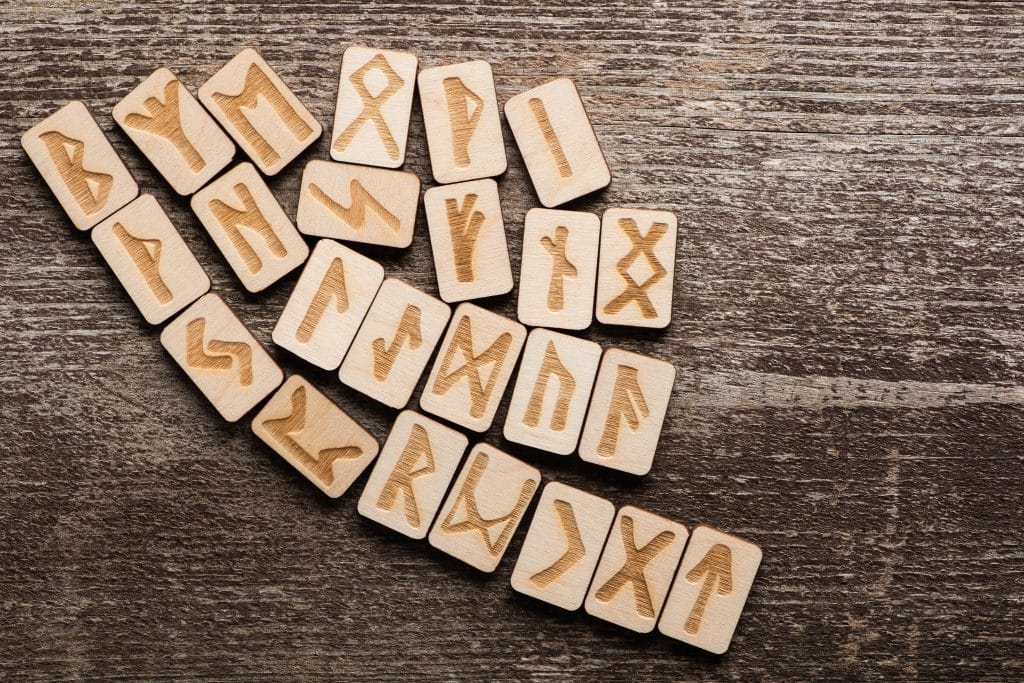
Danish evolved from Old East Norse, the tongue of the Viking Age. Early Danish was carved in runes using the 16 character Younger Futhark. These inscriptions appear across Jutland and southern Sweden.
Middle Danish (1100 to 1525 AD)
As Denmark grew, the language followed. Middle Danish marked the move from runes to the Latin alphabet. Legal texts like the Jutlandic and Scanian Laws were written in plain, vernacular Danish.
This period soaked up heavy influence from Low German. Trade with the Hanseatic League delivered countless loanwords. Many of them sit in everyday Danish today, unnoticed by native speakers.
Modern Danish (1700 to Present)
By the 18th century, Copenhagen speech became the prestige form, known as rigsdansk. National schooling and broadcasting spread it everywhere. According to Britannica, this standardization steadily flattened regional variation.
The result is the Danish you hear on the news and in the classroom. Regional accents survive, but the standard dominates. If you are curious whether Danish counts as a full language, history settles it.
The Danish Dialects, and Why They Are Fading
Like any old language, Danish splintered into dialects. Geography did the dividing. Standardization is now undoing it.
Jutlandic and Insular Danish
Jutlandic, or jysk, dominates the Jutland peninsula. Southern Jutlandic, called sønderjysk, reaches into northern Germany. Even Danes from Copenhagen sometimes struggle to follow it, which has produced some genuinely funny Danish dialect moments on national television.
Insular Danish, or ømål, covers the islands. It includes Zealandic, Funen, and the Lolland Falster dialect. These are the speech patterns of Hans Christian Andersen country.
East Danish and Bornholm
East Danish was once spoken in Scania, Halland, and Blekinge, now part of Sweden. Centuries of Swedish rule reshaped it. The clearest survivor is Bornholmsk, still heard on the island of Bornholm.
The honest truth is that traditional dialects are dying out. Most fluent speakers are elderly. National media and mobility have done what no decree could, smoothing Danish into one broad standard.
How Hard Is Danish to Learn?
Here is where I get personal. Danish reads easier than it sounds. The grammar is gentle, the pronunciation is brutal.
The Grammar Is Friendlier Than You Think
Verbs do not change with the subject. Jeg læser, hun læser, vi læser. You learn one form and reuse it everywhere.
Nouns split into two genders, common and neuter, marked by en and et. Roughly 75 percent are common gender, so en is your safe bet. The word order follows subject, verb, object, much like English. For a fuller breakdown, see this guide to Danish grammar and pronunciation.
The Pronunciation Will Humble You
Spoken Danish is notorious. Words swallow their endings, and the written form rarely matches the sound. The culprit is often the stød, a soft glottal stop that can flip a word’s meaning.
The alphabet adds three letters that trip up beginners: æ, ø, and å. In 1948 the old aa was replaced by å, though place names like Aalborg kept the original. Learners can start with the Danish alphabet and basic Danish numbers before tackling speech. Be patient, because even Danes admit their spelling feels like a puzzle.

Who Regulates Danish Today?
Denmark takes its language seriously. One small council keeps the rules tidy.
The Danish Language Council, or Dansk Sprognævn, sets the official spelling. It publishes the authoritative dictionary and tracks new words each year. Its decisions even reach the Danish minority in Southern Schleswig, keeping written Danish consistent across borders.
Should Expats Bother Learning Danish?
My answer is yes, with a caveat. You can survive in English, but you will not belong without Danish.
The Case For Learning
Almost everyone here speaks excellent English, which I cover in detail on what percent of Denmark speaks English. So you can technically live in Denmark without speaking Danish. The catch is social, not practical.
Danish opens the door to friendships, jokes, and job security. It helps you read a lease, follow a parents’ group chat, and understand Danish work culture. Once you grasp Danish, Swedish and Norwegian become surprisingly readable too.
How to Actually Start
The state offers heavily subsidized lessons to most residents. Programs in the capital make it easy to learn Danish in Copenhagen, and apps fill the gaps between classes. Concern is growing, though, after reports of lower interest in Danish language studies.
My advice is to start small and speak early. Learn how to greet people, master how to say thank you, and collect a few useful Danish phrases. Tips from long term residents on learning Danish as an expat help more than any textbook.
Frequently Asked Questions About Who Speaks Danish
Who mainly speaks Danish and where else is it used?
Danes in Denmark are the main speakers, about 5.5 million people. Danish is also used in Greenland and the Faroe Islands, both part of the realm. Smaller communities exist in Southern Schleswig in Germany and among emigrant families abroad.
How many people speak Danish worldwide?
Roughly 5.5 to 6 million people speak Danish globally. Nearly all of them live in Denmark, with smaller numbers across Greenland, the Faroe Islands, and northern Germany. That makes Danish a compact language tied closely to a single nation.
Is Danish the official language in Greenland and the Faroe Islands?
Not anymore as the primary one. Greenlandic and Faroese are the main languages in their territories. Danish is widely taught as a second language and used in administration, though its role in Greenland is now politically contested.
Why is Danish so hard to pronounce?
Danish swallows word endings and uses the stød, a subtle glottal stop. Written Danish often looks disconnected from how it sounds. Even native speakers find spelling tricky, which makes pronunciation the hardest part for most learners.
Can Danish, Swedish, and Norwegian speakers understand each other?
Mostly yes, especially in writing. The three North Germanic languages share grammar and vocabulary, giving strong mutual intelligibility. Norwegians and Danes read each other easily, while spoken Danish can challenge Swedish ears because of its softer sounds.