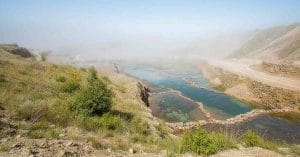
Greenland sits on the North American continent geographically, yet it stays politically tied to Europe through the Kingdom of Denmark. That split personality is exactly what makes the island so fascinating.
If you have lived in Denmark as long as I have, you learn fast that asking what continent is Greenland in opens a much bigger conversation. The geography points one way. The politics, the passport, and the krone point another. So the honest answer is North America by land, and Europe by flag.
This guide untangles the whole thing. I will give you the facts, the science, and the messy human story underneath. As an expat, I find Greenland one of the most misunderstood places in the Danish realm.

What Continent Is Greenland In? The Short Answer
Greenland is part of the North American continent. The island rests on the North American tectonic plate. It lies far closer to Canada than to Denmark, with just the Nares Strait separating it from Canadian islands. Politically, however, it belongs to the Kingdom of Denmark, which keeps Greenland linked to Europe.
That single paragraph answers the search. The rest of this article explains why the answer feels more complicated than it should. According to Encyclopaedia Britannica, Greenland is geographically North American while remaining Danish territory.
Why Greenland Belongs to North America Geographically
Land does not lie. By every physical measure, Greenland is a North American island.
Tectonic Plates and Proximity to Canada
Greenland sits almost entirely on the North American plate. The same geological foundation runs under Canada and the northern United States. At its narrowest, the island lies only about 26 kilometres from Canada’s Ellesmere Island.
Mainland Denmark, by contrast, sits roughly 3,000 kilometres away across the Atlantic. So when people ask where Greenland actually is, the map is blunt. This is the Arctic edge of North America, not a European outpost.
Flora, Fauna, and Arctic Geography
The wildlife tells the same story. Polar bears, Arctic foxes, muskoxen, and caribou roam shared Arctic terrain. These species also live across northern Canada and Alaska.
The plant life mirrors the Canadian tundra too. From a natural history view, Greenland is unmistakably North American. You can read more in our guide to whether Greenland is part of North America.
Why People Think Greenland Is in Europe
Here is where my years in Denmark come in handy. The European label is not random. It comes from centuries of Danish rule.
The Danish Colonial Connection
Norse settlers arrived around the year 985, led by Erik the Red. Norway controlled the island for centuries. With the Treaty of Kiel in 1814, control passed firmly to Denmark.
That colonial history still shapes daily life. Greenland gained home rule in 1979 and broader self rule in 2009. Yet Copenhagen still handles foreign affairs and defence, as our explainer on why Greenland was granted autonomy sets out.
Language, Law, and Daily Life
The official language is Greenlandic, an Inuit language. But Danish is taught widely and used in government and business. Around 88 percent of residents identify as Greenlandic Inuit.
Danish institutions still frame the courts, schools, and healthcare system. That European influence is real, and it runs deep. For the full picture, see what language is spoken in Greenland.
Is Greenland a Continent of Its Own?
No, Greenland is not a continent. It is the world’s largest island, at about 2.16 million square kilometres. A continent requires its own tectonic plate and distinct landmass, which Greenland lacks.
Australia, often compared to it, is more than three times larger and qualifies as a continent. Greenland simply does not meet the threshold. We break this down further in our piece on whether Greenland is a continent.

Greenland’s Inuit Identity and the North American Link
The cultural heart of Greenland is Inuit, not Danish. That heritage stretches across the Arctic, binding Greenland to Canada and Alaska.
Greenlandic Inuit share ancestry, language roots, and traditions with Inuit communities in Nunavut and northern Alaska. Kayaks, dog sledding, and seal hunting are not folklore here. They remain living practice in many settlements.
This indigenous link reinforces the North American case. The roughly 56,000 people who live here feel closer to fellow Arctic peoples than to Jutland. For context, see how many people live in Greenland and the story of its capital, Nuuk.
The Ice Sheet: Why Greenland Matters to the Whole Planet
Greenland is more than a geography quiz. Its ice sheet is a global climate engine.
The ice sheet covers roughly 1.7 million square kilometres, about 80 percent of the island. It holds enough frozen water to raise global sea levels by around 7.4 metres if it all melted. As reported by the National Snow and Ice Data Center, it is the second largest ice mass on Earth.
The melt is accelerating. Between 1992 and 2018, the ice sheet lost about 3.8 trillion tonnes. Annual losses jumped from 33 billion tonnes in 1992 to 254 billion tonnes by 2018.
The Arctic is warming up to four times faster than the global average. That phenomenon, called Arctic amplification, makes Greenland a frontline lab for climate science. The island has even seen its winter melt away in shocking heat, and the ice sheet still claims unprepared adventurers.
Greenland’s Geopolitical Moment: Trump, the US, and the Arctic
The continent question turned political fast in recent years. Greenland’s location made it a prize for great powers.
The United States has held a military presence here since World War Two, at what is now the Pituffik Space Base. Melting ice opens new shipping lanes and exposes rare earth minerals beneath the cap. That mix of strategy and resources keeps Washington, Moscow, and Beijing watching closely.
Donald Trump revived talk of buying the island, sparking real anger in Copenhagen and Nuuk. Danish leaders responded bluntly that Greenland is not for sale. I have watched this saga unfold from Denmark, and the frustration here is genuine, not performative. Our coverage of why Trump wants Greenland tracks the whole story.
In March 2025, the centre right Demokraatit party won Greenland’s election, with independence high on the agenda. Greenlanders increasingly want to shape their own future. That ambition complicates any neat continental label.
What the Greenland Question Means for Expats in Denmark
For expats, this is not just trivia. Greenland is part of the Danish realm, so it touches Danish politics directly.
When you follow Danish news, Greenland appears constantly, from defence budgets to colonial reckonings. Denmark has issued apologies over historical abuses, including a forced contraception scandal. Understanding Greenland helps you understand the country you now call home, and our guide to whether Greenland is part of Denmark is a useful start.
There is also the practical side. Greenland left the European bloc in 1985 over fishing disputes, so it sits outside the EU despite the Danish tie. If you ever plan to visit, our list of things to do in Greenland and our notes on how cold Greenland really is will save you some surprises.
Quick Facts About Greenland
- Continent: North America, geographically and geologically.
- Political status: Autonomous territory of the Kingdom of Denmark.
- Size: About 2.16 million square kilometres, the largest island on Earth.
- Population: Roughly 56,000 people, mostly Greenlandic Inuit.
- Capital: Nuuk, on the southwest coast.
- Languages: Greenlandic (official) and Danish, with English growing fast.
- Ice sheet: The second largest on the planet, covering about 80 percent of the land.
- EU status: Outside the EU since 1985, unlike Denmark itself.
Frequently Asked Questions
What continent is Greenland in?
Greenland is in North America. It sits on the North American tectonic plate and lies far closer to Canada than to Europe. Politically, though, it belongs to the Kingdom of Denmark, which keeps it culturally and administratively tied to Europe.
Is Greenland in North America or Europe?
Both, in a sense. Greenland is geographically North American but politically European through Denmark. The land belongs to North America, while the flag, currency, and government link it to Europe. That dual identity is why the question confuses so many people.
Is Greenland its own continent?
No. Greenland is the world’s largest island, not a continent. It lacks its own tectonic plate and is too small to qualify. Australia, the smallest continent, is more than three times larger than Greenland.
Why is Greenland part of Denmark and not North America politically?
History explains it. Norse settlers arrived around 985, and control passed to Denmark by the Treaty of Kiel in 1814. Greenland gained home rule in 1979 and expanded self rule in 2009, but it remains within the Kingdom of Denmark.
How far is Greenland from Canada?
Very close. At the narrowest point, only about 26 kilometres of the Nares Strait separate Greenland from Canada’s Ellesmere Island. By comparison, mainland Denmark lies roughly 3,000 kilometres away across the Atlantic Ocean.
Does Greenland have its own government?
Yes. Greenland runs its own parliament and government, called the Naalakkersuisut, which handles most domestic affairs. Denmark still controls foreign policy and defence. Many Greenlanders now push for full independence in the coming years.
How does Greenland’s ice sheet affect sea levels?
Greenland’s ice sheet holds enough water to raise global sea levels by about 7.4 metres if fully melted. It is already losing hundreds of billions of tonnes each year. That melt contributes directly to measurable global sea level rise.
Is Greenland in the European Union?
No. Greenland left the European bloc in 1985 after a dispute over fishing rights. Even though Denmark is an EU member, Greenland remains outside it. This makes its relationship with Europe political rather than economic.
The Bottom Line
So, what continent is Greenland in? Geographically and geologically, it is North America, full stop. The European tie is political and cultural, born of Danish history rather than physical fact.
That tension defines Greenland today, from melting ice to Arctic power struggles to a growing push for independence. After years in Denmark, I see Greenland as a place caught between two worlds and slowly claiming its own. If you want to go deeper, explore who owns Greenland and who discovered it next.