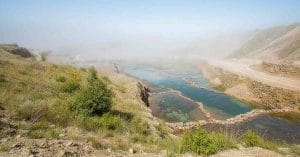
Denmark now counts ten UNESCO World Heritage Sites after the Mors and Fur moler cliffs joined the list, putting millions of Danes within easy reach of globally significant natural and cultural landmarks.
The latest addition brings Denmark’s UNESCO portfolio to double digits. The moler cliffs on Mors and Fur, known for their fossil-rich clay deposits from the Paleocene and Eocene epochs, earned their spot through decades of research and conservation work. UNESCO’s World Heritage Committee approved the designation based on the site’s geological significance and the quality of its protection and public outreach.
For many Danes, world heritage is no longer a distant concept reserved for exotic travel. It sits on their doorstep. Stevns Klint stretches 17 kilometers along the southeast coast of Zealand. The Wadden Sea spans the western shoreline. Roskilde Cathedral and Kronborg Castle anchor historic urban centers. Møns Klint, Denmark’s most recent UNESCO site before the moler cliffs, celebrated its first full year on the list in early 2026.

The Geography of Heritage
Living near a UNESCO site shapes everyday life in ways that outsiders often miss. For residents of Helsingør, Kronborg is not just Hamlet’s castle. It is a commute landmark and a weekend backdrop. For families on Mors and Fur, the moler cliffs are childhood memories, not tourist attractions. UNESCO status formalizes what locals already know: these places matter.
Tourism and Conservation Collide
The designation brings benefits and burdens. Tourism increases. Infrastructure improves. But so does pressure on fragile ecosystems and historic structures. Stevns Klint and Møns Klint both face erosion from foot traffic and weather. The Fur Museum and similar institutions work to balance access with preservation, but the line is thin.
I have watched this tension play out at other Danish heritage sites. More visitors mean more revenue for local businesses, but also more wear on the sites themselves. The Wadden Sea manages this through strict zoning and seasonal restrictions. Kronborg relies on ticketing and guided tours to control flow. The moler cliffs will need similar strategies as international attention grows.

What UNESCO Status Really Means
UNESCO recognition is not just a tourism stamp. It requires ongoing research, transparent management, and public education. Sites must demonstrate global significance, not just national pride. The Nykøbing Mors Museum and the Morsland Historical Museum have spent years building the case for the moler cliffs through exhibitions and fieldwork. That groundwork made the designation possible.
For expats, Denmark’s UNESCO sites offer a crash course in the country’s natural and cultural history. Stevns Klint tells the story of the asteroid impact that killed the dinosaurs. Roskilde Cathedral traces 800 years of Danish monarchy. The Wadden Sea is a living laboratory for coastal ecology. These are not abstract lessons. They are places you can visit on a Saturday afternoon.

Living Near World Heritage
Proximity to a UNESCO site can shape identity and property values. Towns near Stevns Klint and Møns Klint have seen modest increases in tourism-related jobs and real estate interest. But the effect is uneven. Rural areas benefit less than towns with good transport links. And not all locals welcome the attention. Some worry that UNESCO status will bring overdevelopment or restrict land use.
The Expat Perspective
For those of us who moved here from elsewhere, Denmark’s UNESCO sites are both familiar and foreign. Castles and cathedrals fit the European heritage script. But the moler cliffs and Wadden Sea are distinctly Danish: understated, scientifically rigorous, and deeply tied to landscape rather than spectacle. That reflects a broader Danish approach to heritage. Preservation matters, but so does accessibility. You do not need a ticket to walk along Stevns Klint or explore the Wadden Sea tidal flats.

The new map showing how close Danes live to UNESCO sites will likely surprise many. Heritage is not confined to remote corners or capital monuments. It is woven into the national fabric, often within a short drive or train ride. That proximity is both a privilege and a responsibility. Denmark has committed to protecting these sites for future generations. Whether it can balance that promise with tourism growth and local needs remains to be seen.
Sources and References
The Danish Dream: Fur Museum: Discover Denmark’s Astonishing Gateway to Ancient Ecosystems and FossilsThe Danish Dream: Nykøbing Mors Museum: Discover the Hidden Treasures of Danish Heritage and HistoryThe Danish Dream: The Morsland Historical Museum: Journey Through Denmark’s Rich Past with Interactive ExperiencesDR: Danmarkskort: Se, hvor tæt du bor på unik verdensarv