Nearly one in four Ukrainian students in Danish schools reports struggling with wellbeing, far exceeding the rate among other pupils, according to a new survey from children’s advocacy organization Børns Vilkår. The findings point to challenges in language learning and social integration as key factors behind the disparity.
Wellbeing Gap Among Ukrainian Students
Survey Reveals Significant Differences
Ukrainian students in grades four through nine face notably higher rates of poor wellbeing compared to their Danish peers. The Børns Vilkår survey found that nearly one in four Ukrainian students reports struggling, while only one in seven other students in the same grades experiences similar difficulties. The organization collected responses directly from Ukrainian children and young people now attending Danish schools.
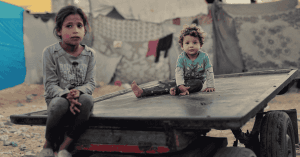
The findings paint a picture of a group that faces particular challenges adapting to life in Denmark. These children fled war in their homeland and now navigate unfamiliar surroundings without the language skills or social networks that typically ease such transitions. Many arrived with limited knowledge of Danish society and culture.
Language Barriers and Social Isolation
Language emerges as a critical obstacle to integration and wellbeing. Without fluency in Danish, Ukrainian students struggle to connect with classmates and participate fully in school life. This communication gap creates barriers to forming friendships and engaging in everyday school activities.
Social isolation follows naturally from these language difficulties. Ukrainian students often find themselves alone during breaks and unable to join conversations or games. The inability to communicate leaves them on the sidelines even when other students show initial interest in including them.
One Student’s Journey
Early Struggles in a New School
Sofia Karpenko experienced these challenges firsthand when she arrived at Hanebjerg Skole in Hillerød. The 13 year old fled Kharkiv in spring 2022 with her mother and older sister when Russia invaded Ukraine. Her father and brother remained behind in Ukraine.
She recalls feeling deeply lonely during her first months at the Danish school. Nearly every break period brought the same sense of isolation. Other children showed willingness to play with her, but interactions quickly stalled when they realized she understood little Danish.
The language barrier wore on her emotionally. She reached a point where she considered giving up entirely. School felt overwhelming and she lost motivation to attend classes or engage with lessons.
Path to Integration
Sofia’s situation gradually improved as her Danish language skills developed. Today she reports feeling happy with her life in Denmark and enjoys attending school. She has formed friendships with Danish classmates and participates more fully in school activities.
Her principal, Frank Schultz Mortensen, remembers her frequent distress during the early period. He credits her success to her willingness to keep trying despite difficulties. Her outgoing personality and determination to practice the language helped her break through initial barriers.
Sofia’s experience illustrates both the depth of challenges Ukrainian students face and the importance of language mastery for successful integration. Her principal describes her as having done remarkably well given the circumstances.
Institutional Response and Resources
Criticism of School Preparedness
Rasmus Kjeldahl, director of Børns Vilkår, argues that schools lack sufficient capacity to properly support Ukrainian students. He identifies inadequate Danish language instruction as a primary problem. Schools also show limited understanding of how to work with children carrying trauma from war and displacement.
The organization believes schools need better training in teaching Danish as a second language. Staff also require more knowledge about trauma informed approaches to education. Current efforts fall short of what these students need to integrate successfully and recover from their experiences.
Kjeldahl emphasizes that the problem extends beyond individual shortcomings. The system itself has not adapted adequately to receive and support this population. Schools need more resources and specialized expertise to meet these students’ distinct needs.
School Leader Perspective
Frank Schultz Mortensen acknowledges that expanded Danish language instruction would benefit Ukrainian students. He calls for increased funding for schools and new investments from the national government. The resources should support hiring more qualified staff and providing professional development in second language teaching.
He stresses that supporting Ukrainian students should be a shared responsibility across the school. All teachers, not just Danish language instructors, need training and skills to work effectively with students learning Danish. The challenge requires coordinated effort from the entire educational team.
The principal also notes that current economic constraints limit what schools can provide. Additional funding would enable schools to offer more intensive language support and smaller class sizes for students still developing Danish proficiency.
Debate Over Findings and Response
Teacher Efforts and Commitment
Kristian Dissing Olesen, deputy chairman of the School Leaders Association, pushes back against what he characterizes as unfair criticism. He insists that teachers throughout Denmark work hard to support Ukrainian children. Staff members share the broader Danish public’s commitment to helping refugees from the war.
Dissing Olesen questions whether the survey findings warrant the level of concern Børns Vilkår expresses. He points out that three out of four Ukrainian students in the survey actually report positive wellbeing. From his perspective, this majority success rate deserves recognition alongside the challenges some students face.
He suggests taking the conclusions with some skepticism. The framing matters as much as the raw numbers when interpreting what the data reveals about Ukrainian students’ experiences.
Competency and Training Gaps
Despite his defense of teachers’ efforts, Dissing Olesen does acknowledge some validity to concerns about specialized competencies. He concedes that schools may need additional training and expertise to fully meet Ukrainian students’ needs. The criticism contains some truth even if it does not tell the complete story.
The debate reflects broader tensions around immigration policy and resource allocation in Denmark. Schools face pressure to integrate refugee students while operating under tight budget constraints. Teachers work to support diverse student populations without always having specialized training for complex situations.
Both sides agree that language instruction represents a key area for improvement. The disagreement centers on whether current efforts deserve more credit and whether the framing of challenges accurately reflects the full picture of Ukrainian students’ experiences.
Broader Immigration Context
Declining Asylum Numbers
The focus on Ukrainian refugee students comes against a backdrop of historically low asylum applications in Denmark. January 2026 saw just 160 asylum applications, the lowest January figure since 2022. The full year 2025 recorded only 1,961 total asylum applications, making it the third lowest annual total since Denmark began current record keeping in 1998.
These numbers reflect Denmark’s increasingly strict immigration policies. Immigration Minister Rasmus Stoklund has characterized the low figures as evidence that restrictive policies achieve their intended effect. The political environment emphasizes limiting immigration and refugee admissions.
Ukrainian Population and Future Departures
Denmark has provided temporary protection to over 64,000 Ukrainians since 2022, including 22,516 children and young people under age 19. This represents a substantial population that has entered the school system and community life across the country. Current legislation requires Ukrainian refugees to return home when conditions allow.
Population projections anticipate that most Ukrainian refugees will depart Denmark by the end of March 2026 under existing law. This expected mass departure could significantly affect communities where Ukrainian families have settled. Schools that invested in supporting Ukrainian students will see those populations leave relatively suddenly.
The timeline creates uncertainty for both Ukrainian families and the institutions serving them. Students like Sofia Karpenko face potential uprooting just as they achieve integration and comfort in their new environment. Schools and teachers who developed relationships with Ukrainian students will experience the loss of those connections.
Sources and References
DR: De flygter fra krig og rammes af mistrivsel i den danske hverdag