“Is Danish Dutch?” It’s a common question, often sparked by the similar-sounding names. But let’s be clear: Danish and Dutch are distinct languages with unique origins, grammar, and speakers. In this article, we’ll explore the difference between the Dutch and the Danish. Let’s go.
- Are Dutch and Danish the Same Language?: No, Danish and Dutch are distinct languages belonging to different branches of the Germanic family, with unique origins, grammar, and pronunciation.
- Main Differences Between Danish and Dutch: Danish is a North Germanic language closely related to Scandinavian languages, while Dutch is a West Germanic language similar to German and English, with notable differences in pronunciation and vocabulary.
- Cultural Contrasts: Dutch culture values directness and is very bicycle-oriented, whereas Danish culture emphasizes understated modesty, hygge (coziness), and sustainable energy practices.
- Geographical and Linguistic Distribution: Danish is spoken mainly in Denmark and some Scandinavian territories, while Dutch is the official language of the Netherlands and parts of Belgium, among other countries.
- Mutual Intelligibility and Names: Danish and Dutch are not mutually intelligible, and people from the Netherlands are called Dutch, not Danish, reflecting their distinct linguistic and national identities.
Are Dutch and Danish the Same Language?
No, Danish and Dutch are not the same language. Danish is the language of Denmark, while Dutch is the language of the Netherlands. Both are part of the Germanic language family, but they sit on different branches.
Danish is a North Germanic language, closely linked to Norwegian and Swedish, while Dutch is a West Germanic language, much closer to German and English. The differences between these two languages are so pronounced that they’re not mutually intelligible, even in written form.
For starters, the Danish language uses the Dano-Norwegian alphabet, which includes unique characters like ‘æ,’ ‘ø,’ and ‘å,’, while Dutch uses the Latin alphabet. Their pronunciation styles couldn’t be more different.
Danish is often described as soft and almost melodic, while Dutch vocabulary has a harder, more guttural sound that’s closer to German. The sentence structures in these languages also diverge, with Dutch using grammatical forms that feel more structured, and Danish leaning toward simpler constructs.
Is There Any Cultural Difference Between the Dutch and the Danes?
Yes, the Dutch and the Danes are different, culturally and otherwise, and the contrast is hard to miss once you dig in. Both countries are progressive but their values show up in very different ways.
Straight-talkers vs. Understated Modesty
Dutch people? They’ll tell it to your face: good, bad, or awkward. It’s not rude. It’s just how things are in the Netherlands. The Danes, though? They’re quieter about it. Danish communication leans on subtlety, humility, and finding common ground. You won’t see a Dane jumping into a heated debate unless it’s absolutely necessary.
Cycling, But Not the Same Ride
The Dutch are fast and fearless on their bikes. Danes, on the other hand, keep things tidy on the road. In Copenhagen, you’ll see cyclists actually stopping for traffic signals, making the whole system look more organized and, frankly, less chaotic.
Hygge vs. Gezelligheid

Both cultures love coziness, but they define it differently. Danish hygge is about personal contentment, whether you’re enjoying a quiet night with friends or just feeling at ease on your own. The Dutch take gezelligheid in a more social direction. It’s about being together, sharing stories, and enjoying each other’s company. Same warm vibes, but different angles.
Wind Power, But Who’s Winning?
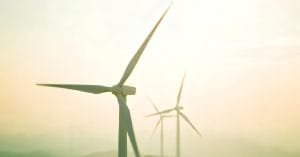
Yes, the Dutch have windmills, but Denmark’s taking the lead with wind turbines and renewable energy. Denmark’s green game is strong, with much of its energy coming from wind. The Netherlands? Not so much, even though the iconic windmills might make you think otherwise.
These differences might not seem huge on the surface, but they shape everything, from how the Dutch and Danes speak to how they live their everyday lives. They’re two cultures with unique rhythms, and that’s what makes them fascinating.
Danish vs Dutch: Main Differences Between the Two Languages
Danish and Dutch are two distinct languages with clear differences in their origins, pronunciation, grammar, and vocabulary. While they share Germanic roots, their unique evolution highlights how language and culture diverge over time.
Origins and Classification
Danish and Dutch belong to the Germanic branch of the Indo-European language family but differ in their specific sub-branches. Danish, a North Germanic language, is closely tied to Scandinavian languages like Norwegian and Swedish, emphasizing its roots in Denmark and the broader Scandinavian region.
Dutch, on the other hand, is a West Germanic language, closely linked to German and English, reflecting its origins in the Netherlands. Understanding this difference between the Dutch and the Danes helps clarify why these two languages are distinct.
Pronunciation and Phonetics
The way Danish and Dutch are spoken distinguishes them from each other. Danish is considered soft and melodic, with unique vowel sounds and the “stød,” a glottal stop that plays a critical role in word meaning. In contrast, Dutch pronunciation is harsher, marked by guttural sounds like “g” and “ch,” which Dutch speakers often liken to German. These differences highlight key distinctions in the phonetics of the two languages.
Alphabet and Orthography
Both Danish and Dutch use the Latin alphabet, but their specific implementations differ. Danish incorporates three extra characters: æ, ø, and å, which are integral to its vocabulary. Dutch, while lacking additional letters, uses combinations like “ij” and “ei,” which can be challenging for learners. This is one of the main differences in how the Danish and Dutch languages are written.
Grammar and Syntax
Danish and Dutch grammar vary significantly. Danish uses two noun genders (common and neuter) and attaches definite articles as suffixes. Dutch also has two genders but places definite articles before the noun. Sentence structure and verb conjugations differ as well. If you want to understand the difference between Danish and Dutch, you must take note of these grammatical contrasts.
Vocabulary and Mutual Intelligibility
Despite their shared Germanic roots, the vocabularies of Danish and Dutch have evolved differently. Danish has absorbed influences from Low German and French, while Dutch vocabulary reflects French and English influences. While some words are similar, the two languages are not mutually intelligible, even in written form. Danish uses terms unique to its culture and geography, while Dutch vocabulary reflects the Netherlands’ historical and linguistic context.
Where Are Danish and Dutch Spoken?
Danish is spoken in Denmark and extends to communities in Greenland and the Faroe Islands. Dutch is the language of the Netherlands and parts of Belgium, such as Flanders, where Flemish is spoken. These two countries, while geographically close, have distinct cultural and linguistic identities. Danish culture emphasizes Scandinavian traditions, whereas Dutch culture reflects the Netherlands’ historical ties to commerce and art.
Denmark and the Netherlands: Distinct Nations with Unique Identities
The geography of Denmark and the Netherlands highlights the distinctiveness of these two countries. Both have flat terrains, but their physical territories and natural landscapes have shaped their identities in very different ways.
Denmark, a Scandinavian country, is a nation of islands. With over 400 islands, including Zealand, Funen, and Bornholm, and the Jutland Peninsula, its geography is as fragmented as it is stunning. The majority of its landmass is bordered by the North Sea and the Baltic Sea, giving it an impressive 7,000+ kilometers of coastline. Unlike the Netherlands, Denmark is not significantly below sea level, although its relatively low-lying topography lends itself to an openness that’s visually striking.

The geography here has influenced Danish culture and practicalities, with a focus on sustainability and wind power. Denmark is renowned for its extensive wind turbine systems, with large portions of its energy derived from these renewable sources.
The Netherlands, in contrast, is a lowland marvel. A significant part of the Netherlands lies below sea level, with regions like Flevoland and Zuid-Holland standing as examples of Dutch ingenuity. This country has mastered water management, using a complex system of dikes, polders, and canals to reclaim land from the sea. It’s not just practical; it’s cultural. Dutch are known for their resourcefulness, and their water management system is a source of national pride.
Unlike Denmark, the Netherlands has fewer natural coastlines and more man-made waterways. The Dutch city of Amsterdam, with its famous canals, showcases this water-based identity. The reliance on water has also influenced Dutch culture, making trade and commerce cornerstones of its history.
Notable Differences in Their Geographies
While Denmark shares much in common with its Scandinavian neighbors like Sweden and Norway, the Netherlands’ landscape feels more aligned with regions of Germany and Belgium. These differences in geography have shaped how the Dutch and the Danes live, work, and interact with their environments.
Are People from the Netherlands Called Dutch?
Yes, people from the Netherlands are called Dutch. The term “Dutch” refers to both the people and the official language spoken in the Netherlands. Despite some confusion with the Danes, who come from Denmark and speak Danish, Dutch and Danish are not the same language. The difference between these two languages lies in their roots: Dutch is a West Germanic language, similar to Low German and English, whereas Danish is a North Germanic language, closely tied to Swedish and Norwegian.
Historically, the term “Dutch” originates from the Old High German word “diutisc,” meaning “of the people.” Dutch is the official language in the Netherlands and is widely used in terms of vocabulary that reflect its Germanic roots. While Dutch speakers in the Netherlands may share some linguistic similarities with Low German, their language is distinct from Danish. This is an essential basic understanding of the names and linguistic origins of the two groups.
To summarize: Dutch people come from the Netherlands and speak Dutch, not Danish.
Are Danish and Dutch Mutually Intelligible Languages?
No, Danish and Dutch are not mutually intelligible. Despite both being Germanic languages, the Danish and Dutch languages differ so much in pronunciation, grammar, and vocabulary that speakers cannot understand each other without learning the other language first.
Danish comes from the North Germanic branch, closely tied to Danish and Swedish, while Dutch is from the West Germanic group, influenced by Low German and sharing traits with English and German. These roots result in similarities and differences in some basic words, but the words are similar only in rare cases.
The difference between the Dutch and Danish is particularly noticeable in pronunciation. Danish uses soft, melodic tones and unique vowel sounds, while Dutch uses guttural consonants like “g” and “ch.” Their sentence structures and grammatical systems are also miles apart.
In short, the Danes and Dutch don’t have the luxury of mutual understanding when it comes to language. Whether you’re looking at Danish or Dutch, it’s clear that while they share many Germanic features, their differences are far greater, making mutual intelligibility impossible.
Is Danish Dutch? Final Words
Asking “Is Danish Dutch?” is like comparing apples to oranges. Is Danish the same language as Dutch? No. Are their cultures, histories, and geographies the same? Also, no. The difference between the Dutch and the Danish is more pronounced than most people think, and both countries should be appreciated on their own terms.
FAQ
Are the Danes and Dutch the same?
No, Danes and Dutch are not the same. Danes are people from Denmark, a Scandinavian country, and they speak Danish. Dutch are people from the Netherlands, and they speak Dutch. These are two distinct nationalities with different languages and cultures.
What country speaks Danish?
Danish is the official language of Denmark. It is also spoken in Greenland and the Faroe Islands, both of which are part of the Kingdom of Denmark. In addition, Danish is taught in schools in Iceland and is understood by some in northern Germany.
What do the Dutch call themselves?
In their native language, Dutch people refer to themselves as “Nederlanders,” which translates to “Netherlanders.” This term reflects the name of their country, the Netherlands. The word “Dutch” in English is derived from the old Germanic word “Deutsch,” meaning “people” or “nation.”
Which country is Dutch?
The Netherlands is the country where Dutch is the official language. It is located in Western Europe, bordered by Germany to the east, Belgium to the south, and the North Sea to the north and west.
Is Norway a Dutch country?
No, Norway is not a Dutch country. Norway is a Scandinavian country located in Northern Europe, and the official language is Norwegian. The term “Dutch” refers to something or someone from the Netherlands, not Norway.
What three countries make up the Netherlands?
The Netherlands is a single country and does not consist of multiple countries. However, it is often informally referred to as “Holland,” which actually comprises two provinces: North Holland and South Holland. The Kingdom of the Netherlands includes the Netherlands itself and three special municipalities in the Caribbean: Bonaire, Sint Eustatius, and Saba.
What five countries speak Dutch?
Dutch is spoken in several countries:
- The Netherlands: Dutch is the official language.
- Belgium: In the northern region of Flanders, Dutch is one of the official languages.
- Suriname: Dutch is the official language.
- Aruba: Dutch is one of the official languages.
- Curaçao: Dutch is one of the official languages.
Dutch is also spoken in Sint Maarten and has historical significance in Indonesia.
Is Denmark Danish or Dutch?
Denmark is Danish. The people from Denmark are called Danes, and they speak Danish. “Dutch” refers to something or someone from the Netherlands, not Denmark.
What is a mix of Dutch and English called?
A mix of Dutch and English is often referred to as “Dunglish,” a portmanteau of “Dutch” and “English.” This term describes the interlanguage that emerges when Dutch speakers incorporate English expressions into Dutch, sometimes leading to humorous or incorrect usage.
More Articles to Explore
- Where Do They Speak Danish? The Top Danish Speaking Countries
- Is LEGO from Denmark? Origins of the LEGO Group
- Geography, Culture, & History of Denmark and Danish People
- Make Danish Pastry Dough & Create Excellent Danish Pastries
- Danish Pastry Made Easy: Craft Danish Dough & Cream Cheese Danish
- How to Learn Danish Language (Pronunciation & Grammar) Fast
- Where Is Denmark On the World Map? The Map of Denmark Simplified
- Things to Do in Denmark: 24 Attractions in Denmark That’ll Make You Plan Your Trip
- Languages Spoken in Denmark (in Addition to Danish Language)
- 14 Popular Facts About Denmark: From Copenhagen to Traditional Danish Food
- Quick Facts About Greenland & the Kingdom of Denmark
- Can You Consume Marijuana, THC, CBD, & Medical Cannabis in Denmark?
- The Unique Relationship Between Denmark and the European Union (EU)
- What’s the Difference Between Danish and Dutch? The Simple Answer
- Does Denmark own Greenland, the Largest Island in the World?
- Danes Speak English, But Can You Live in Denmark Without Speaking Danish?
- Is Denmark One of the 3 Scandinavian Countries?
- How to Make a Danish Kringle Like Your Favorite Danish Bakery
- 35 Different Ways to Say Thanks in Danish (Starting with Tak)