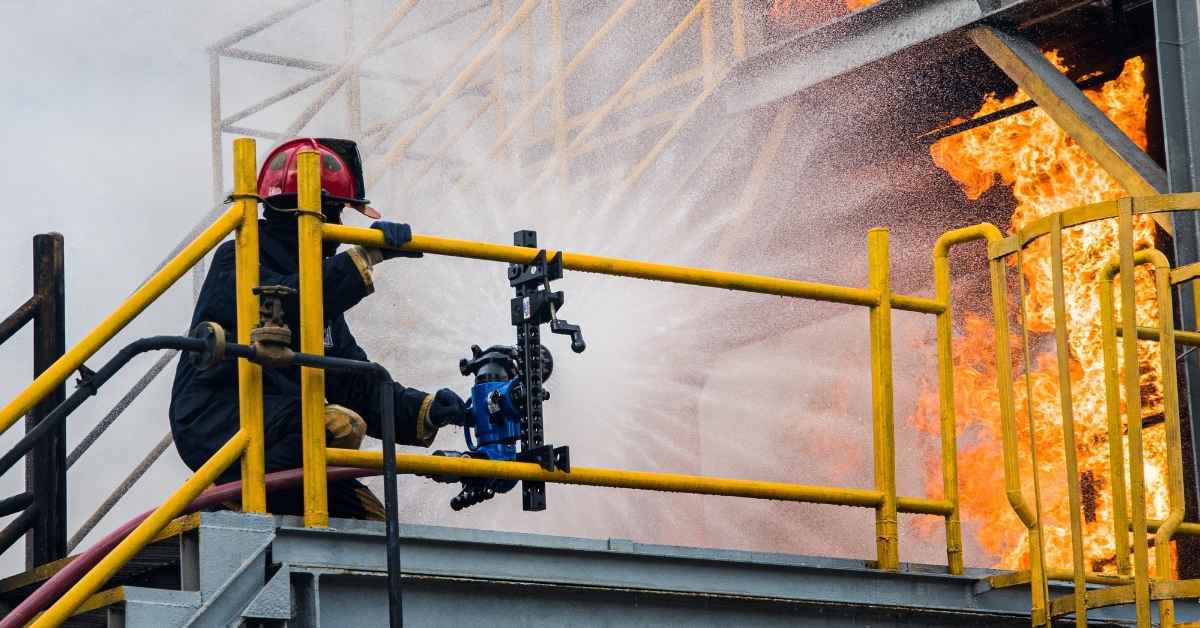
A major fire involving lithium batteries broke out at a metal recycling facility in Frederiksværk early Monday morning, prompting police to urge residents in the northeastern part of the town to stay indoors and close windows and doors due to toxic smoke. The blaze, which erupted in mixed waste containing lithium batteries, is expected to take many hours to extinguish.
Emergency Response and Safety Warnings
Police and fire crews responded with a massive presence to the fire at a facility on Havnevej in Frederiksværk. The site belongs to a company that processes metal scrap, according to Nordsjællands Politi.
Toxic Smoke Blankets Area
Authorities issued urgent warnings to residents in the northeastern part of Frederiksværk to remain indoors. The fire involves lithium batteries mixed with various types of waste, creating particularly dangerous fumes. Police emphasized that while all smoke from fires is inherently toxic, this blaze poses heightened risks due to the materials involved.
Residents who inhale the smoke may experience discomfort and other health effects. The warning mirrors recent safety alerts at facilities across Denmark, including incidents involving toxic hazards requiring public precautions. Fortunately, favorable wind conditions kept the smoke plume rising straight up rather than spreading horizontally across populated areas.
No Spread or Injuries Reported
Police confirmed no fire spread beyond the facility perimeter and no injuries occurred. The site features security measures including guards and fencing, reducing concerns about unauthorized access. Authorities do not suspect criminal activity, noting that lithium batteries can spontaneously heat up when mixed with other materials in waste collections.
Challenges of Lithium Battery Fires
The incident highlights the growing problem of lithium battery fires in waste management and recycling operations across Europe.
Why These Fires Are So Difficult
Lithium battery fires present unique challenges for emergency responders. Water cannot effectively extinguish these blazes because the batteries contain flammable liquids that react violently when exposed to traditional firefighting methods. The batteries can reach temperatures between 150 and 200 degrees Celsius, triggering a chain reaction called thermal runaway.
Even after flames appear controlled, lithium battery fires can reignite hours or days later. This forces firefighting teams to maintain extended operations, cooling materials long after visible flames disappear. Police estimated the Frederiksværk fire would not be fully extinguished until Monday morning, requiring continuous monitoring throughout the night.
Rising Frequency of Battery Incidents
Denmark and neighboring countries face increasing numbers of lithium battery fires as electric vehicle adoption accelerates and battery waste grows. A similar large scale incident occurred in Poland on January 11, 2026, when a lithium ion battery sparked a fire at an 11,000 square meter logistics warehouse in Tarnowo Podgórne. These events underscore persistent safety challenges in facilities handling battery storage and recycling.
The batteries found in the Frederiksværk waste could range from small consumer electronics to larger units from electric vehicles or energy storage systems. Police could not immediately determine the size or origin of the batteries involved. Mixed waste streams at recycling facilities often contain unknown battery types, complicating risk assessments and fire prevention efforts.
Battery Technology and Safety Developments
The Frederiksværk fire draws attention to ongoing debates about battery safety as Denmark pursues its green energy transition.
Current Battery Market Dominance
Lithium ion batteries currently dominate the global market, with manufacturers shipping hundreds of gigawatt hours annually for electric vehicles and energy storage. Chinese companies CATL and BYD lead production, holding 35 percent and 17.2 percent market shares respectively. The global lithium ion battery market is projected to reach 133.35 billion dollars by 2030, driven primarily by electric vehicle demand.
These batteries offer high energy density, allowing vehicles to travel longer distances per charge. However, their reliance on flammable liquid electrolytes creates inherent fire risks when cells are damaged, overcharged, or exposed to high temperatures. Manufacturing defects can also trigger dangerous failures, though quality control has improved significantly in recent years.
Safer Alternatives on the Horizon
Researchers and manufacturers are developing battery technologies with improved safety profiles. Lithium iron phosphate batteries, already used in some electric vehicles, reduce fire risks compared to older nickel manganese cobalt formulations. Sodium ion batteries, entering the market in Chinese vehicles from 2024 onward, eliminate some flammable components while offering lower costs.
The Technical University of Denmark has patented a potassium silicate based battery material as a potential long term alternative to lithium ion technology. This innovation aims to provide safer energy storage using easily sourced materials, supporting European Union goals for domestic battery production. Solid state batteries, expected to reach mass production between 2027 and 2030, promise to eliminate flammable liquids entirely while extending battery lifespan and performance.
Implications for Denmark’s Green Transition
The incident raises questions about infrastructure readiness as Denmark expands electric vehicle adoption and renewable energy storage.
Waste Management Challenges
Recycling facilities face growing volumes of end of life batteries as early generation electric vehicles reach retirement age. Most electric vehicle batteries carry warranties guaranteeing 70 to 80 percent capacity retention for eight years or 150,000 kilometers. As these warranties expire, more batteries enter waste streams where they mix with other materials, creating fire hazards like those seen in Frederiksværk.
Proper sorting and handling of lithium batteries requires specialized training and equipment that not all facilities possess. Mixed waste collections at metal recycling operations can inadvertently combine batteries with materials that accelerate heating and ignition. Industry experts recommend dedicated collection systems for batteries, but implementation remains inconsistent across Danish municipalities.
Policy and Prevention Measures
European Union battery regulations introduced in 2023 establish safety standards for manufacturing, use, and disposal of batteries. These rules aim to prevent incidents while promoting circular economy principles through improved recycling. Denmark must balance aggressive electrification targets with adequate safety infrastructure at charging stations, storage facilities, and recycling operations.
Battery management systems in modern electric vehicles monitor cell temperatures and charge levels to prevent dangerous conditions. However, once batteries leave vehicles and enter waste streams, these protections disappear. Emergency services are developing specialized protocols for battery fires, including extended cooling periods and containment strategies to prevent toxic runoff from entering water systems.
Sources and References
The Danish Dream: Toxic Caterpillar in Denmark Discovered at Horsens Daycare Center
The Danish Dream: Toxic Supermarket Fire Sparks Mass Evacuation in Denmark
The Danish Dream: Fire Hazards Found in Over Half of Denmark’s Clubs
The Danish Dream: Home Insurance in Denmark for Foreigners
The Danish Dream: Health Insurance in Denmark for Foreigners
The Danish Dream: Liability Insurance in Denmark for Foreigners
DR: Kraftig brand i lithium-batterier: Borgere bør blive indenfor