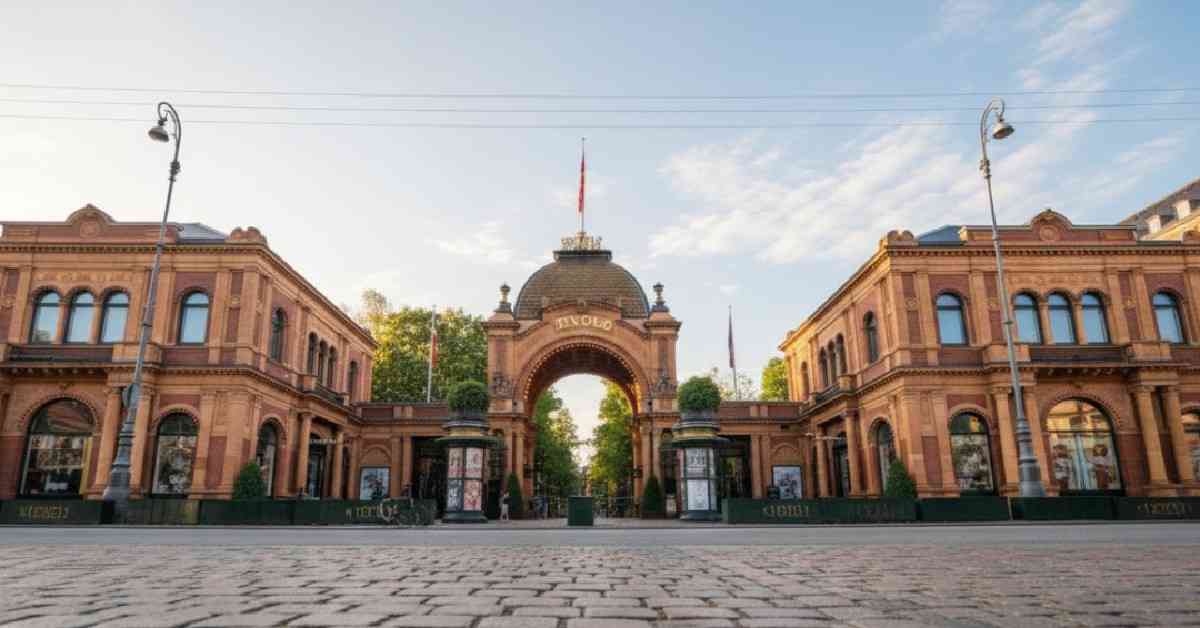
Families visiting Tivoli can spend roughly DKK 1,000 per household per visit on tickets and rides, yet the Copenhagen amusement park’s trade terms reserve the right to suspend attractions without automatic refunds or compensation, a sharp contrast to competitors like BonBon-land that describe giving vouchers when several rides close.
One visiting family took their children to Tivoli on a Tuesday afternoon expecting thrills. According to the family, they found multiple major attractions closed for the entire day. Their children, eager to try flagship rides, left disappointed. The central question is a simple one: why should paying customers receive no compensation when several headline attractions are out of service?
The answer lies in Tivoli’s trade terms. The relevant clause states that Tivoli Gardens reserves the right to suspend ride operations in the event of technical or operational issues. Refunds are handled case by case and may be requested if access restrictions introduced without prior notice are of a significant nature, according to the terms.
The economics of a Tivoli visit
According to investor guidance published by Tivoli in March 2026, the park forecasts revenue of DKK 1.345 billion in 2025 and DKK 1.400 billion in 2026. Tivoli recorded around 4.3 million visitors in 2025, as reported by NordiskPost. Dividing projected revenue by visitor numbers suggests an average in-park spend of roughly DKK 300 per guest, or around DKK 900 to 1,000 per household per visit when entrance, ride passes and food are counted together.
By comparison, Danish households spent on average DKK 360 per year on all nature and amusement parks combined, according to a 2012 consumption analysis by Statistics Denmark. That means a single Tivoli outing can consume roughly triple an entire year’s typical park budget for a Danish family. International visitors, who account for around half of overnight stays in Copenhagen according to Wonderful Copenhagen tourism data, often cannot navigate fine print written primarily in Danish.

Weekend entrance for an adult costs around DKK 210. A ride pass adds around DKK 349. Two adults and two children paying similar rates can reach well over DKK 1,000 before buying a single snack or souvenir, making a full family day a significant household expense. Yet Tivoli’s trade terms do not promise automatic refunds or vouchers when individual rides are suspended.
What BonBon-land does differently
BonBon-land, a smaller Danish park south of Copenhagen, has adopted a more transparent approach. According to communications chief Mette Christina Nielsen, if management knows three rides will be closed for a full day, each guest receives a DKK 25 voucher automatically. Closure information is displayed on the website and at the entrance so visitors can decide whether to come or postpone.
Nielsen explained that the voucher allows visitors to opt out if the closed ride is exactly the one they came to try. Tivoli, by contrast, handles complaints individually through its customer centre. No public log of ride downtime is available on the park’s main site.
Consumer law and the limits of Tivoli’s terms
Danish consumer authorities have stated that Tivoli’s approach has legal backing, with conditions. In an interview with TV2, Susanne Aamann from the Danish Competition and Consumer Authority said the terms appeared legally valid, with the caveat that extensive closures must be communicated clearly before purchase. Marie Frank-Nielsen, senior jurist at Forbrugerrådet Tænk, told TV2 that when a high number of rides are closed, the service delivered is inferior to reasonable expectations, and that under Danish law this can justify a price reduction.
The problem for expats and tourists is information asymmetry. Tivoli’s English website describes rides, playgrounds, concerts and theatre but does not prominently flag that several headline attractions can be down all day without automatic compensation. Detailed terms and operational notices are found primarily on Danish-language pages.
Tivoli’s growth and transparency gap
Tivoli’s March 2026 investor guidance forecasts revenue of DKK 1.400 billion in 2026, up from around DKK 1.1 to 1.2 billion before the pandemic, representing a rise of roughly 15 to 25 percent. Pre-tax profit is projected at DKK 145 million in 2026, according to the same guidance. This upward trajectory signals confidence in strong visitor numbers. Yet the park publishes no detailed data on ride reliability or average downtime.

As reported by B.T., several Danish outlets have documented days when Minen, Veteranbilerne, Dæmonen and Tik Tak were simultaneously closed. Separate reports showed Himmelskibet, Rutsjebanen and Mælkevejen out of service at the same time. Tivoli insists these are isolated incidents driven by rigorous safety protocols. Garden and Operations Director Kasper Schumacher said in a written statement that operational stoppages can never be avoided at any park, that safety comes first, and that rides are brought back online as quickly as possible.
Critics note that without independent data, guests have no way to verify whether 2026 represents a broader pattern. Tivoli’s position that recent closures are not a general challenge rests on internal assessments the public cannot check.
What expats and tourists can do
Disappointed visitors should contact Tivoli’s customer centre in writing, documenting which rides were closed, for how long and what they paid. If the park refuses compensation, the next step is Forbrugerklagenævnet, Denmark’s consumer complaints board. The process requires receipts, screenshots and written replies from Tivoli, plus a complaint fee that is refunded if the complaint succeeds.

International residents can seek English-language guidance from Forbrugerrådet Tænk and the European Consumer Centre Denmark. The key is to save digital evidence: booking confirmations, app screenshots showing no closure warnings and photos of out-of-order signs taken on the day. For expats unfamiliar with Danish complaint mechanisms, that paper trail can make the difference between negotiating alone and winning a formal ruling.
A fairness gap in Denmark’s amusement sector
Tivoli is more than an amusement park. Urban historians describe it as part of Denmark’s national identity, a park founded in 1843 and located at Vesterbrogade 3 in central Copenhagen. That status shapes expectations. Locals and expats alike associate Tivoli with Danish values of trust and fairness. When the park’s standard terms provide no automatic compensation for multiple closed rides, that expectation collides with contractual reality.
Nordic amusement ride regulation places objective liability on park owners for injuries but not for disappointment. Compensation for non-dangerous downtime is left to contract terms and market pressure. Some large European parks offer service guarantees, such as fast-track passes or discounts when major rides are down, to protect their reputation among international guests. Denmark has no harmonised rule on this.
The result is a competitive divergence. BonBon-land describes issuing vouchers and displaying closure information at the gate. Tivoli‘s standard terms promise neither, relying instead on brand strength and a clause that puts the risk of stoppages squarely on the buyer. For families spending close to DKK 1,000 per household on a day out, that gap feels less like legal fine print and more like a fairness problem.