The Hirschsprung Collection is Copenhagen’s most underrated art museum, a compact treasury of Danish Golden Age and Skagen paintings tucked inside Østre Anlæg park.
I have walked past The Hirschsprung Collection more times than I can count. For years I assumed it was just an annex of the much larger Statens Museum for Kunst next door. I was wrong, and if you are an expat living in Denmark, do not make the same mistake.
This little neoclassical pavilion holds one of the finest curated displays of 19th century Danish painting anywhere. It is intimate, walkable in 90 minutes, and rarely crowded. For anyone trying to understand Danish identity through art, it is essential.
What Is The Hirschsprung Collection?
The Hirschsprung Collection, in Danish Den Hirschsprungske Samling, is a state-owned art museum in central Copenhagen. It holds around 700 paintings, plus drawings and sculptures, all by Danish artists from the 19th and early 20th centuries. You can read more on the official museum website.
The collection focuses on three major chapters of Danish art history. These are the Danish Golden Age, the Skagen Painters, and the Symbolists around the year 1900. It is a tight, deeply personal collection, and that is exactly its charm.
Why It Stands Out Among Copenhagen Museums
Compared to the big institutions, the Hirschsprung feels like walking through someone’s home. The rooms are small, the light is soft, and the paintings hang close together. That intimacy was deliberate, and it changes how you look at the art.
If you are mapping out cultural visits, see our guide to must-visit museums in Copenhagen. The Hirschsprung pairs well with the bigger collections without competing with them.
The Story Behind The Hirschsprung Collection
The museum exists because of one stubborn, art-obsessed tobacco merchant and his wife. The full history is well documented by Encyclopaedia Britannica and the museum’s own archives.
Heinrich Hirschsprung: The Tobacco Millionaire Turned Patron
Heinrich Hirschsprung was born in 1836 in Copenhagen to a Jewish family of cigar makers. Together with his brother Bernhard, he founded the firm A.M. Hirschsprung & Sønner in 1866. The cigars made him rich, and the money funded a lifetime of art buying.
Heinrich and his wife Pauline started collecting Danish art seriously in the 1860s. He bought directly from young artists, often before they were famous. He paid fair prices and built personal friendships with painters like P.S. Krøyer and Vilhelm Hammershøi.
A Gift to the Danish Nation
In 1902, Hirschsprung donated the entire collection to the Danish state. The condition was simple. A dedicated museum had to be built to house it properly.
Heinrich died in 1908, three years before the museum opened on 8 June 1911. His widow Pauline lived to see it. The donation was one of the largest private gifts of art in Danish history.
The Building: A Neoclassical Jewel Box
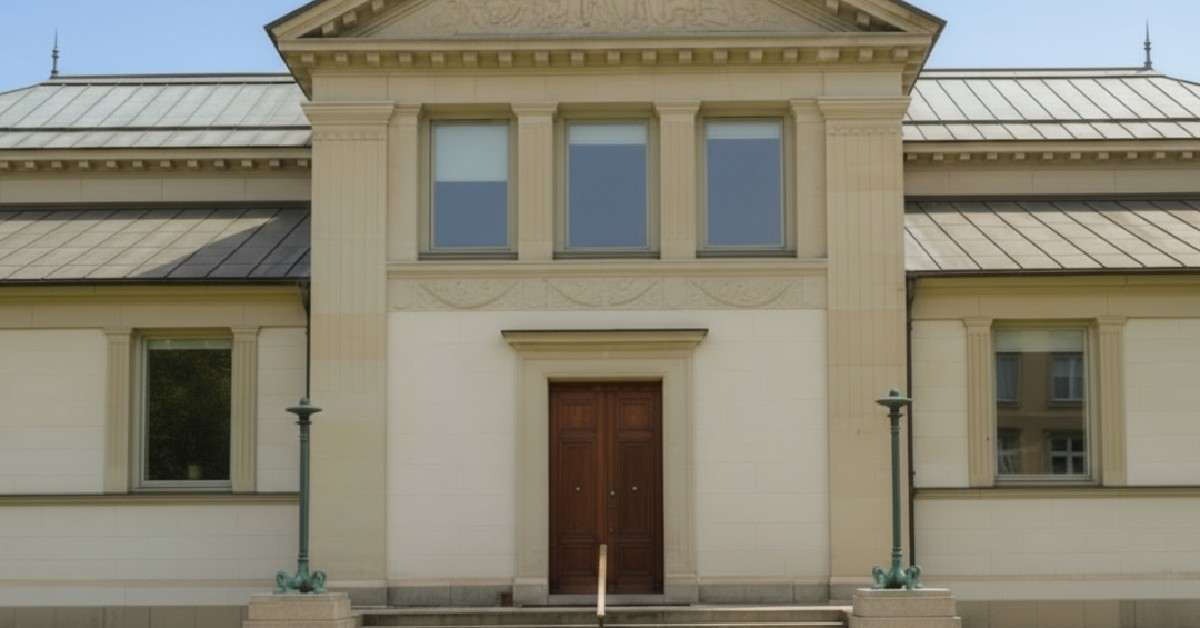
The museum building itself is worth the visit. Designed by architect Hermann Baagøe Storck, it opened in 1911 in a strict neoclassical style. The exterior is modeled on a Greek temple, with a low-slung profile that blends into Østre Anlæg.
Inside, natural light pours through skylights in every gallery. Storck designed the rooms to mimic a wealthy 19th century home, not a cold institutional museum. As noted by the museum’s curators, this was Hirschsprung’s explicit wish, and you feel it the moment you walk in.
What You Will See at The Hirschsprung Collection
The collection is organised chronologically across roughly a dozen rooms. Plan for at least 90 minutes if you actually want to look at things. Here are the highlights.
The Danish Golden Age (1800 to 1850)
This is the heart of the collection. The Golden Age was a strange flourishing of art during a period when Denmark was economically broken and territorially shrinking. The paintings are quiet, precise, and full of national longing.
Look for works by Christoffer Wilhelm Eckersberg, often called the father of Danish painting. You will also find masterpieces by Christen Købke, Constantin Hansen, Wilhelm Marstrand, Wilhelm Bendz, and Martinus Rørbye. Købke’s small landscapes of the Copenhagen ramparts are particularly worth slow looking.
The Skagen Painters
The Skagen Painters were a colony of Nordic artists who gathered at the northern tip of Jutland from the 1870s onward. They painted fishermen, beaches, and most famously each other, in a style influenced by French plein-air painting. The collection holds key works by P.S. Krøyer, Michael Ancher, Anna Ancher, and Marie Krøyer.
You can also see paintings here by Bertha Wegmann, the brilliant 19th century portraitist. If you want to see the actual Skagen landscape, visit Skagens Museum on Jutland’s northern coast.
The Symbolists and Vilhelm Hammershøi
The third great strength of the collection is Danish Symbolism around 1900. Vilhelm Hammershøi’s quiet, grey interiors are the standout. Hirschsprung was one of Hammershøi’s earliest and most loyal buyers.
You will also find work by J.F. Willumsen, Ejnar Nielsen, and Harald Slott-Møller. These artists pushed Danish painting toward modernism, and the collection traces that shift clearly. According to scholars at the National Gallery of Denmark, this period was a hinge point in Nordic art history.
The Funen Painters
A smaller but lovely room is dedicated to the Fynboerne, the Funen Painters. Look for Johannes Larsen, Fritz Syberg, and Peter Hansen. Their rural scenes from the island of Funen are a softer counterpoint to the urban Symbolists.
Visiting The Hirschsprung Collection: Practical Information
Here is everything you need to plan a visit. I checked the practical details directly against the museum’s current opening info.
Location and How to Get There
The address is Stockholmsgade 20, 2100 Copenhagen Ø. The museum sits in the eastern half of Østre Anlæg park, behind the National Gallery. From central Copenhagen it is a 15-minute walk or one quick metro ride.
The nearest station is Østerport, served by both metro and S-train. From there the museum is a 7-minute walk through the park. Our Copenhagen public transport guide covers tickets and zones if you are new in town.
Opening Hours and Tickets
The museum is open Tuesday to Sunday, 11:00 to 16:00. It is closed on Mondays and on selected public holidays. Always check the official site before going, especially around Christmas and Easter.
Standard adult tickets are around 120 DKK. Visitors under 27 enter free with valid ID, which is unusual and generous by Copenhagen standards. Free entry also applies on Culture Night and during certain partner programs.
Accessibility and Facilities
The Hirschsprung is fully wheelchair accessible on the ground floor. There is a small café, a museum shop with excellent art books, and free cloakroom storage. The building is small enough that you will not get lost, which is a nice change from the bigger museums.
Best Time to Visit
Weekday mornings between 11:00 and 13:00 are quietest. Late autumn and early spring are best if you want the rooms almost to yourself. I have visited in February and had entire galleries alone for 20 minutes at a time.
Summer Sundays are the busiest, but it is still nothing like the queues at Louisiana or the National Gallery. If you want a fuller cultural day, combine it with a walk through nearby Ørstedsparken or a stop at one of the art galleries in Copenhagen.
My Take as an Expat in Denmark
Most expats I know rush to Louisiana for the contemporary art and the sea view. That is fine, but it skips something essential. If you want to understand why Danes are so attached to a certain quality of light, why they paint their walls a particular grey, and why hygge is more than a hashtag, the Hirschsprung is your shortcut.
The Golden Age paintings are not just landscapes. They are arguments about what it means to be Danish after losing Norway in 1814 and most of Schleswig in 1864. Heinrich Hirschsprung, a Jewish industrialist, was making a quiet point by collecting them so fiercely. He was Danish, and he wanted the nation to see itself.
Pair It With Other Quiet Copenhagen Spots
The Hirschsprung makes the most sense as part of a slow Copenhagen day. Walk over from Bernstorff Palace grounds or combine it with the Storm P. Museum. Both are small, surprising, and underrated.
If you have already done the big institutions like the Louisiana Museum of Modern Art and The Cisterns, the Hirschsprung is your next logical stop. It is the missing piece for anyone serious about Danish visual culture.
Frequently Asked Questions About The Hirschsprung Collection
What is The Hirschsprung Collection famous for?
The Hirschsprung Collection is famous for its concentrated holdings of Danish Golden Age painting, the Skagen Painters, and Vilhelm Hammershøi’s Symbolist interiors. It is considered one of the finest 19th century Danish art collections in the world. The collection was assembled privately by Heinrich Hirschsprung before being gifted to the state in 1902.
How long does it take to visit The Hirschsprung Collection?
Most visitors spend between 60 and 120 minutes inside. The museum is compact, with around a dozen galleries arranged chronologically. If you want to read every label and sit with the Hammershøis, allow two hours.
Is The Hirschsprung Collection worth visiting?
Yes, especially if you have any interest in Danish history, painting, or 19th century European art. It is one of Copenhagen’s most underrated museums and is rarely crowded. The combination of quality, intimacy, and a quiet park setting makes it a unique experience.
Who was Heinrich Hirschsprung?
Heinrich Hirschsprung was a Danish-Jewish tobacco manufacturer who lived from 1836 to 1908. He co-founded the cigar firm A.M. Hirschsprung & Sons and used his fortune to build one of Denmark’s most important private art collections. He donated the entire collection to the Danish state in 1902.
Where is The Hirschsprung Collection located?
The museum is located at Stockholmsgade 20, 2100 Copenhagen Ø, inside Østre Anlæg park. It is a 7-minute walk from Østerport Station and roughly 15 minutes on foot from central Copenhagen. The closest neighbor is the Statens Museum for Kunst.
How much does it cost to enter?
Adult admission is around 120 DKK. Visitors under 27 enter free with valid ID, and children under 18 always enter free. Reduced rates apply on Culture Night and during certain seasonal events.
Can I take photos inside the museum?
Personal, non-flash photography is generally allowed in the permanent collection. Special exhibitions may have separate rules, so check the signage at the entrance. Tripods and commercial photography require advance permission.