
St Canutes Cathedral, also known as Odense Cathedral, is in the heart of Odense, Denmark’s third-largest city. This Gothic masterpiece stands as a testament to both spiritual devotion and architectural ingenuity. Renowned for its complex design, storied past, and cultural significance, St. Canute’s Cathedral is more than just a place of worship. It is a symbol of Danish resilience and a beacon of historical insight. I had a chance to not only gather knowledge about the building, but also about the royal it was named after—King Canute IV.
St Canutes Cathedral: Legacy of King Canute IV
St. Canute’s Cathedral derives its name from King Canute IV of Denmark, who reigned from 1080 to 1086. King Canute IV, also known as Canute the Holy, was a pivotal figure in Danish history. Also, he is remembered for his attempts to strengthen the Danish monarchy and church.
In 1086, King Canute IV met a tragic end at the Odense Cathedral, the precursor to the current St. Canute’s Cathedral. After a rebellion led by noblemen opposed to his taxation policies and religious reforms, he took refuge within the church. Unfortunately, it was within these sacred walls that King Canute IV was assassinated by insurgents. Additionally, his sainthood and martyrdom were recognized when the Roman Catholic Church declared him a saint in 1101. His remains were interred in the cathedral.
Architectural Magnificence
St. Canute’s Cathedral stands as an exquisite example of Gothic architecture. Built primarily between 1300 and 1499, the present structure showcases the distinctive hallmarks of Gothic design. This is characterized by its tall spires, pointed arches, grand vaults, and detailed ornamentation. In addition, the cathedral’s exterior is constructed from red brick, a typical Danish building material during the medieval period. These bricks instill the structure with a warm, earthy tone, blending seamlessly with the surrounding urban landscape.
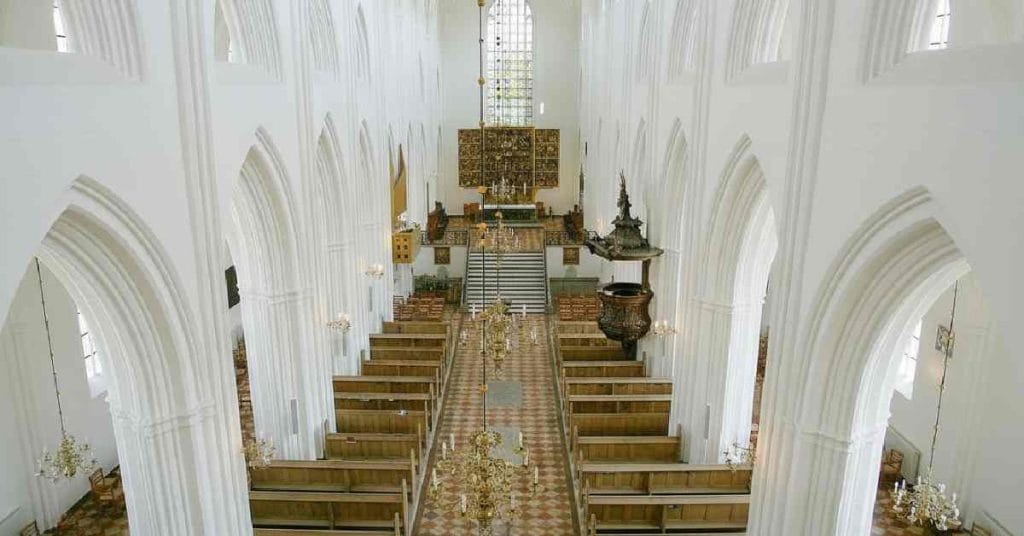
Moreover, the interior of the cathedral is equally captivating, with its high vaulted ceilings, complex wooden carvings, and stunning altarpieces. The main altar, created in the early 16th century by German craftsman Claus Berg, is a masterpiece of late Gothic artistry. This altarpiece depicts scenes from the life of Christ and various saints. What’s more, visitors are drawn to the crypt, where the relics of St. Canute rest.
Visiting St Canutes Cathedral: A Traveler’s Guide
When to Visit
St. Canute’s Cathedral is open to the public year-round. However, the best time to visit is during the late spring and summer months, from May to September. This is when the weather in Odense is most favorable, with temperatures ranging between 15°C (59°F) and 25°C (77°F). During this period, the lush gardens surrounding the cathedral come to life, enhancing the beauty of the exterior and offering a serene picnic spot. Furthermore, consider planning your visit around July 10th, which marks St. Canute’s Day. This day commemorates the martyrdom of King Canute IV.
How to Reach the Cathedral
St. Canute’s Cathedral is conveniently located in the city center of Odense, making it easily accessible via various modes of transportation:
– By Train: The cathedral is just a 10-minute walk from Odense Station, the main railway hub. Trains run frequently from major Danish cities like Copenhagen and Aarhus, providing an efficient and comfortable travel option.
– By Bus: City buses in Odense connect various parts of the city to the cathedral with several stops close by, including the Bangs Boder and Munke Mose stops.
– By Car: For those driving, adequate parking facilities are available within walking distance of the cathedral. In addition, Odense is approximately a 90-minute drive from Copenhagen via the E20 highway.
Conclusion
St Canutes Cathedral offers a sanctuary of spirituality and contemplation but also serves as a bridge connecting the past and present. As one goes into its Gothic splendor, explores its storied past, and experiences its living traditions, the cathedral leaves an impression of Denmark’s medieval grandeur and enduring devotion.
FAQs about St Canutes Cathedral
1. Why is St. Canute’s Cathedral significant?
St. Canute’s Cathedral is significant due to its architectural grandeur, historical ties to King Canute IV, and status as a center of Danish religious and cultural heritage.
2. Is there an entrance fee to visit the cathedral?
Entry to the cathedral is generally free, though a small fee may apply for certain exhibitions or events. Also, donations are welcome to support the maintenance of the cathedral.
3. How should I dress when visiting St. Canute’s Cathedral?
While there is no strict dress code, it is respectful to wear modest clothing suitable for a sacred environment, avoiding overly revealing outfits.
4. How long should I plan to spend at St. Canute’s Cathedral?
Allow at least 1 to 2 hours to fully explore the cathedral, including its main hall, guided tours, crypt, and any ongoing exhibitions.
5. Can I participate in a religious service during my visit?
Yes, visitors are welcome to attend services. However, it’s important to be respectful and follow the customs of the service, regardless of personal beliefs.
6. Are there other attractions nearby to complement my visit to St. Canute’s Cathedral?
Yes, Odense offers a range of attractions such as the Hans Christian Andersen Museum, Odense Zoo, and the charming old town. Besides, they are all within easy reach of the cathedral.