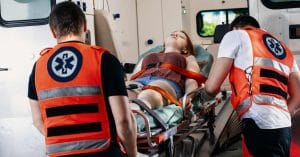
Danish hospitals performed just 11 cranial reconstruction surgeries in 2023, down from 23 four years earlier, making cranioplasty among the rarest major reconstructive procedures in the country. Now 3D-printed implants and new research on immune-cell support are quietly changing prospects for a tiny group of patients living with missing bone.
When Henrik Havsteen Kristensen returned to work as a glassblower after surgeons removed half his skull to save his brain, he spent months wearing a helmet and fielding stares. His case, reported by TV 2, highlights a medical reality most Danes and internationals never encounter: fewer than one person per month in Denmark undergoes surgery to rebuild a major skull defect. That puts cranial reconstruction in a tier of rarity that pushes both patients and the health system into improvisation.
The Numbers Behind the Rarity
According to Statistics Denmark’s StatBank table SKR3, Danish hospitals recorded 7,740 contacts for severe head injuries in 2023, yet only 11 cranial plastic surgery operations took place that year. That amounts to roughly 1.9 operations per million inhabitants annually, a fraction of the thousands of hip replacements performed each year across the country. The drop from 23 cranial operations in 2019 is documented in StatBank, though no Sundhedsstyrelsen report has formally explained the cause.
For the patients who do need reconstruction, the stakes are high. Large skull defects leave the brain vulnerable to pressure changes, cosmetic disfigurement affects social life, and according to Sundhedsstyrelsen’s rehabilitation guidelines for acquired brain injury, there is no specific chapter on living with a missing skull segment. Municipalities and employers typically grant protective helmets and related aids case-by-case under general assistive device rules in the Social Services Act, rather than following a dedicated national pathway.

From Titanium Mesh to 3D-Printed Skulls
Danish hospitals are shifting from hand-bent titanium plates toward patient-specific synthetic implants ordered from CT scans. Procurement records on Udbud.dk list multi-year contracts worth several million kroner for custom cranial and facial implants, with per-implant costs likely in the low six-figure range. According to Sundhedsstyrelsen’s DRG tariffs for 2023, a standard hip replacement is reimbursed at around DKK 60,000 to 70,000, making custom cranial implants substantially more expensive.
Recent research from Aarhus and Aalborg universities adds a surprising finding. Studies on polycaprolactone (PCL) implants in animal models found that immune cells form giant cells on the surface that strengthen and stabilise the material. As Halldór Bjarki Einarsson at Aalborg University noted, the primary breakdown comes from spontaneous chemical hydrolysis, not immune rejection, meaning implant longevity may be more predictable than previously assumed.
What That Means for Younger Patients
Predictable degradation matters most for people who need decades of durability. According to the Frontiers in Immunology study, mechanical strength of PCL cranial implants in pig models remained above 80 percent of baseline after six months. Researchers suggest that, if similar behaviour is observed in humans, resorbable or hybrid materials could reduce revision surgeries over a lifetime, though this has not yet been demonstrated in long-term clinical studies. Denmark’s national patient registers and CPR numbers make such follow-up studies possible, but so far only small groups have been analysed.

Navigating the System as an Expat
For internationals, the lack of structured English-language information compounds an already fragmented pathway. Hospital leaflets on cranioplasty are predominantly in Danish. Borger.dk and nyidanmark.dk contain no topic pages that explicitly address severe cranial injury or cosmetic skull reconstruction. Rigshospitalet patient advisers can provide guidance in English, but deeper details on materials, MRI compatibility and long-term infection risk require translation or persistence.
According to Sundhedsstyrelsen’s forløbsprogram for acquired brain injury, patients and families often need to insist that their case is registered as adult acquired brain injury to access multidisciplinary rehabilitation. Partial sick leave and flexible job arrangements exist under Danish rules, but require explicit agreements with the kommune jobcenter, often documented only in Danish. If the injury was work-related, recognition by Arbejdsmarkedets Erhvervssikring can cover future medical interventions and revisions, but claim forms and legal detail remain Danish-heavy.

The Cost-Benefit Debate
Some authors in the clinical and economic literature have raised concerns about limited long-term data on newer materials and questioned their cost-effectiveness compared with stored bone or standard titanium. Some surgeons remain cautious about fully resorbable implants for load-bearing areas of the skull, noting that degradation timelines in humans are not yet well-characterised beyond small series.
Neurosurgeons counter that patient-specific implants offer better cosmetic symmetry, more precise fit and potentially lower complication rates. Regions often argue that successful reconstruction may reduce long-term care costs by enabling return to work. According to Hjernesagen, a brain injury NGO, restoring skull integrity is part of holistic rehabilitation, not vanity surgery.

A System Designed for Frequency, Not Rarity
Low volumes, fewer than one cranial reconstruction per month nationwide, can make it challenging to maintain widespread experience. That is one reason Sundhedsstyrelsen’s 2020 speciality plan for neurosurgery classifies large cranioplasties as a highly specialised function centralised at Rigshospitalet and Aarhus University Hospital. Centralisation may improve surgical quality, yet it can mean long travel for patients from rural Jutland or Greenland.
For internationals, cranial injury intersects with immigration rules when long sick leave affects income. Permanent loss of work capacity can trigger considerations of early retirement or flexible jobs, and for non-EU nationals whose residence depends on employment, no official English guidance on nyidanmark.dk explicitly mentions brain or skull injury as an example. The gap between medical need and administrative clarity leaves patients piecing together support one phone call at a time.