Two men have been charged in connection with a death on Fyn, a case that highlights a tightly regulated Danish medico-legal system where roughly 9,500 deaths a year trigger formal police review — yet most residents, including long-term internationals, have no idea what this means for them as relatives, witnesses or neighbours.
Fyns Politi announced the charges on June 28, 2026, following an investigation into a death that moved from a medical event to a criminal inquiry. Danish law allows prosecution not only for direct violence but also for failing to help a person in obvious mortal danger, a charge with precedent in earlier cases, as reported by Politiken.
What makes this case instructive is the broader machinery it reveals. When a person dies under unclear circumstances in Denmark, a chain reaction begins involving doctors, police and the Danish Patient Safety Authority. Doctors must report the death to police the same day if it is sudden, unexpected, involves possible crime or accident, or if the person is found dead. According to Styrelsen for Patientsikkerhed, this obligation sits with medical staff, not relatives.
The Hidden Scale of Police Deaths
Around 9,500 deaths a year are formally reported to the police for potential criminal or medico-legal review, according to a national working group on police-reported deaths. That corresponds to roughly one in every 12 to 14 deaths in Denmark. The working group figure dates from around 2012, and more recent nationwide totals are not easily comparable.
According to Styrelsen for Patientsikkerhed’s official guidance, seven precise triggers require mandatory police reporting. One is simply that a person is found dead. Another is that death is sudden and not foreseen on medical grounds. A seventh catch-all states that police must be notified if it cannot be ruled out with certainty that death resulted from a criminal act, suicide or accident. Mere doubt about a natural cause is enough to involve police, a legal threshold lower than many assume.

Once police are notified, they decide together with Styrelsen for Patientsikkerhed whether to conduct a forensic examination at the scene and possibly an autopsy. Release of the body may be delayed until this process is complete. For foreign families wanting a funeral in their home country, this delay can be critical. Relatives and witnesses are quickly drawn into the process as potential informants or, in some cases, suspects.
What This Means for Internationals
Danish death registration rules apply regardless of nationality or church membership. According to Lavendla’s legal guidance on Danish death reporting, all deaths must be registered in the civil registration system within two working days, normally via a digital notification on borger.dk or through a priest or municipality. This registration affects pensions and bank accounts.

Internationals who are relatives do not have to report the death to police themselves, but they should quickly file the civil death notification. Foreign nationals may also wish to contact their embassy or consulate, which can assist with translation and help with repatriation of remains. If the death may involve crime, malpractice or a workplace accident, relatives can report suspected crime to police, including via the police service number 114 or through the relevant reporting channel on politi.dk.

One under-reported aspect is how strongly Danish death investigations are tied to patient safety oversight. According to Styrelsen for Patientsikkerhed, the authority is present at forensic examinations not just to determine cause of death, but to identify systemic treatment problems. Suspicious hospital deaths and community deaths are funnelled through the same mechanism, blurring the line between criminal investigation and healthcare regulation.
From Medical Care to Criminal Investigation
The trigger in the current Fyn case is that the death has moved to a criminal investigation with suspects. This shifts the applicable rules from simple death registration to full criminal procedure, including potential charges such as violence, failure to assist a person in danger or negligent homicide. Danish criminal law has precedent for charging individuals who fail to help a person in obvious mortal danger.

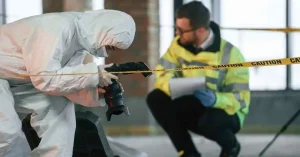
When police on Fyn consider a death suspicious, the scene can be treated as a crime scene. They secure evidence, interview witnesses and possibly detain persons present. The joint medico-legal procedure carried out by police and Styrelsen for Patientsikkerhed includes decisions on autopsy and toxicology, which can be crucial if drugs, alcohol or restraint are suspected.

For internationals living in Denmark, the shift from medical care to police investigation often comes with limited explanation, especially in English. Relatives may feel treated more as suspects than victims when police secure phones, clothing or apartment access before they can grieve or organise a funeral. Understanding your rights and obligations in advance can protect you if you are ever drawn into this system, whether as a relative, neighbour or witness.