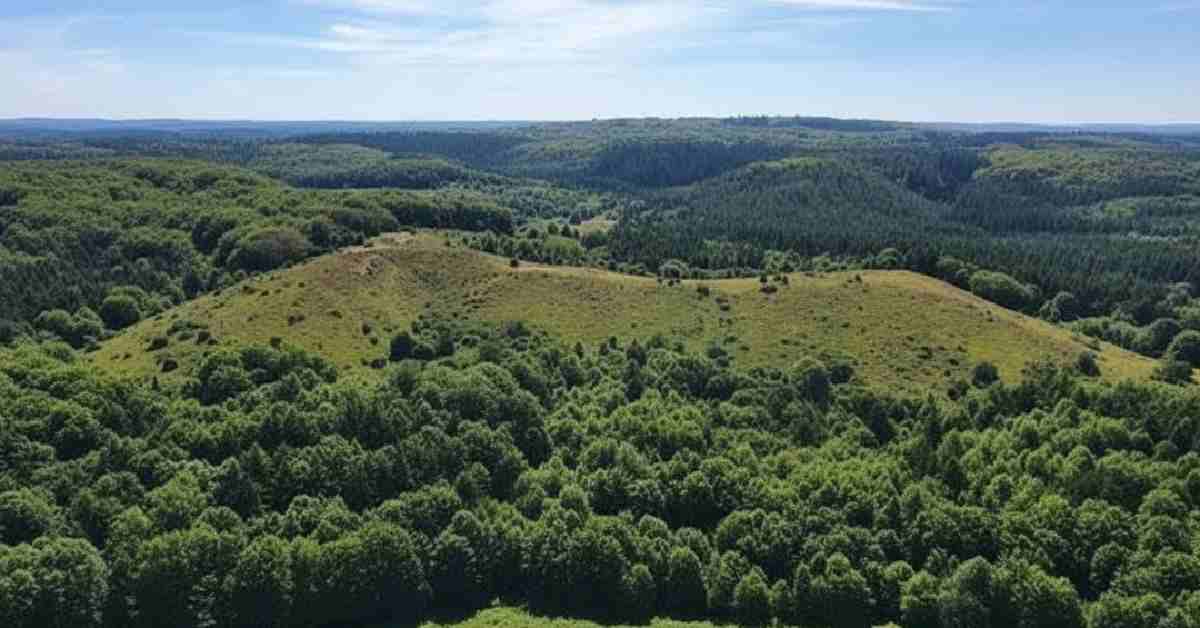
A self-declared king has been evicted from a Scottish forest, ending a peculiar land dispute that highlights the tension between eccentric claims of sovereignty and actual property rights. The case, reported by TV2, involves a man who styled himself as royalty on land he didn’t own, a move that ultimately failed when confronted with Scotland’s legal reality.
I’ve watched Danes follow stories about Scotland with particular interest over the years, partly because of Anders Holch Povlsen’s massive land holdings there. But this story isn’t about Denmark’s wealthiest man. It’s about something stranger: what happens when someone declares themselves king of land that isn’t theirs.
The Self-Declared Monarch
According to TV2, Scottish authorities removed a man from forest land where he had established himself as a self-styled king. The details reveal a familiar pattern: someone claims territory, declares independence or sovereignty, and assumes the trappings of authority without legal foundation.
These micronation attempts pop up regularly. They make colorful news stories. They rarely survive contact with actual law enforcement. This one followed the script. The man styled himself as royalty, apparently attempted to establish some form of autonomous zone, and got evicted when property owners or authorities decided enough was enough.
Property Rights and Fantasy Kingdoms
Scotland has complicated land ownership history. Much of the Highlands and forests belong to large estates, some foreign owned. Povlsen himself owns roughly 221,000 acres across Scotland, making him the country’s largest private landowner. That scale of foreign ownership generates debate about land reform, access rights, and who controls Scotland’s wild spaces.
But this case wasn’t about legitimate land reform activism. It was about someone declaring themselves king without owning the ground beneath their feet. Scotland’s land laws, while offering significant public access rights through the Scottish Outdoor Access Code, don’t permit squatting or establishing unauthorized settlements, let alone sovereign territories.
The eviction highlights how even in Scotland, where you can walk almost anywhere thanks to right to roam legislation, you cannot simply claim land and declare yourself its monarch. Property law still applies. Ownership still matters.
Why This Resonates Beyond Scotland
Living in Denmark, I’ve watched this country grapple with its own land access debates. Denmark has some of Europe’s most restrictive access to nature, with national parks and protected areas carefully managed. You cannot wild camp freely here the way you can in Scotland or Sweden. The relationship between private property and public access remains tense.
Danish estates like Egeskov Castle and Bratskov Manor represent centuries of concentrated land ownership. These properties remain privately held but culturally significant. The idea of someone simply declaring themselves king of any portion would be unthinkable, swiftly addressed by Danish authorities.
The Scottish case demonstrates that even in places with more liberal access traditions, you cannot bootstrap sovereignty through declaration. Real authority requires either legitimate property ownership or governmental power. Fantasy kingdoms don’t survive encounters with bailiffs.
The Pattern of Micronations
This Scottish eviction fits a broader pattern of attempted micronations that briefly capture attention before collapsing. Some become tourist attractions. Most just fade away when founders realize that international recognition requires more than self-declaration and a homemade flag.
The man in Scotland joins a long list of self-styled monarchs, presidents, and princes who discovered that sovereignty isn’t a participatory sport. You cannot opt out of existing legal systems by simply saying you have. Property owners have rights. Governments have enforcement power. And eccentricity, however colorful, doesn’t trump law.
For expats in Denmark or anywhere else, the lesson is straightforward. You live under the laws of the country where you reside, regardless of what you call yourself. That’s not oppression. That’s how societies function. The alternative is chaos, where anyone with sufficient boldness can claim anything and call it a kingdom.
Sources and References
TV2: Selveerklæret konge smidt ud af skotsk skov
The Danish Dream: Egeskov Castle Discover This Fairytale Renaissance Gem
The Danish Dream: Bratskov Manor Renaissance Architecture in Brovst Denmark
The Danish Dream: Rebild Bakker National Park