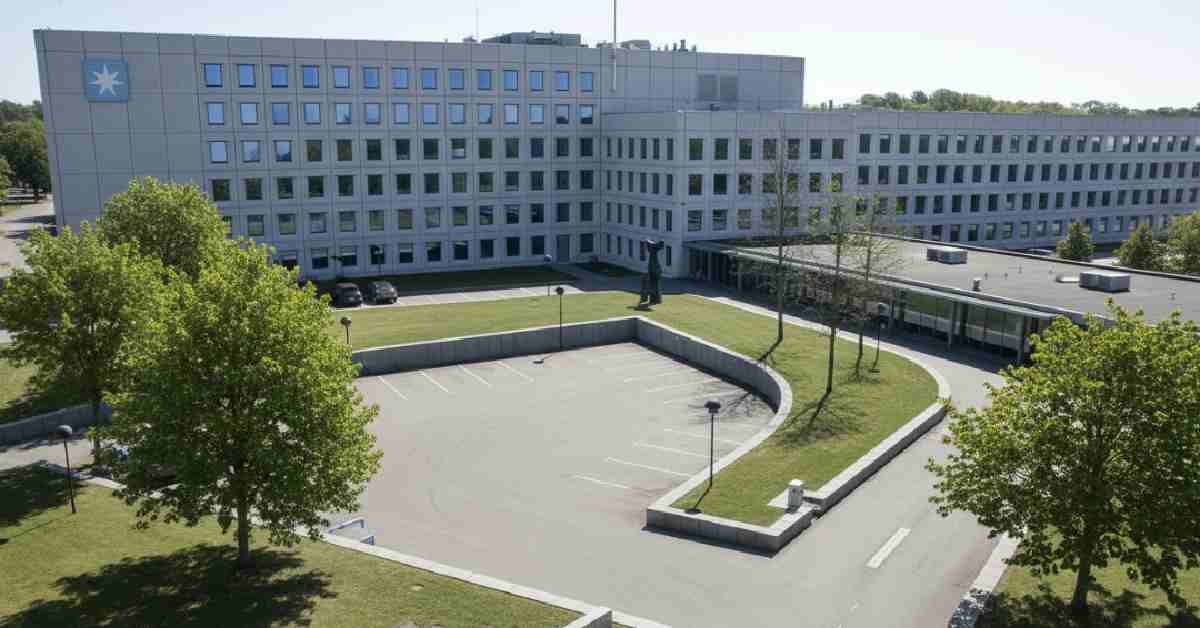
Denmark’s Independent Police Complaints Authority is reviewing multiple complaints about Copenhagen Police’s handling of pro-Palestine protesters at Maersk’s headquarters, where demonstrators accused the shipping giant of transporting weapons to Israel.
The Independent Police Complaints Authority has confirmed it is examining several complaints from the demonstrations at A.P. Møller-Mærsk’s Esplanaden headquarters in central Copenhagen. The authority, known as DUP, will screen each case to determine whether it amounts to a conduct complaint or requires criminal investigation by special prosecutors. As reported by DR, the complaints focus on alleged disproportionate use of force and the circumstances surrounding detentions.
Around 200 to 300 protesters gathered outside Maersk’s headquarters to demand the company stop shipping military equipment to Israel. The demonstration was part of the global Mask Off Maersk campaign, which accuses the shipping company of playing a direct role in enabling Israel’s military operations in Gaza. Climate activist Greta Thunberg was among those detained.
From peaceful protest to police intervention
Copenhagen Police maintain they acted lawfully when demonstrators blocked building entrances and refused orders to disperse. Officers used physical force to remove protesters, with some accounts describing pressure points and arm locks. Police detained a number of participants under preventive detention provisions in the Danish Police Act.
The force insists it gave protesters multiple opportunities to leave peacefully before escalating. They argue the demonstration lost its legal protection when it moved from a notified assembly to what they characterize as obstruction of private property. Only a fraction of those present were ultimately detained or charged.
A separate occupation on Amager
In a distinct incident, more than 50 activists including Thunberg entered Maersk Tankers’ offices on Holmbladsgade in Amager. The group occupied corridors and unfurled banners inside the building. Copenhagen Police warned demonstrators they were on private premises and forcibly removed those who refused to leave voluntarily.
Police charged those removed from the Amager offices with husfredskrænkelse, roughly translated as trespassing or violating the peace of a household. The charge typically results in fines rather than imprisonment. Some activists reported threatening language from officers during removal, which may feed additional complaints to DUP.
The arms shipments at the heart of the protests
The demonstrations stem from a Danwatch investigation documenting 43 weapon-related shipments to Israel by Maersk-owned container ships between October 2023 and September 2024. The investigative outlet reported that 14 Maersk vessels transported thousands of tons of military equipment, including ammunition, explosives and weapons from US and European ports.
Maersk counters that it complies with all export control and sanctions regimes. The company argues it is a common carrier that cannot unilaterally refuse lawful cargo, and that responsibility for arms exports lies with governments that grant licenses. A company spokesperson has expressed concern about the humanitarian situation in Gaza while insisting Maersk follows the law.
Activists reject this position. They point to the UN Guiding Principles on Business and Human Rights, which expect companies to avoid contributing to abuses regardless of what states permit. The clash between legal compliance and moral responsibility has made Maersk a focal point for protest campaigns worldwide.
A test for Danish protest rights
Having covered Denmark for years, I have seen the country’s approach to demonstrations evolve. Danish police traditionally practice dialogue-based policing, seeking to de-escalate rather than confront. The forceful clearing of the Maersk protests suggests a tougher line when demonstrations target corporate infrastructure or cross into civil disobedience.
DUP’s investigation matters because it will determine whether police maintained the balance between protecting property and respecting constitutional assembly rights. The authority receives hundreds of complaints annually, but only a small percentage lead to consequences for officers. Civil-rights advocates warn that heavy-handed tactics create a chilling effect on lawful protest.
The stakes extend beyond Denmark. Georgian officials have already seized on the Copenhagen police response to argue that EU member states fall short on their own human-rights standards. Across Europe, authorities grapple with similar tensions over protests targeting arms manufacturers and logistics companies linked to Israel.
For expats living here, this controversy reveals something important about Danish society. The country prides itself on democratic openness and space for dissent. But when protest collides with powerful economic interests, particularly a company as central to Danish identity and prosperity as Maersk, the response can be surprisingly forceful. Maersk’s privileged position, including tax arrangements that see less than 0.2 percent of record profits reach the Danish treasury, compounds activists’ frustration.
DUP’s eventual findings will clarify whether police crossed legal boundaries. But the deeper questions about corporate responsibility and the limits of legitimate protest will remain contested long after the complaints are resolved.
Sources and References
The Danish Dream: A.P. Møller-Mærsk
The Danish Dream: Maersk’s Shocking Tax Bill Despite Huge Profits
The Danish Dream: Maersk’s Arms Shipments Face Global Protest Pressure
DR: Politiklagemyndigheden har fået flere klager over behandlingen af Mærsk-demonstranter