Denmark heads to the polls for a general election no later than October 31, 2026, as mandated by the constitution. The vote will determine the future of the country’s unprecedented centrist coalition and could reshape Danish politics after years of cross-bloc cooperation.
The 2026 election arrives at a pivotal moment for Denmark. The current government, formed in December 2022, brought together parties from across the traditional political divide for the first time in more than 40 years. Now voters will decide whether this experiment continues or whether Denmark returns to its familiar red and blue bloc politics.
Understanding the Danish Electoral System
The mechanics of Danish democracy can seem complex, but they ensure broad representation and proportional outcomes.
Constitutional Requirements and Timing
The Danish Constitution requires parliamentary elections at least every four years. Section 32 establishes this maximum interval, giving the Prime Minister flexibility to call elections earlier when politically advantageous. The last election took place on November 1, 2022, setting the constitutional deadline for the next vote at October 31, 2026.
Prime Minister Mette Frederiksen holds the power to dissolve parliament and set an election date anytime before that deadline. Political observers note that timing plays a crucial role in election outcomes. Spring elections often favor sitting governments, while fall contests can amplify voter discontent after summer reflection.
Seat Distribution and Mandates
The Folketing contains 179 seats representing all parts of the Danish Realm. Of these, 175 seats represent constituencies across Denmark proper. Two seats each go to Greenland and the Faroe Islands, reflecting their status as autonomous territories within the Kingdom.
The electoral system divides the 175 Danish seats into 135 constituency mandates and 40 supplementary mandates. Constituency seats go to candidates based on local vote totals within larger electoral districts. Supplementary mandates ensure proportional representation nationwide, compensating parties whose national vote share exceeds their constituency wins. This dual system balances local representation with national party strength.
The Two Percent Threshold
Denmark operates an informal electoral threshold of two percent. While no formal barrier exists in law, the mathematical distribution of supplementary mandates effectively requires parties to capture at least two percent of the national vote to enter parliament. This translates to roughly four seats minimum.
Votes for parties falling below this threshold become wasted votes that do not contribute to seat allocation. Recent polling suggests some smaller parties risk falling below the line, making every percentage point critical in the final weeks of campaigning.
Current Government and Coalition Dynamics
The government going into this election broke decades of political tradition and set new precedents for cooperation.
The Historic SVM Coalition
The Frederiksen II Cabinet took office on December 15, 2022, uniting the Social Democrats, Venstre, and the Moderates in a centrist coalition. This marked the first time since the early 1980s that a Danish government bridged the traditional left-right divide. Mette Frederiksen retained her position as Prime Minister. Venstre initially provided Deputy Prime Minister Jakob Ellemann-Jensen, who also served as Defense Minister before Troels Lund Poulsen succeeded him. Lars Løkke Rasmussen of the Moderates became Foreign Minister.
Business groups welcomed the coalition as a force for stability and reform. Dansk Industri praised its potential to advance economic growth, job creation, and business-friendly policies while maintaining welfare commitments. The government emphasized cross-bloc cooperation on fiscal sustainability and green transition priorities.
Policy Achievements and Tensions
The SVM government enacted significant reforms during its tenure. It expanded defense spending in response to European security concerns following Russia’s invasion of Ukraine. Green energy investments accelerated under joint leadership. Fiscal discipline remained a stated priority despite pressure for increased social spending.
However, the coalition faced internal tensions on immigration policy, taxation, and welfare priorities. Social Democrats pushed for stronger worker protections and public investment. Venstre advocated for tax cuts and reduced business regulation. The Moderates positioned themselves as mediators, though their influence waned as Rasmussen’s personal popularity declined. These fractures will likely surface during the campaign as parties differentiate themselves from governing partners.
Polling and Mandate Projections
Recent polling suggests the SVM coalition faces an uphill battle to retain power. The most recent Megafon survey shows the three governing parties collectively holding just 71 of the 175 Danish seats. A functioning government requires 90 seats in the full 179-seat Folketing.
The Social Democrats remain the largest single party but have shed support since 2022. Venstre holds steady but cannot compensate for Social Democratic losses. The Moderates struggle near the electoral threshold. Meanwhile, opposition parties on both flanks have gained ground, complicating any post-election coalition mathematics.
Parties and Leadership
Twelve parties hold ballot access for 2026, representing the full spectrum of Danish politics.
Government Parties
The Social Democrats under Mette Frederiksen anchor the current coalition from the center-left. Frederiksen has led the party since 2015 and served as Prime Minister since 2019, making her one of Europe’s longest-serving current leaders. Her pragmatic approach to immigration and national identity reshaped Danish social democracy but alienated traditional left-wing allies.
Venstre, led by Troels Lund Poulsen, represents the center-right liberal tradition. As Denmark’s traditional governing party from the right, Venstre emphasizes economic growth, entrepreneurship, and fiscal responsibility. Poulsen took over leadership amid the coalition’s formation and now seeks to prove Venstre can deliver results in centrist frameworks while preserving conservative values.
The Moderates, founded and led by Lars Løkke Rasmussen, occupy the center ground. Rasmussen previously led Venstre and served as Prime Minister before forming his own party in 2022. The Moderates advocate pragmatic problem-solving over ideological purity, though critics question whether the party can survive long-term as Rasmussen’s personal vehicle.
Opposition Forces
The Conservative People’s Party under Mona Juul stakes out traditional center-right positions on economics while taking harder lines on immigration and law enforcement. Liberal Alliance, led by Alex Vanopslagh, advocates free-market economics and minimal government intervention. Recent polling shows Liberal Alliance gaining support, with Vanopslagh emerging as a popular figure among younger urban voters.
Danmarksdemokraterne, led by Inger Støjberg, focuses on restrictive immigration policies and skepticism toward international institutions. Danish People’s Party under Morten Messerschmidt competes in similar territory but has lost ground since its peak influence in the 2010s.
Left Opposition
The Socialist People’s Party, led by Pia Olsen Dyhr, combines environmental priorities with traditional welfare state advocacy. The party has gained support by positioning itself as a principled alternative to Social Democratic compromises. The Red-Green Alliance under Pelle Dragsted maintains the furthest left position, calling for wealth redistribution and anti-capitalist policies.
The Social Liberals under Martin Lidegaard occupy the center-left with emphasis on education, culture, and progressive social policies. Alternativet, led by Franciska Rosenkilde, focuses on green politics and democratic innovation but struggles to maintain relevance after internal turmoil.
Borgernes Parti, led by Lars Boje Mathiesen, declared him a Prime Ministerial candidate, though few observers consider this credible given the party’s minimal support.
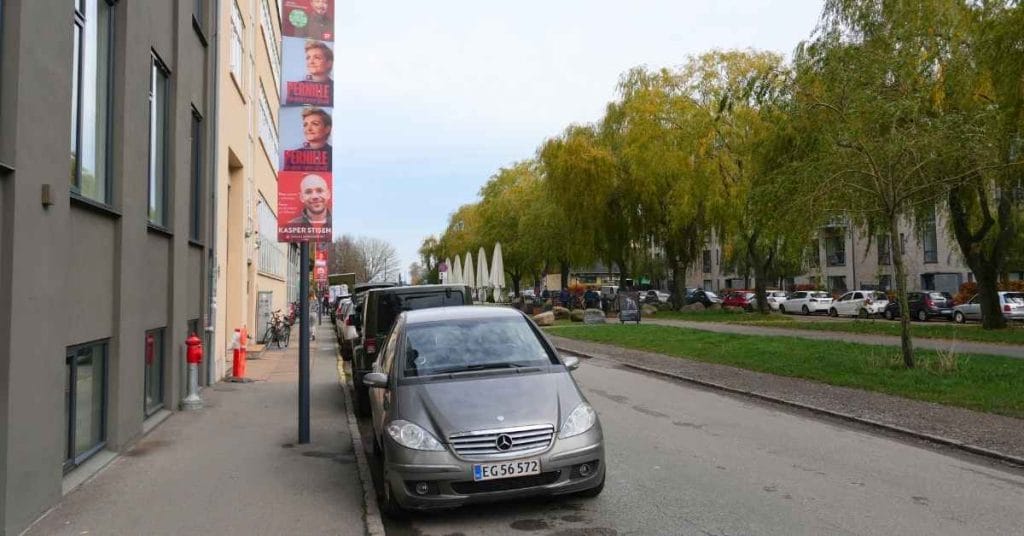
Campaign Themes and Voter Priorities
Several issues will dominate the debate as parties compete for voter attention and support.
Security and International Position
International security has moved to the forefront of Danish politics. Russia’s ongoing war in Ukraine continues to shape European defense policy. American President Donald Trump’s renewed claims on Greenland create unprecedented tensions with Denmark’s most important ally. China’s growing global influence raises questions about trade and security partnerships.
Denmark committed to major defense spending increases under NATO pressure. Voters will hear competing visions for how to fund this buildup while maintaining other priorities. The government’s Atlantic orientation faces challenges from voices calling for greater European strategic autonomy. Greenland’s future relationship with Denmark may also surface as a campaign issue.
Immigration and Integration
Immigration policy remains contentious despite broad consensus on restrictive approaches. The debate has shifted from border control toward the status of existing immigrant populations. Questions about deportation procedures, international convention obligations, and labor migration from outside Europe will generate sharp exchanges.
Some parties advocate withdrawing from or renegotiating international agreements they view as limiting Danish sovereignty on immigration matters. Others defend current frameworks while seeking stricter enforcement. The presence of Danmarksdemokraterne and Danish People’s Party ensures immigration stays prominent throughout the campaign.
Welfare Financing and Economic Management
Denmark’s generous welfare system faces long-term financing challenges from demographic aging and rising healthcare costs. Business groups warn that limited fiscal room exists regardless of which coalition wins power. Defense spending and green transition investments compete with demands for healthcare, education, and elder care funding.
Tax policy will feature prominently as parties debate how to generate revenue without undermining economic growth or competitiveness. Some left parties propose wealth taxes or higher income tax brackets for top earners. Right parties emphasize economic growth and private sector job creation as revenue sources. The balance between consumption and investment spending will shape competing economic platforms.
Regional Balance and Housing
Geographic inequality has grown as Copenhagen property values soar while rural areas face population decline. Housing affordability in major cities concerns younger voters unable to enter the property market. Rural communities worry about service cuts and infrastructure neglect as resources concentrate in urban centers.
Some parties propose regional development initiatives to reverse rural decline. Others focus on housing construction and rent regulation in cities. Transportation infrastructure investment creates both regional balance opportunities and fiscal trade-offs. This divide between urban and rural interests cuts across traditional party lines.
The Store Bededag Controversy
One unexpected issue threatens to dominate campaign discourse. The government eliminated Store Bededag, a spring public holiday, to fund increased defense spending. Public reaction proved strongly negative across the political spectrum. Restoration of the holiday has become a symbolic issue representing government overreach and lack of consultation.
Nearly all opposition parties now promise to restore Store Bededag if elected. The government parties face difficult questions about the decision throughout the campaign. What began as a technical budget measure has transformed into a referendum on governance style and priorities.
Practical Voting Information
Understanding the mechanics of voting helps ensure participation and valid ballot casting.
Eligibility and Registration
Danish citizens aged 18 or older with residence in the Kingdom can vote. Registration happens automatically through the national civil registration system. Voters receive polling cards by mail at least five days before election day showing their assigned polling station and voting number.
Voting typically occurs in schools, municipal buildings, or sports facilities near voters’ registered addresses. Voters must cast ballots at their assigned location unless they use advance voting options. Acceptable identification includes passports, health cards, or driver’s licenses if the polling card is unavailable.
Advance and Absentee Voting
Advance voting opens approximately three weeks before election day at municipal citizen service centers. This option accommodates voters unable to reach polls on election day due to work, travel, or health reasons. Danish citizens living abroad can vote at embassies or consulates during the advance voting period.
All advance voting requires valid identification. Procedures mirror election day voting, with ballots secured until official counting begins. Advance voting has grown increasingly popular as schedules become more complex and international mobility increases.
How to Mark Your Ballot
Danish ballots list parties by their official letter designation running from A through Å. Under each party, individual candidates appear with their names and numbers. Voters have three options: marking a party letter to support the party generally, marking a specific candidate to support that individual’s election, or submitting a blank ballot.
Valid marks include X, plus signs, asterisks, completely filled boxes, circles around the checkbox, or check marks. Only one mark is permitted per ballot. Multiple marks or any writing beyond approved symbols invalidates the ballot. Voters fold completed ballots to preserve secrecy before placing them in ballot boxes.
Counting and Results
Polls close at 8 PM on election day, with counting beginning immediately at local polling stations. Initial results typically emerge within an hour of closing as constituencies report totals. The full national picture usually clarifies by midnight or early morning as supplementary mandate calculations conclude.
Media organizations provide live coverage of results as they arrive. Voters can follow real-time updates showing seat projections and coalition possibilities as counting progresses. Official results undergo verification before formal certification by electoral authorities.
Government Formation Process
The period between final results and new government formation can stretch from days to weeks depending on coalition complexity.
Constitutional Procedures
The sitting Prime Minister continues in office until either reappointed or replaced through formal procedures. If the government retains a working majority, it simply continues. If it loses majority support, the monarch initiates consultations to identify who commands confidence to form a new government.
During consultations, party representatives advise the monarch on potential Prime Minister candidates. The monarch then designates someone to either form a government or facilitate negotiations toward government formation. This person, called the formateur, conducts talks with various parties to build a coalition commanding at least 90 seats.
Coalition Negotiations
Coalition talks can prove lengthy and complex when no clear majority exists. Parties negotiate ministerial portfolios, policy priorities, and budget frameworks. Written coalition agreements specify commitments on major issues to prevent later disputes. Successful negotiations conclude with the monarch formally appointing the new government at Amalienborg Palace.
If the designated formateur fails to assemble a viable coalition, the monarch initiates fresh consultations. This process can repeat multiple times until a government emerges. Denmark’s proportional system and multi-party landscape mean most governments require at least informal support from parties outside the formal coalition.
Possible Outcomes
Several scenarios appear possible based on current polling and party positions. A return to traditional bloc politics could produce either a red government of Social Democrats, Socialist People’s Party, and Social Liberals, or a blue coalition of Venstre, Conservatives, Liberal Alliance, and possibly Danmarksdemokraterne or Danish People’s Party.
Alternatively, a renewed centrist coalition might emerge with different composition than the current SVM government. The Social Democrats could partner with the Social Liberals and Socialist People’s Party in a red-green alliance. Venstre might lead a center-right coalition including Conservatives and Moderates.
Much depends on which parties cross the two percent threshold and exact seat distributions. The Moderates and Social Liberals could play kingmaker roles if neither bloc achieves a clear majority. Liberal Alliance’s strong polling position gives it potential leverage in blue coalition talks.
Prime Minister Candidates
Mette Frederiksen remains the only declared Prime Ministerial candidate entering the campaign. Her experience and name recognition make her the favorite if red or centrist coalitions prevail. However, sustained losses could prompt internal Social Democratic leadership questions.
Troels Lund Poulsen appears the most likely blue bloc candidate despite not formally declaring. Conservatives and Danish People’s Party have endorsed him as the natural choice if center-right parties win a majority. Alex Vanopslagh of Liberal Alliance polls strongly personally but leads a smaller party, making him a longer shot for the top job.
Lars Løkke Rasmussen’s future remains uncertain. His experience includes previous service as Prime Minister, but his party’s weak position limits his prospects. Some observers speculate he could emerge as compromise candidate in deadlocked negotiations.
Recent polling showed 42 percent of voters would choose Troels Lund Poulsen as Prime Minister versus 40 percent for Mette Frederiksen. However, Denmark does not elect Prime Ministers directly, making coalition math more important than personal popularity.
Historical Context and Turnout
Understanding recent electoral history provides perspective on what the 2026 contest might reveal about Danish democracy.
Recent Election Patterns
The November 2022 election produced the narrow result that enabled the SVM coalition experiment. Red bloc parties won a slim majority, but Mette Frederiksen chose centrist coalition partners rather than governing with left support alone. This decision reflected her long-term strategy of positioning Social Democrats as a broad center party rather than left faction leader.
Voter turnout reached 84.1 percent in 2022, the lowest participation rate in more than 30 years. This decline from previous elections above 85 percent concerned democratic advocates. Lower turnout often benefits parties with more committed core supporters while disadvantaging those relying on occasional voters.
Voter Engagement Challenges
Political scientists note declining party membership and weakening traditional loyalties across Danish society. Younger voters show less attachment to established parties and more willingness to shift support between elections. Social media and fragmented information sources complicate efforts to reach and mobilize voters.
Parties invest heavily in digital outreach and personalized messaging to counter these trends. Door-to-door campaigning remains important in local constituencies. Public debates and media appearances by party leaders generate crucial visibility during intense campaign periods. The challenge of motivating turnout amid widespread satisfaction but