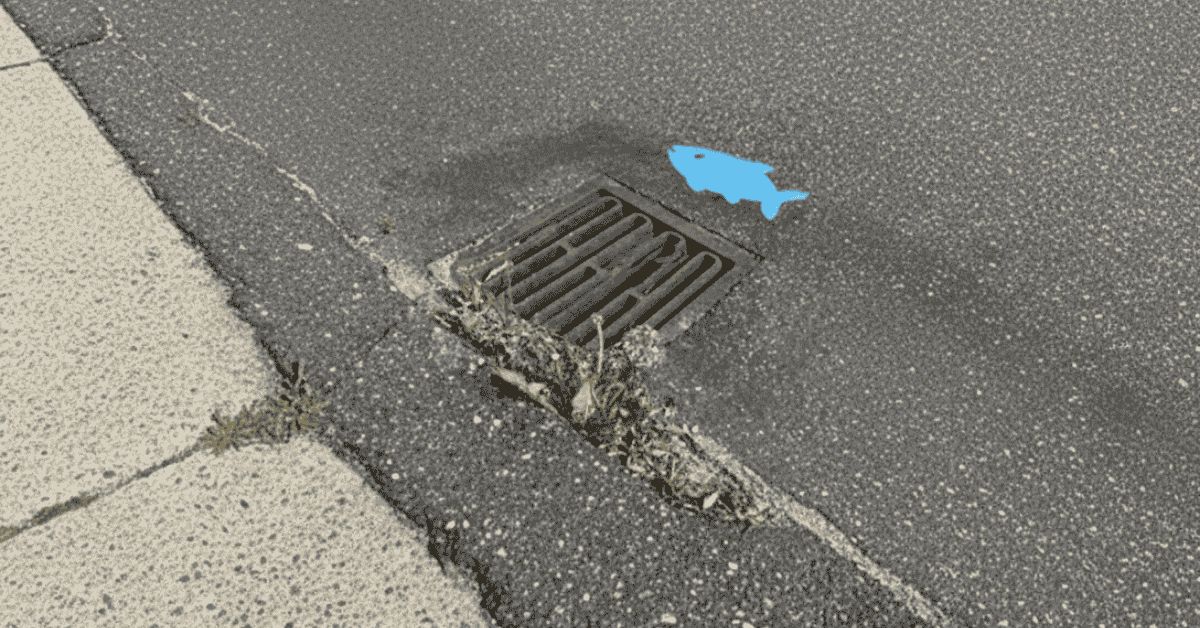
In towns across Denmark, a blue fish symbol painted into asphalt are being used to prevent pollution from entering storm drains. The initiative aims to increase public awareness about the environmental impacts of pouring chemicals and wastewater into street drains. The message is simple and meant to create awareness. What goes into the drains, end up in the environment, and the initiative seems to work.
Visual Reminders for Environmental Awareness
A blue fish symbol stenciled into the pavement near storm drains are becoming a common sight in Denmark. The painted fish are part of a growing effort by municipalities to reduce pollution in natural waterways. The message is simple but effective: what goes into the drains ends up in the environment.
Many people remain unaware that storm drains connect directly to rivers, lakes, and fjords. In Denmark, most towns use a dual sewage system, with one system for household wastewater and another for rainwater. The latter leads untreated water straight into nature. This means that any detergent, oil, paint, or other chemicals disposed of in storm drains can directly impact aquatic life.
Proven Effectiveness of Blue Fish Symbol
The city of Herning introduced the project in 2018 and has since installed 260 blue fish on streets throughout the town of Haderup. According to local officials, the initiative has successfully raised environmental awareness among residents. The painted fish prompt a moment of reflection just before someone might pour something harmful down a drain.
In Struer Municipality, located in western Jutland, a similar effort is gaining momentum. The community of Bremdal, situated just north of Struer, has recently begun placing the fish symbols throughout residential areas. Officials plan to install a total of 100 fish on roads in the neighborhood this year.

Targeting Common Forms of Pollution With Blue Fish Symbol
Everyday activities such as washing one’s car on a residential street or using chemical products like algicides on rooftops may seem harmless. However, the resulting runoff can be disastrous for nearby ecosystems if it enters storm drains. Contaminants such as soap, oil, and cleaning agents contribute to algal blooms and chemical imbalances in waterways. This harms both plant and animal life.
The goal of the blue fish symbol is to prevent this type of pollution by serving as a visible deterrent. Placing the fish next to storm drains helps remind individuals that these actions directly impact local fjords, streams, and ponds. Educational campaigns accompanying the project highlight that storm drains are for clean rainwater only.

Public and Political Support for Blue Fish Symbol
The campaign has garnered broad support across political lines. Municipal environmental committees have prioritized local water quality, focusing on preventing contamination through public outreach and city-designed interventions. In particular, local politicians from the Venstre party have emphasized the importance of initiatives that raise environmental awareness without requiring costly infrastructure changes.
Municipal employees involved in executing the initiative use high-performance heat guns to permanently bond the fish icons to the pavement. The visual cues are engineered to withstand all weather conditions, ensuring long-term durability.
Keeping Waters Clean for All
The consequences of careless disposal into drains extend beyond just wildlife damage. These pollutants can reduce water quality in recreational areas used for swimming, boating, and fishing. When algae grow excessively due to chemical runoff, oxygen levels in the water drop, suffocating fish and creating dead zones.

More than just a symbol, each blue fish speaks to a larger message about environmental responsibility. The campaign empowers individuals to act more conscientiously in their day-to-day routines, especially when it comes to using household chemicals or washing cars.

Looking Ahead
Other municipalities are now looking to replicate the success seen in Herning and Struer. The simplicity and low cost of the blue fish project make it easily scalable across Denmark. As public awareness builds, the initiative could become a standard feature in environmental efforts nationwide.
With 260 fish already installed in Herning and 100 planned for Bremdal, Danish local governments are showing that small actions and simple designs can have a meaningful impact. The campaign serves as a reminder that everyone, from city officials to residents, plays a role in protecting the country’s water quality and maintaining a healthy, sustainable environment.