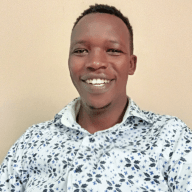
Liberal Alliance’s political spokesperson, Mads Strange, has admitted to a “linguistic error” after describing a European disability study on a B.T. podcast. The researcher behind the study says Strange’s revised version is still wrong.
DR reports that Strange used a printed research project during an episode of B.T.’s podcast Borgerligt Tabloid. He said that the larger the public sector, the worse the treatment of the weakest citizens in the welfare state. Denmark, he said, performed by far the worst among the 31 countries examined.
According to DR, that reading of the research is not correct. The fact-checking outlet TjekDet described the case first, framing it as a verification dispute over Strange’s use of the study. Alexi Gugushvili, a professor at the University of Oslo and one of the researchers behind the 2023 study, calls the interpretation misleading.

Per Gugushvili, the study did not examine whether the size of the public sector leads to worse outcomes. It also did not assess how well individual countries treat vulnerable citizens. He tells DR that the claim about a larger public sector worsening conditions for people with disabilities cannot be drawn from the research.
Strange’s correction also rejected
Strange was not available for an interview but replied to DR in writing. He said he had unfortunately made a linguistic error, and that the study shows Denmark is the country, out of 31 in Europe, with the largest gap between citizens with and without disabilities. He acknowledged that this is not the same as saying disabled people have it worst in Denmark.
Gugushvili says that conclusion also fails. Other countries show larger gaps on education, employment or life satisfaction, and the picture depends on which outcome measure and definition are used. The study covered four parameters: education, employment, material wealth and life satisfaction.
As noted by the researcher, Strange confuses relative inequality with absolute living conditions. A gap can be wide because people without disabilities in a country are doing unusually well, not because disabled citizens are worse off than elsewhere.
The podcast episode was published on May 20. In recent days, Strange again shared a clip from the episode on his Facebook and Instagram profiles, prompting questions in the comments about the underlying research. He has now told DR that he deleted the video to avoid misunderstandings.
Sif Holst, co-founder of the consultancy FutureAble and a former member of the EU’s Economic and Social Committee, tells DR that cross-country comparisons on disability are generally difficult. On access to education and the labor market, she says Denmark ranks above the European average. On legal certainty and international obligations, she says criticism is justified.
In 2024, the UN Committee on the Rights of Persons with Disabilities criticized Denmark on several points, including failed school inclusion, the use of psychiatry and force at residential facilities, and differences between municipalities. Related concerns have also been raised about fire escape access for wheelchair users.
Strange was elected to the Folketing for Liberal Alliance for the first time in spring 2026.