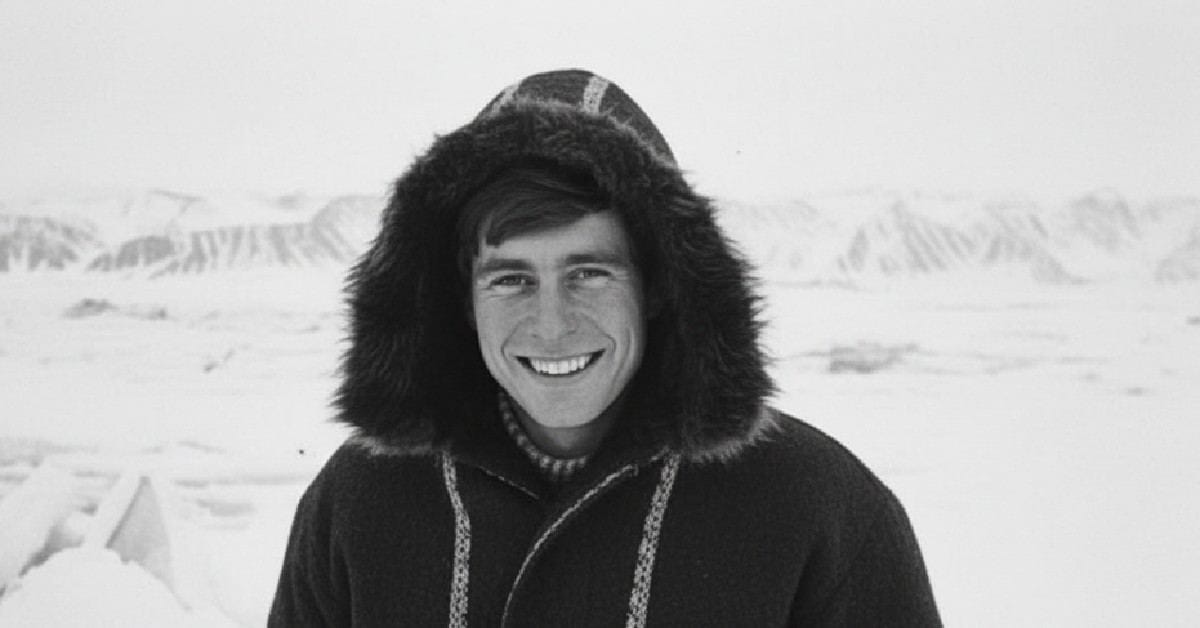
Knud Rasmussen stands as one of the most iconic figures in the realm of Arctic exploration. Known as the “Father of Eskimology,” Rasmussen significantly impacted our understanding of the Arctic and its indigenous cultures. His passion for exploration, anthropology, and storytelling has immortalized him as a cherished figure in Danish history. And it has made his name synonymous with courage, curiosity, and cultural exchange.
Born in a time when much of the Arctic remained a mystery to the world, Knud Rasmussen ventured into the icy terrain and brought back tales of wonder, challenges, and insight. Also, his works have paved the way for modern explorers, anthropologists, and historians.
Early Life and Formative Years of Knud Rasmussen
Knud Johan Victor Rasmussen was born on June 7, 1879, in Jakobshavn, Greenland—now known as Ilulissat. His very birthplace set the stage for his lifelong connection to the Arctic. Ilulissat, situated near the Ilulissat Icefjord, a UNESCO World Heritage site, is a place where the stunning beauty of nature and icy wilderness merge.
Furthermore, Rasmussen’s heritage was as mixed as the cultures he would later study. His father, Christian Rasmussen, was a Danish missionary, while his mother, Louise, was part Inuit. This unique blend of Danish and Inuit cultures gave him an intimate understanding of both worlds. His mother taught him Inuit language and traditions, embedding in him a deep respect and appreciation for the culture he would later explore.
Rasmussen was educated in Denmark, attending school in Lynge and later pursuing studies in Copenhagen. Despite living in a modern European city, his heart often yearned for the icy landscapes of his birthplace. During his youth, he read about explorers and adventurers, kindling his desire to follow in their footsteps.
By his late twenties, Rasmussen had developed into a multilingual, culturally insightful individual. He was equipped with a unique perspective and the skills necessary to navigate the complexities of Arctic exploration. At the heart of his mission was more than just the pursuit of undiscovered lands. He sought to understand and preserve the knowledge and practices of the indigenous people—a mission that would define his legacy.
Career Highlights of Knud Rasmussen
Danish Literary Expedition (1902–1904)
Rasmussen embarked on his first major expedition, the Danish Literary Expedition, which took place from 1902 to 1904. This journey aimed not only at geographical exploration but also at gathering cultural insights. Alongside fellow explorer and writer Mylius-Erichsen, Rasmussen traversed the vastness of Greenland, covering over 1,000 kilometers. During this expedition, he developed a deeper understanding of the Inuit’s rich oral traditions, customs, and lifestyles. Thus collecting artifacts and stories that would later inspire his writings.
Founding of the Thule Trading Station
In 1910, Rasmussen, driven by a vision of creating a hub for exploration and cultural exchange, founded the Thule Trading Station. It was named after the legendary Greco-Roman region believed to be the farthest north. The establishment of this station at Cape York in northwestern Greenland was an important moment in his career. Beyond serving as a commercial center, Thule became a base for numerous expeditions and a crucial site for cultural interaction between Europeans and Inuit.
The Fifth Thule Expedition (1921–1924)
The Fifth Thule Expedition is perhaps the most significant and ambitious of Rasmussen’s undertakings. Conducted between 1921 and 1924, this expedition spanned over 18,000 miles across the Arctic, from Greenland through Canada to Siberia. Rasmussen’s goal was to document the lives of the Inuit and their kin across these regions, tracing cultural connections and variations. His profound observation of the Inuit, with whom he connected due to his heritage and linguistic skills, produced unparalleled anthropological insights.
This endeavor resulted in a ten-volume series of works, providing comprehensive documentation of the Inuit way of life: their myths, songs, and social customs. The expedition’s remarkable breadth and the richness of its findings earned Rasmussen international acclaim, firmly establishing him as a leading figure in Eskimology.
Conclusion
Rasmussen was awarded numerous honors, including the Hans Egede Medal in 1924. It celebrated his exceptional service in promoting knowledge about Greenland and its inhabitants. In addition, his literary contributions, such as “The People of the Polar North” and “Across Arctic America,” are enduring testaments.
Rasmussen continued his exploratory voyages and studies until his untimely death on December 21, 1933. Even after his passing, his legacy endures in the spheres of polar exploration and cultural anthropology. He remains a beacon of inspiration for explorers and scholars worldwide. Finally, his commitment to documenting and respecting the voices of indigenous peoples set new standards for the inclusive and empathetic study of human cultures.
FAQs about Knud Rasmussen
1. Why is Knud Rasmussen called the “Father of Eskimology”?
Rasmussen earned this title due to his comprehensive and pioneering work in the study of Eskimo cultures, traditions, and languages. Thus greatly contributing to the field of cultural anthropology.
2. How did Knud Rasmussen die?
Rasmussen passed away on December 21, 1933, due to complications from pneumonia contracted after a bout of food poisoning.
3. Why is Knud Rasmussen still relevant today?
Rasmussen remains relevant for his groundbreaking approach to cultural anthropology and exploration, demonstrating the importance of empathy and cultural awareness in global understanding and scholarship.