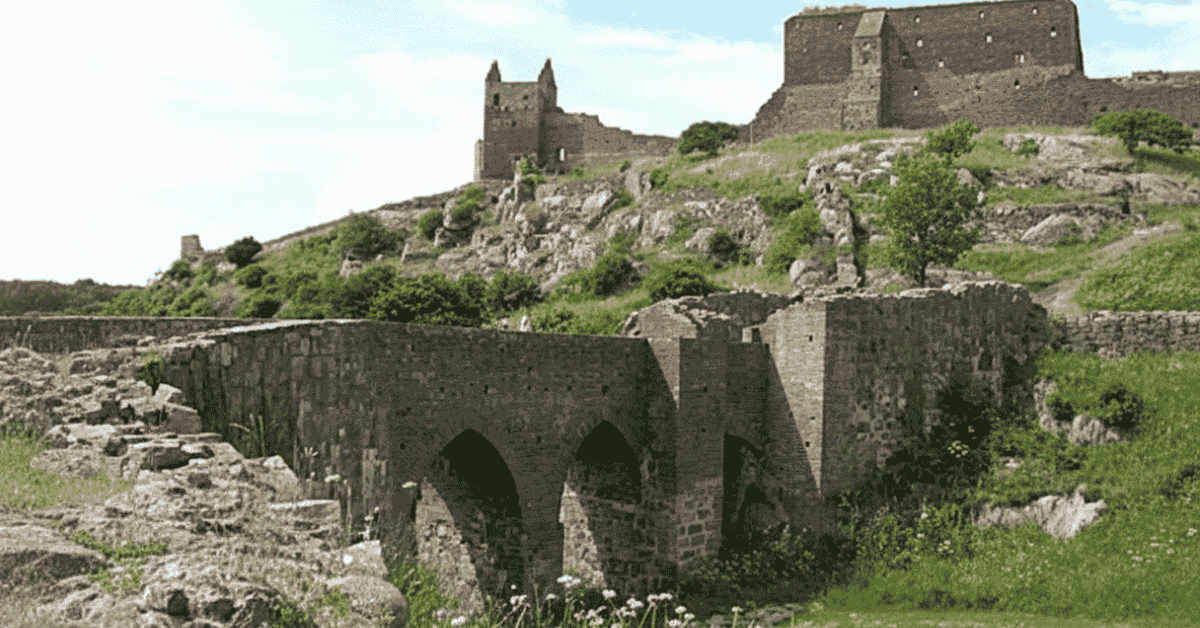
Hammershus, perched on the cliffs of northern Bornholm, is Northern Europe’s largest medieval castle ruin and a 13th-century fortress that still defines Denmark’s Baltic identity. Here is the expat guide to its layered history, recent archaeology, and how to visit it properly.
I have lived in Denmark long enough to know that most expats never make it to Bornholm. That is a mistake, and Hammershus is the main reason why. This is not a tidy little castle on a postcard. It is a sprawling cliff-top ruin, weathered by 800 years of Baltic wind, politics, and fire.
When I first walked the ramparts in late spring, I understood why Danes treat this place almost reverently. Hammershus is not just stone. It is a national mood. It sits on granite, 74 metres above the sea, with the wind doing most of the storytelling.
What Makes Hammershus Denmark’s Most Important Medieval Fortress
Hammershus is the largest medieval castle ruin in Northern Europe, full stop. The fortress sits at Hammeren, the northernmost tip of Bornholm. Its outer curtain wall stretches roughly 750 metres around a rocky knoll above the Baltic Sea.
For Denmark, that scale matters. The country is famously flat, lacking dramatic geography. Hammershus gives Danes their one true cliff-top stronghold, and it shows in how it is preserved and promoted.
A Fortress Built on Rock and Politics
The earliest stone construction at Hammershus dates from around 1200. Recent archaeology, summarised by Medievalists.net, points to a joint project. King Valdemar II and Archbishop Anders Sunesen of Lund likely built it together.
That collaboration tells you everything about medieval Denmark. The crown and the church were not rivals here. They co-managed a strategic Baltic island where shipping routes, tolls, and ecclesiastical revenues all converged.
The Numbers That Define the Site
Hammershus rises about 70 to 74 metres above the sea, depending on the reference point. Its perimeter wall runs 750 metres. The Danish Nature Agency manages it as both a cultural and natural heritage area.
According to Wikipedia, the fortress was partially demolished around 1750. Today, the ruin draws close to half a million visitors a year. That is a serious number for a remote Baltic island.
The Real History of Hammershus: Sieges, Kings, and Prisoners
Most online guides skim the history. They should not. Hammershus is where Danish, Swedish, and Hanseatic ambitions collided for four centuries.
Medieval Power Struggles on Bornholm
Through the High Middle Ages, three of Bornholm’s four districts belonged to the Archbishop of Lund. Hammershus became the seat of that ecclesiastical authority. It collected taxes, housed officials, and projected power over local peasants and passing merchants.
The Hanseatic League also pressed in. Bornholm sat on the Baltic trade web, and control of Hammershus meant influence over that web. The fortress changed hands repeatedly, pledged and reclaimed in tangled deals between bishops, kings, and Lübeck merchants.
The Siege of Hammershus, 1645
During the Torstenson War, Swedish forces attacked Hammershus on 16 to 17 June 1645. The siege was short but politically significant. It ended with the Peace of Brömsebro, a humiliating settlement for Denmark.
Sweden took Gotland, Øsel, and Norwegian provinces. Bornholm itself stayed Danish, but the balance of Baltic power shifted west. Hammershus would matter militarily for only another half-century after that.
The Castle as State Prison
Hammershus also functioned as a prison for high-ranking political enemies. The most famous case is Leonora Christina, daughter of King Christian IV. She and her husband Corfitz Ulfeldt were imprisoned here in 1660 and 1661 on charges of treason.
Her later writing made the imprisonment legendary in Danish literature. Stand inside the inner castle today, and you can feel why these walls broke people. The wind alone is punishing.
Architecture and Archaeology: What You Actually See
The original article you may have read calls the design Gothic. That is too tidy a label for what survives.
Layered Defences and the Mantel Tower
Hammershus uses concentric rings of fortification, exploiting the granite ridge beneath it. The inner castle contains the residence, halls, a chapel, and the Mantel Tower. The Mantel Tower combined defensive lookout and high-status living quarters in one massive structure.
Two additional towers were added in the 16th century. These supported artillery, reflecting the shift from arrow slits to gunpowder warfare. The castle was constantly adapted, not frozen in one architectural moment.
Recent Archaeological Discoveries
A joint Polish and Danish archaeological project uncovered more than 200 artefacts from 13th-century layers. These finds, reported by The Copenhagen Post, confirmed the early construction date. They also strengthened the case for joint royal and ecclesiastical authorship.
Ongoing surveys hint at even earlier fortifications on the rock. The Danish Nature Agency notes traces of pre-castle defences beneath the visible ruins. Hammershus, in other words, was already a stronghold before it became a stone fortress.
The Hammershus Visitor Centre: Where Old Meets New
The site’s modern Hammershus Visitor Centre opened in 2018, designed by Arkitema Architects with Christoffer Harlang. It sits across a small valley from the ruins, with panoramic windows framing the castle. The architecture is deliberately quiet, built with local Bornholm oak.
I appreciate the restraint. The centre does not compete with the ruin. It hosts exhibitions, a café, and educational rooms designed to handle up to 500,000 visitors annually, according to Topos Magazine.
What the Exhibitions Cover
Inside, you get the full archaeological context. Models, artefacts, and a miniature reconstruction show how Hammershus once looked. The exhibitions also tackle conservation philosophy and explain why the ruin is preserved, not rebuilt.
This matters. Danish heritage policy treats Hammershus as a “permanent ruin,” a concept worth understanding before you wander the site. Stabilise, do not reconstruct. The decay itself is part of the story.
How to Visit Hammershus: A Practical Guide for Expats
Now to the part most articles get wrong or outdated. Visiting Hammershus is easier than you think, and cheaper too.
Entry, Hours, and Access
Entrance to both the ruins and the Visitor Centre is free. The castle itself is open 24 hours a day, year-round. The Visitor Centre opens daily from 10:00 to 15:30, Easter through 12 November, and weekends only in winter.
That is unusual for a site this significant. Most European castles charge serious money. Denmark, true to form, makes its biggest medieval monument open to anyone willing to walk up the hill.
Getting There from Copenhagen
You first need to reach Bornholm. Direct flights from Copenhagen Airport take about 35 to 40 minutes. The cheaper route runs by train to Ystad in Sweden, then ferry to Rønne, totalling around three hours.
From Rønne, Hammershus is roughly 23 kilometres north. Driving takes about 25 minutes along route 158/9, with coastal views the whole way. Bus lines 1, 2, and 7 from Rønne also serve the site, and line 7 connects from Nexø.
Best Time of Year to Visit
Late May to early September is ideal. Bornholm sees more sunshine than mainland Denmark, and the cliff-top approaches are friendly in mild weather. The ruins glow in the long Nordic evening light.
For atmosphere, go in October or February. The wind howls, the sea turns slate, and you get the place almost to yourself. Just dress like you mean it.
The Bornholm Context: What Else Worth Seeing Nearby
Hammershus alone justifies a trip, but it sits within one of Denmark’s richest cultural landscapes. Plan more than a day.
Nearby Sites Worth Adding to Your Trip
The Hammeren peninsula itself, called Hammerknuden, offers some of Denmark’s best coastal hiking. Just south, you can visit the Lilleborg Ruins, the inland royal counterpart to Hammershus. Together, they tell the full story of medieval Bornholm.
Bornholm’s famous round churches are also nearby. So is the medieval town of Gudhjem and the Bornholm Art Museum, which is one of Denmark’s most beautifully sited galleries.
Where to Stay and Eat
Allinge and Sandvig, the two villages closest to Hammershus, offer family-run hotels and traditional smokehouses. Bornholm is famous for smoked herring, and the local sild plates are the real thing.
Book accommodation well in advance for July and August. The island is small, and demand outstrips supply every summer. Off-season, you can usually find something cheap and atmospheric on short notice.
Why Hammershus Matters to Expats in Denmark
I have noticed that expats often miss Bornholm because it requires effort. That is exactly the point.
Hammershus shows you a side of Denmark that Copenhagen never reveals. This is not Nordic minimalism or cycling lanes. This is medieval ambition carved into Baltic stone, with eight centuries of war, faith, and politics layered into the walls.
If you are building a life here, you owe yourself this trip. Walking the ramparts of Hammershus is the closest most of us will come to feeling Danish history physically, in our knees and lungs. It puts the rest of the country into perspective.
FAQ: Frequently Asked Questions About Hammershus
What is Hammershus and why is it famous?
Hammershus is a medieval fortress on the northern tip of Bornholm in Denmark. It is the largest medieval castle ruin in Northern Europe, with a 750-metre perimeter wall. The fortress dates to around 1200 and played a key role in Danish and Baltic history.
When was Hammershus built and by whom?
Hammershus was built around 1200, likely as a joint project between King Valdemar II of Denmark and Archbishop Anders Sunesen of Lund. This collaboration reflected the shared royal and ecclesiastical interest in controlling Bornholm and Baltic trade routes.
How do I get to Hammershus from Copenhagen?
Fly from Copenhagen Airport to Bornholm in about 40 minutes. Alternatively, take a train to Ystad in Sweden, then a ferry to Rønne, which takes around three hours total. From Rønne, drive 25 minutes or take bus line 1, 2, or 7.
Is there an entrance fee for Hammershus?
No. Entry to both the Hammershus ruins and the Visitor Centre is completely free. The ruins are open 24 hours a day, while the Visitor Centre operates daily from 10:00 to 15:30 between Easter and 12 November.
When is the best time of year to visit Hammershus?
Late May through early September offers mild weather and long daylight hours. Bornholm has more sunshine than mainland Denmark. For dramatic atmosphere and fewer tourists, October and February are excellent alternatives.
What famous prisoners were held at Hammershus?
The most famous prisoners were Leonora Christina, daughter of King Christian IV, and her husband Corfitz Ulfeldt. They were imprisoned at Hammershus in 1660 and 1661 on charges of treason. Their story became central to Danish literary memory.
Are there nearby attractions to Hammershus?
Yes. Hammerknuden peninsula, the Lilleborg ruins, Bornholm’s round churches, the medieval town of Gudhjem, and the Bornholm Art Museum are all within easy reach. Together they make Hammershus a full multi-day cultural destination.