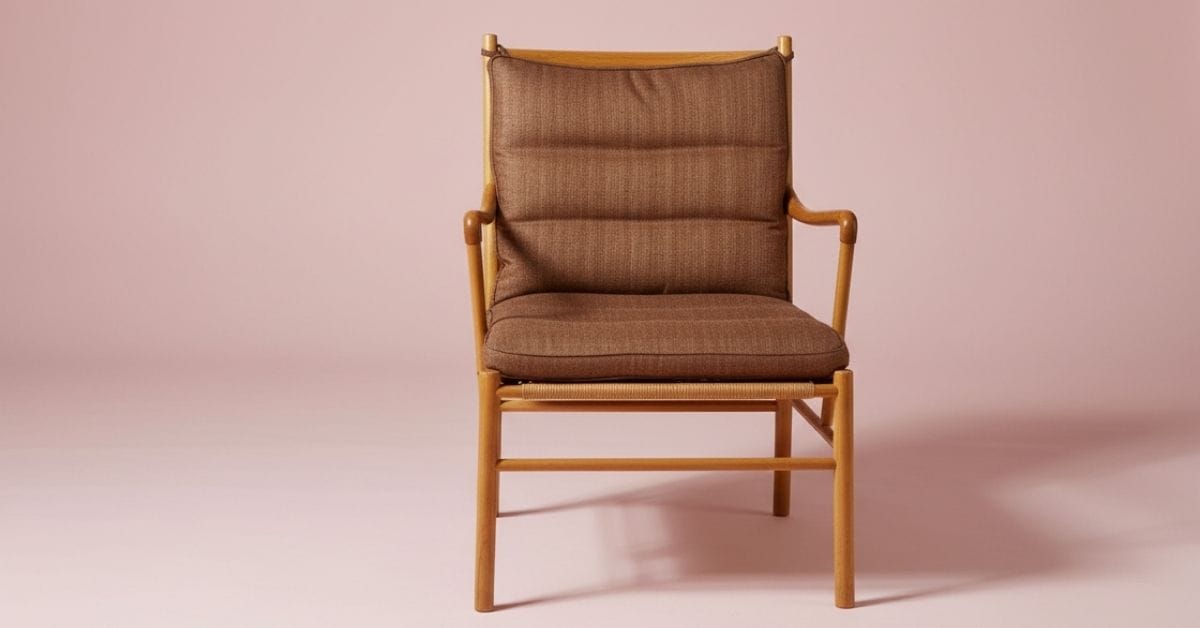
Timeless, tactile, and exquisitely crafted, the Colonial Chair by Ole Wanscher is a masterstroke of mid-century Danish design.
Key Points:
- A Danish design Icon Rooted in History and Refinement: Designed in 1949 by Ole Wanscher, the Colonial Chair reflects Denmark’s blend of classical influences and modern minimalism, emphasizing craftsmanship, elegance, and functionality.
- Ole Wanscher: Architect, Educator, Master Craftsman: Wanscher, trained by Kaare Klint, was a pivotal figure in Danish modernism, known for his focus on classical furniture influences, simplicity, and precise craftsmanship across his prolific career.
- Qualities That Define the Colonial Chair: Characterized by its slender profile, durable high-quality wood, ergonomic comfort, and meticulous details, the chair exemplifies the balance of form and function central to Scandinavian design.
- Cultural and Aesthetic Importance in Denmark: The Colonial Chair symbolizes Danish values of simplicity, function, and artisanry, seamlessly fitting into serene, well-curated interiors and embodying timeless Scandinavian aesthetics.
- Why The Colonial Chair Remains a Global Favorite: Enduring in design reputation, the Colonial Chair is appreciated worldwide for its quiet confidence, tactile richness, and long-lasting appeal, making it a coveted investment piece.
A Danish Design Icon Rooted in History and Refinement
Designed in 1949 by Danish designer and architect Ole Wanscher, this elegant chair exemplifies the fusion of classic influences and modern minimalism that defines Denmark’s design heritage. With a light yet solid structure, clean lines, and subtle detailing, the Colonial Chair continues to enchant collectors, architects, and design lovers alike.
Evocative of 18th-century colonial furniture, Ole Wanscher’s interpretation is a refined and contemporary homage to classical craftsmanship. This piece brings together history and innovation in a single, graceful form, making it one of the most celebrated sitting chairs to emerge from Denmark’s golden age of design in the mid-20th century. Over 70 years after its creation, it remains a shining example of comfort, elegance, and Scandinavian functionality, produced today with the same devotion to quality and materials.
Ole Wanscher: Architect, Educator, Master Craftsman
Ole Wanscher (1903–1985) is a key figure in the legacy of modern Danish design, often mentioned in the same breath as his contemporaries such as Hans J. Wegner and Børge Mogensen. Trained by the legendary Kaare Klint, the father of Danish modernism, Wanscher absorbed and extended the principles of structure, harmony, and craftsmanship. He was not only a prolific designer but also a respected educator at the Royal Danish Academy of Fine Arts, where he passed his knowledge on to future generations of craftsmen and architects.
Throughout his career, Wanscher placed significant emphasis on design inspired by classical furniture, particularly English and Oriental traditions. He had a particular passion for pieces that fused delicate visual lightness with durability, using carefully selected materials and refined construction methods. The Colonial Chair became one of Wanscher’s signature works, showcasing his devotion to simplicity, grace, and proportion.
Qualities That Define the Colonial Chair
The Colonial Chair, also referred to by its model number OW149, is an artistic interplay between subtle detailing and practical design. It is characterized by its light visual footprint, slender profile, and superb construction, reflecting the elegant balance between form and function so central to Scandinavian design philosophy.
Light Yet Strong
Visually, the chair may appear slender and delicate, but its frame is an engineering marvel. Constructed from high-quality solid wood, traditionally mahogany, oak, or walnut, the chair is structurally resilient and slender in proportion. Weighing approximately 8.1 kg (around 18 lbs), the chair can easily be moved, reflecting Wanscher’s emphasis on practicality as well as harmony. Despite its lightness, the frame’s mortise-and-tenon joinery ensures exceptional stability and long-term use.
Ergonomic Comfort
One of the Colonial Chair’s defining benefits is its comfort. With a gently reclining backrest, a slightly tilted seat, and graceful armrests that follow the body’s natural posture, the chair invites relaxation without compromising on elegance. The optional cushioned seat enhances comfort further, while versions with woven cane seats offer breathability and light texture.
Materials and Craftsmanship
A key feature of this chair is the variety and quality of materials used, which reflect the detail-driven ethos of Danish furniture design. Today, the Colonial Chair is primarily manufactured by Carl Hansen & Søn, a premier Danish furniture producer known for its exquisite woodworking traditions.
The frame is available in oiled, lacquered, or soaped oak or walnut, allowing users to match the chair to a wide variety of interiors. The seat can be woven cane or upholstered in top-grade leather or fabric, both of which age beautifully over time. Importantly, all modern versions use FSC-certified wood and are built using environmentally responsible practices, in keeping with Denmark’s sustainability values.
Precision in Every Detail
The genuine brilliance of the Colonial Chair lies in its details. From the hand-finished woodwork to the curvature of each armrest and back leg, every component has been refined for a precise tactile and visual experience. The chair’s proportions are meticulously balanced, measuring approximately 65 cm wide, 68 cm deep, and 85 cm in height, allowing it to fit comfortably in living rooms, lounges, reading areas, and even offices.
Cultural and Aesthetic Importance in Denmark
There is a reason why this chair has been praised by collectors and featured in museums and high-end interiors across the world. The Colonial Chair eloquently communicates the values of Danish design: simplicity, function, artisanry, and timeless aesthetics. It fits effortlessly into the fabric of Scandinavian life, where interiors are serene, spaces are intentional, and objects are both meaningful and practical.
Whether placed in a Copenhagen apartment, a Nordic-style summer house, or a modern international home, the Colonial Chair is more than a piece of furniture. It acts as a touchstone for those who admire quality, subtlety, and artistic integrity. Its light expression contrasts beautifully with heavier elements in a room, making it a versatile choice in the evolving world of interior design.
Why The Colonial Chair Remains a Global Favorite
In a global design landscape where trends often fade quickly, the Colonial Chair endures. It is a favorite not only in Denmark but also internationally, thanks to its quiet design confidence, familiar warmth, and tactile richness. It has been honored in major design publications, acquired by global art collectors, and continues to earn new admirers each year, proof that Ole Wanscher’s vision remains as relevant today as it was in 1949.
The chair exemplifies what makes Danish furniture design legendary: it isn’t just designed to be seen, it’s designed to be lived with, subtly enhancing the beauty of daily life.
Why You Should Invest in the Colonial Chair by Ole Wanscher
The Colonial Chair is A Timeless Statement of Danish Design
The Colonial Chair by Ole Wanscher isn’t merely a chair; it is a narrative of timeless craftsmanship, historical homage, and cultural identity. For enthusiasts of Danish design, owning this piece is akin to having a work of art that is also profoundly functional. What makes it so enduring, and why should one consider it for their living space today?
In the context of Denmark’s approach to interiors, characterized by simplicity, natural materials, minimalism, and cozy elegance, the Colonial Chair embodies the essence of the country’s design philosophy. It brings warmth without visual clutter and sophistication without excess. This is why even decades after its debut in 1949, the chair remains highly relevant and continues to be produced by Denmark’s most respected manufacturer, Carl Hansen & Søn.
Functional Beauty and Ergonomic Quality
At a glance, the Colonial Chair appears light and graceful, but it offers remarkable ergonomic support and long-lasting construction. With a seat height of approximately 46 cm and careful attention given to the slope of the backrest, the chair encourages healthy posture and comfort across extended periods of sitting.
Unlike bulky lounge chairs, the Colonial Chair maintains an open, breathable visual space. This makes it perfect for smaller apartments or minimalist interiors, a common style in urban Denmark, where every piece needs to serve a blend of function and aesthetic harmony.
The Colonial Chair That Master Craftsmanship That Endures
One of the most compelling reasons to buy the Colonial Chair is its build quality. Every joint, surface, and detail is finished to master-level standards. Produced under the Carl Hansen & Søn umbrella, the chair upholds over 100 years of Danish woodworking tradition. Made with FSC-certified wood and crafted using traditional joinery techniques, each chair undergoes hours of hand-finishing. The choice of materials, whether oiled oak, smoked walnut, or black lacquered ash, makes it not just a seating option but a future heirloom.
These elements contribute to the fact that a well-maintained Colonial Chair can last for over 50 years, with families passing it down through generations.
Designed to Complement Any Interior
Part of what makes the Colonial Chair so attractive is its adaptability. Whether your home is classic with antique touches or modern with clean lines and neutral tones, this piece fits in seamlessly. Its small footprint (just under 70 cm in width and depth) ensures it’s easy to incorporate into Danish-style interiors, where space and light are maximized.
In Denmark, there is a great emphasis on creating ‘hyggelige’ (cozy) spaces. Furniture is chosen not just for its appearance, but for its feel, both to the touch and to the mood of the room. The lightness of the Colonial Chair, its tactile wooden arms, and the luxurious feel of the leather or fabric cushion offer exactly the kind of inviting warmth that is central to a Danish home.
The Colonial Chair is A Lasting Investment in Authentic Design
Beyond comfort and visual appeal, the Colonial Chair is also a smart investment. Authentic pieces, especially those that are limited editions, leather-upholstered, or vintage originals, fetch high prices at auctions and design galleries. It’s not uncommon to see values climb between €3,000 to €10,000 depending on condition and provenance. In a time where disposable furniture dominates, the Colonial Chair stands as an alternative: enduring, original, and steeped in value.
High Customizability Reflects Scandinavian Personalization
Another appeal is the ability to tailor the Colonial Chair to one’s taste. Buyers can choose:
– Wood types: Soaped oak, oiled walnut, lacquered mahogany, black stained ash
– Upholstery: Natural leather or premium textiles in a range of color palettes
– Matching Ottoman (OW149-F): For extra comfort and seamless design coordination
These options echo the values of Danish living, where homes are curated to reflect nature, harmony, and individuality. Just like art on a wall or books on a shelf, furniture choice in Denmark speaks volumes about the inhabitant’s aesthetic and values.
Conclusion
The Colonial Chair by Ole Wanscher is more than just a piece of furniture; it is a reflection of Denmark’s rich design heritage and a symbol of timeless elegance. With its perfect balance of classic inspiration and contemporary relevance, this chair exemplifies the principles of precision, simplicity, and comfort that define Danish design. Ole Wanscher’s vision for refined practicality and masterful craftsmanship continues to resonate with design enthusiasts worldwide, making the Colonial Chair a cherished investment in artful living.
Summary
– Design and Heritage: Created in 1949 by Ole Wanscher, it embodies the fusion of historic craftsmanship with modern simplicity.
– Construction and Materials: Made from high-quality woods such as oak, walnut, and mahogany, featuring ergonomic construction and a long-lasting build.
– Enduring Appeal: Well-suited for any interior style, from modern minimalist to classic traditional, maintaining its status as an iconic piece of Danish design.
– Investment Value: Offers a blend of aesthetic appeal and financial value, with heritage and limited editions fetching high prices.
FAQ
1. Who is Ole Wanscher?
Olivia Wanscher was a renowned Danish designer and architect, celebrated for his contributions to mid-century modern furniture. He was known for his elegant and timeless designs that balanced functionality with artistry.
2. What is unique about the Colonial Chair?
The Colonial Chair is distinct for its light yet durable frame, ergonomic design, and meticulous craftsmanship, making it both a practical seating solution and an elegant design piece.
3. What materials are used in the Colonial Chair?
The chair is crafted from high-quality solid woods like oak, walnut, and mahogany. It features woven cane or upholstered seating options in premium leather or fabrics.
4. Is the Colonial Chair comfortable for everyday use?
Yes, the Colonial Chair is designed for comfort, with a reclined backrest, ergonomic seating, and supportive armrests, making it suitable for daily sitting.
5. How does the Colonial Chair fit into modern interiors?
Its timeless design allows it to seamlessly integrate into various style contexts, from minimalist to traditional, adding a touch of elegance and understated sophistication to any room.
6. How do I care for my Colonial Chair?
Regular dusting, gentle cleaning with a damp cloth, and occasional wood treatment help maintain its beauty. Avoid harsh chemicals and excessive moisture to preserve the materials.
7. Why is the Colonial Chair considered an investment?
As a classic of Danish design, it not only retains its aesthetic and functional value over time but also appreciates in financial value, especially for rare editions and vintage originals.
8. Can the Colonial Chair be customized?
Yes, buyers can choose from a variety of wood finishes and upholstery options to suit their personal preferences and fit their interiors.
9. What makes Danish design so highly valued?
Danish design is prized for its emphasis on simplicity, functionality, and durability. Products like the Colonial Chair embody these principles, offering high-quality aesthetics and practical use that last for generations.