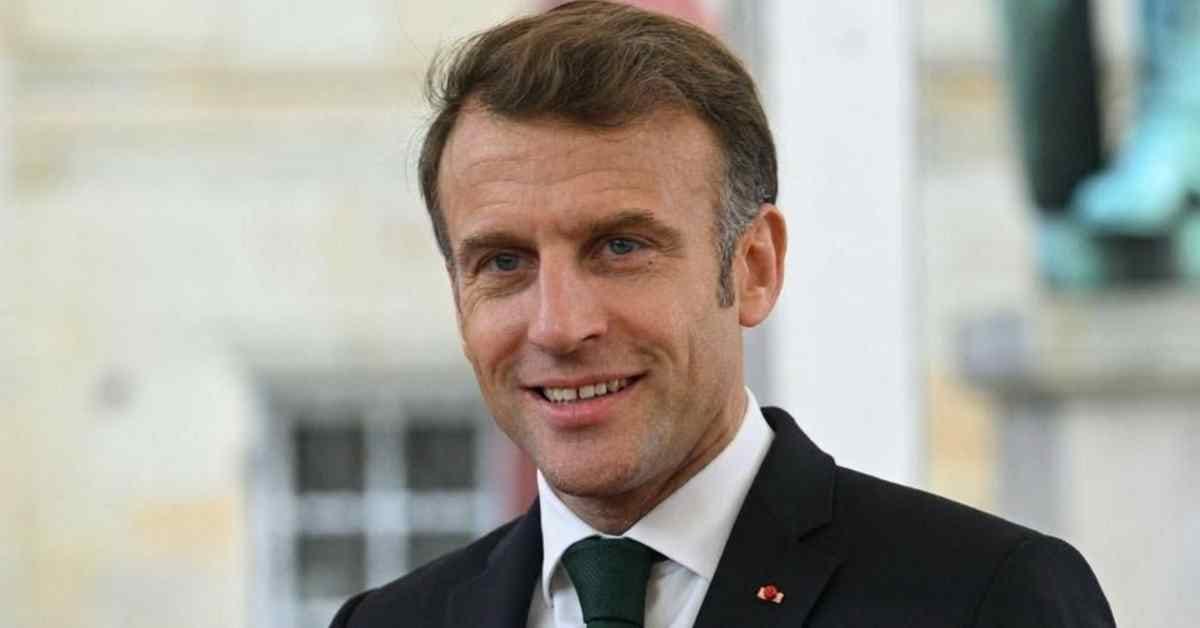
The French president called for unity and mutual respect as tensions grow between Europe and the United States over Greenland, tariffs, and trade policy.
Macron Addresses Davos as Transatlantic Tensions Escalate
In a charged atmosphere at the World Economic Forum in Davos, French President Emmanuel Macron warned that Europe faces a period of instability and growing confrontation with the United States. His speech came at a time when the EU and the US are clashing over the future of Greenland and new rounds of U.S. tariffs that threaten European industries.
Macron appeared with tinted sunglasses, reportedly due to a mild eye condition, and opened his remarks with humor before quickly shifting tone. He emphasized that the world is moving toward uncertainty, not stability, and urged Europe to prepare for a future where the established rules of global cooperation are tested.

A Dispute Over Greenland and Economic Power
The immediate source of friction stems from U.S. President Donald Trump’s renewed push to claim sovereignty over Greenland. His position has already sparked a wider political crisis within NATO and the EU. France, along with other European partners, has responded by increasing its military and diplomatic presence in Greenland to support Denmark, an EU ally.
According to Macron, the situation reflects a larger problem — a world sliding toward lawlessness as global powers disregard established norms. The French leader accused Washington of undermining European stability by applying what he called endless cycles of tariffs. These measures, he argued, target not only trade but also European sovereignty.
Macron confirmed that France joined joint EU exercises in Greenland to express solidarity with Denmark, not to provoke the United States. The symbolic move underscores Europe’s commitment to defending territorial integrity.
Europe’s Economic “Bazooka”
As trade tensions deepen, Brussels has been preparing its so‑called “bazooka,” formally known as the Anti‑Coercion Instrument. The new legal mechanism allows the EU to retaliate if a major trading partner uses economic pressure or unfair trade restrictions. Measures could include banning U.S. firms from bidding in public projects, limiting their ability to invest in member states, suspending patent rights, or restricting exports of key goods to the U.S. market.
These steps represent Europe’s strongest tools yet for confronting a potential trade war with Washington. Macron said that the EU cannot passively accept what he called “the law of the strongest.” Europe, he insisted, must protect itself when its rules are ignored.

Trump’s Response and New Tariff Threats
The dispute has escalated quickly in recent days. Trump posted private messages from Macron on social media, revealing that the two leaders had planned to meet during the Davos forum. In those messages, Macron reportedly questioned Trump’s intentions regarding Greenland, prompting an irritated reaction from the U.S. president.
Trump has since intensified his rhetoric, sharing an AI‑generated image of himself planting the American flag in Greenland. He also threatened to add a 200 percent tariff on French wine and champagne, further straining relations between the allies. The tariffs, along with earlier moves imposing 15 percent duties on European goods, risk igniting a full‑blown trade conflict.
Europe’s Call for Respect Over Force
While maintaining a firm stance, Macron said his goal is still to keep dialogue open ahead of the upcoming G7 summit in France. He hopes the meeting will foster honest discussion among the world’s major economies. Yet he also emphasized that Europe prefers mutual respect over coercion.
The French president argued that Europe must stop being naïve in its global dealings. For too long, he said, the continent has allowed the United States and China access to its markets without securing equal treatment for European companies. According to Macron, Europe must reform, grow, and strengthen its unity to compete on a global scale.

In the end, Macron’s message in Davos reflected both warning and resolve. Europe wants peace, progress, and predictable trade conditions. But if provoked, it stands ready to defend its partners and its values — especially when they concern its Arctic territories and long‑standing allies like Denmark.
Sources and References
The Danish Dream: Why Trump Wants Greenland – The Danish Perspective
The Danish Dream: Banking in Denmark for Foreigners (Updated 2025)
DR: Macron – Vi foretrækker respekt frem for bøller