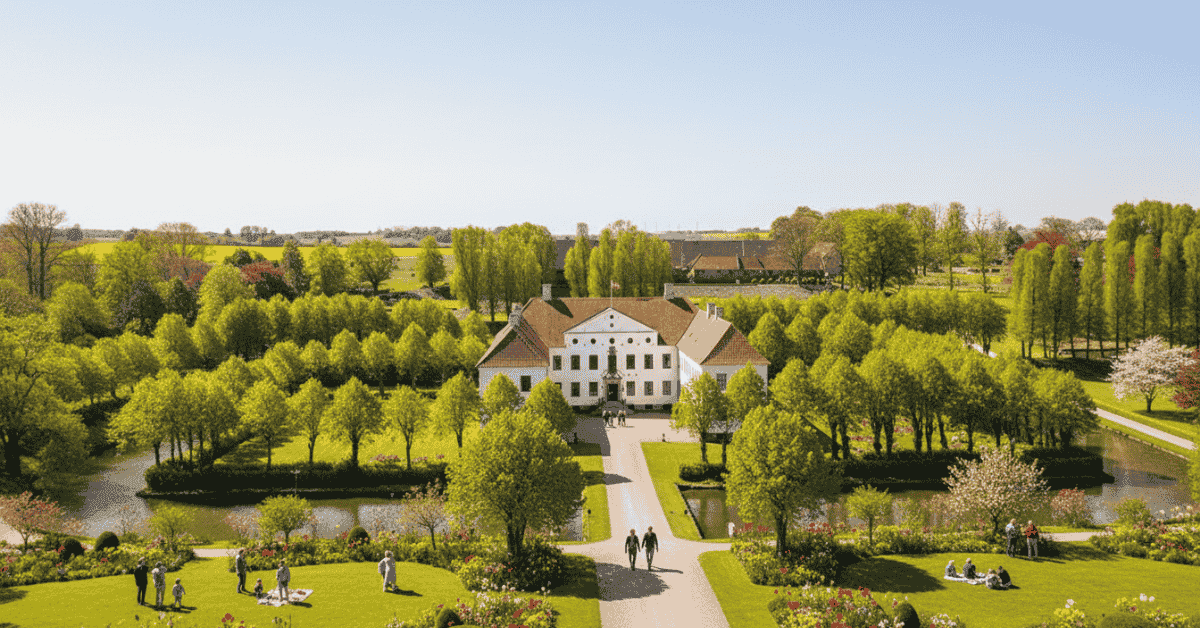
Nestled in the lush landscape of Jutland, just a short drive from Aarhus, Clausholm Castle stands as one of Denmark’s most captivating and historically rich sites. Its elegant Baroque architecture, sprawling gardens, and storied past make it an essential destination for history enthusiasts and casual travelers alike. Beyond its stunning visual appeal, Clausholm Castle is imbued with tales of royal intrigue and national significance, making it a cornerstone of Denmark’s cultural heritage.
- Historical Significance of Clausholm Castle: Clausholm Castle is a prime example of Danish Baroque architecture and has royal ties to King Frederik IV and Queen Anna Sophie Reventlow, shaping Denmark’s royal history.
- Architectural Masterpiece: The castle showcases symmetrical Baroque architecture with lavish interiors, ornate decorations, and a grand ballroom, reflecting 17th-century European aesthetics.
- Stunning Baroque Gardens: Its expansive 20-hectare gardens feature precise geometric layouts, manicured hedges, reflecting pools, and seasonal floral displays, enhancing the castle’s beauty.
- Modern-Day Cultural Importance: Today, Clausholm Castle is a living museum hosting events like art exhibitions and concerts, maintaining its relevance and cultural significance in Denmark.
- Visiting Tips and Practical Info: Best visited from late April to September, with guided tours available, free parking, amenities like a café and gift shop, and photography allowed in most areas.
A Glimpse Into Clausholm Castle’s Rich History
Clausholm Castle’s history dates back to the early 12th century, with its most prominent transformation occurring in the 1690s. The castle was largely built between 1690 and 1693 by the influential and ambitious Danish statesman, Grand Chancellor Count Conrad von Reventlow. With a vision to create a residence that embodied the grandeur of European Baroque architecture, von Reventlow’s dream materialized in the form of this magnificent castle, which quickly became one of the finest examples of Baroque style in Denmark.
Throughout its existence, Clausholm Castle has been intertwined with Denmark’s royal history. In the early 1700s, the castle was a residence for King Frederik IV and his beloved Queen Anna Sophie Reventlow, von Reventlow’s daughter. It was during this time that the castle became embroiled in a romantic and political drama that would forever shape the Danish monarchy—King Frederik IV met Anna Sophie at this very location. Their union, initially scandalous due to the King’s secret marriage to her, would change the course of Danish royal lineage.
The Architectural Significance of Clausholm Castle
Clausholm Castle is a masterpiece of Baroque architecture, distinguished by its symmetrical layout, grand facades, and meticulously planned gardens that reflect the grandeur and elegance of 17th-century European aesthetics. The castle’s exterior is a stunning illustration of Baroque principles, with its balanced proportions, ornate decorations, and a rooftop lined with stately balustrades.
The interiors of Clausholm Castle are equally impressive, featuring lavishly decorated rooms, opulent furnishings, and intricate stucco work that transport visitors to another era. Each room tells a story, with original period furniture and artworks offering a window into the bygone lifestyles of European aristocracy. The grand ballroom, in particular, is a highlight, with its high ceilings and exquisite detailing that serve as a testament to the elaborate taste of its creators.

The Gardens of Clausholm: Nature’s Masterpiece
Complementing the architectural brilliance of Clausholm Castle are its expansive gardens, which are among the oldest Baroque gardens in Denmark. Covering an impressive 20 hectares, the gardens are designed with precise geometric layouts characteristic of the Baroque style. Long avenues stretch into the horizon, flanked by perfectly manicured hedges, reflecting pools, and ornate fountains.
The gardens are also home to a variety of flora, carefully curated to ensure that visitors experience a vibrant landscape throughout the seasons. From the lush greenery of summer to the serene beauty of early spring blooms, the gardens at Clausholm provide a constantly changing tableau of natural beauty. This harmonious blend of nature and design not only enhances the castle’s appeal but also serves as a haven for wildlife and a source of tranquility for visitors.
Clausholm Castle’s Modern-Day Relevance
Today, Clausholm Castle remains a vital landmark and cultural treasure. It is a living museum, offering visitors a glimpse into Denmark’s rich history and architectural legacy. As a preserved site, it attracts thousands of tourists and researchers who are eager to experience and study its historical significance firsthand.
Moreover, Clausholm Castle plays an important role in Denmark’s cultural landscape by hosting a variety of events, including art exhibitions, concerts, and historical reenactments. These events breathe new life into the castle, reaffirming its status not just as a relic of the past, but as a thriving part of Denmark’s cultural present.
The significance of Clausholm Castle is evident, not only in its storied past and beautiful architecture but in its ongoing contribution to Denmark’s cultural and historical narrative. It stands as a monument to the country’s rich heritage and a bastion of its unrivaled historical majesty, inviting all who visit to explore and appreciate its timeless charm.
Planning Your Visit to Clausholm Castle
Visiting Clausholm Castle offers an enchanting journey through Denmark’s regal past, a unique opportunity to explore its architectural beauty and captivating history. Situated roughly 20 kilometers southeast of Randers and less than a two-hour drive from Copenhagen, the castle is easily accessible, drawing visitors from across the globe eager to experience its allure.
Opening Hours and Best Time to Visit
Clausholm Castle opens its doors to the public primarily during the warmer months, with visiting periods typically spanning from late April through to September. During this season, the castle is generally open from 10 AM to 5 PM, making it convenient for day-trip visitors and tourists exploring the region. For those planning their trip, it is essential to check the castle’s official website or contact the administration for specific seasonal schedules and any special events or closures.

The best time to visit is undoubtedly during late spring or early summer, when the gardens are in full bloom, providing a stunning colorful backdrop to the historical architecture. Visiting early in the day can also be a wise decision as you may find fewer crowds, allowing for a more relaxed and intimate exploration of the castle grounds.
Tickets and Tours
Admission to Clausholm Castle is reasonably priced, with adult tickets typically costing around 90 DKK, while children under 12 often enjoy free entry when accompanied by an adult. As prices and promotions can vary, checking online for any available discounts or package deals is recommended, specifically if visiting in a group or with family.
Official guided tours are an excellent way to enhance your visit, as knowledgeable guides provide insightful narratives and anecdotes about the castle’s history, architecture, and royal connections. These tours, often conducted in both Danish and English, allow for a deeper understanding of the site’s significance. They are usually available for an additional fee, and it is advisable to book in advance to secure a spot, especially during peak tourist season.
Tips for an Enriching Experience
Getting There: If traveling by car, free parking is available on-site. Public transport options include buses operating from nearby towns like Aarhus and Randers. Timings and schedules of such services should be checked in advance to ensure a smooth journey.
Amenities: Clausholm Castle includes a charming café where you can indulge in traditional Danish pastries and light lunches, perfect for recharging after a tour. The castle gift shop offers a variety of memorabilia and local crafts, making it a stop worth visiting for any collector.
Photography: Photography is allowed in most areas of the castle and gardens, allowing you to capture and cherish the stunning vistas. However, flash photography may be restricted in certain interior sections to preserve the exquisite artworks and decor.
Respecting Heritage: As a historical site, visitors are encouraged to respect the preservation efforts by not touching artifacts or straying from marked paths. Such actions help maintain the integrity of the castle for future generations.
Seasonal Events: Clausholm Castle hosts various events throughout the year, such as music concerts and art exhibitions. Attending these not only enriches the visit but also provides a contemporary cultural context to the historic setting.
Whether you are a history buff, a photography enthusiast, or someone seeking tranquility amidst breathtaking landscapes, Clausholm Castle offers an unforgettable experience. Planning your visit with these tips in mind ensures a seamless adventure into Denmark’s storied past.
Conclusion: Embracing the Timeless Allure of Clausholm Castle
Clausholm Castle stands as a testament to Denmark’s rich historical tapestry, brimming with architectural magnificence and cultural significance. It is more than just a glimpse into the past; it is a living piece of history that continues to captivate visitors with its beauty and grandeur. Whether exploring the opulent rooms or wandering through the lush gardens, a visit to Clausholm is a journey through time, offering insight into both Denmark’s royal heritage and European Baroque splendor. As one embraces the serene ambiance and storied past of Clausholm Castle, it becomes evident why this site remains a cherished emblem of Danish history.

Summary
– Clausholm Castle is a notable Baroque castle in Denmark, located in Jutland near Randers.
– Built primarily in the 1690s by Count Conrad von Reventlow, it features stunning Baroque architecture and historical significance.
– The castle has strong ties to Danish royalty, particularly involving King Frederik IV and Queen Anna Sophie Reventlow.
– The expansive gardens are among Denmark’s oldest Baroque gardens, covering around 20 hectares.
– Clausholm is open to the public primarily from late April to September, with guided tours available in multiple languages.
– Visitors can enjoy various events, a quaint café, and a gift shop, enhancing their cultural experience.
Frequently Asked Questions
What is the historical significance of Clausholm Castle?
Clausholm Castle is historically significant as a prime example of Danish Baroque architecture and as a royal residence linked to King Frederik IV and Queen Anna Sophie Reventlow, shaping Denmark’s royal history.
When is the best time to visit Clausholm Castle?
The best time to visit is during late spring or early summer, from late April to September, when the gardens are in full bloom, and the weather is favorable.
Are guided tours available at Clausholm Castle?
Yes, guided tours are available and provide insights into the castle’s history, architecture, and royal connections, often in both Danish and English.
How can I get to Clausholm Castle?
Clausholm Castle is accessible by car with free parking on-site, or by public transport from nearby towns like Aarhus and Randers.
What amenities are available for visitors to Clausholm Castle?
Visitors can enjoy a café offering Danish pastries, a gift shop with souvenirs, and photography opportunities in the castle and gardens.