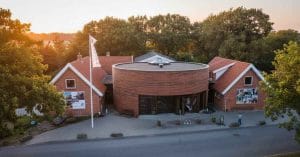
The Fur Museum sits on a tiny Limfjord island and guards some of the finest 55-million-year-old fossils on Earth. Here is what to see, how to get there, and why this overlooked Danish gem deserves a full day of your time.
After years of living in Denmark, I have learned that the best places hide in plain sight. The Fur Museum is exactly that kind of place. It rarely makes the glossy tourist lists, yet it tells a deeper story than almost any castle or church.
- What it is: A geology and natural history museum on Fur island, part of Museum Salling.
- The draw: World-class Eocene fossils preserved in moler, a rare diatomite clay.
- Where: Fur island in the Limfjord, reached by a short ferry from Branden.
- Best time: May to September, when island life and the cliffs are at their best.
- Good for: Families, science lovers, hikers, and curious expats on a road trip.
Why the Fur Museum Is Worth the Trip
The Fur Museum is small. Do not let that fool you. It packs in roughly 55 million years of planetary history.
The museum tells the story of the moler, a pale clay unique to this corner of Jutland. Inside that clay sit fossils so detailed you can count fish bones. As reported by Museum Salling, the collection has made Fur a name known to paleontologists worldwide.
A 55-million-year story in mud
Around 55 million years ago, this region lay under a warm, oxygen-poor sea. Dead plankton and animals sank into the seabed. The lack of oxygen stopped them from rotting away.
That quiet chemistry created perfect fossils. We see feathers, insect wings, and soft body outlines. Few places on Earth preserve life from the early Eocene this well.
What Makes the Fur Museum Special
Plenty of Danish museums hold old objects. The Fur Museum holds something older and stranger.
The moler and the volcanic ash
Moler is a soft, light diatomite formed from the shells of microscopic algae called diatoms. It is found in only a few places on the planet. The Limfjord islands of Fur and Mors are the richest of them all.
Running through the moler are more than 180 layers of dark volcanic ash. According to the Fur Formation record, these ash bands fell during the violent opening of the North Atlantic. Each layer is numbered, giving scientists a precise prehistoric clock.
Fossils that stop you in your tracks
The displays cover fish, birds, insects, turtles, and plants. Some of the bird fossils rank among the oldest well-preserved birds known. The detail is genuinely startling up close.
I remember leaning over a fossil fish and seeing every fin ray intact. It felt less like a museum case and more like a snapshot. That is the quiet power of this place.
A research powerhouse
The Fur Museum was established in 1954 as a home for these local finds. Today it functions as a serious research center, not just a display hall. Scientists still travel here to study Eocene climate and evolution.
This matters more than it sounds. The early Eocene was a hothouse world, a deep-time warning about a warming planet. The Geological Survey of Denmark treats these layers as a climate archive.
Visiting the Fur Museum: A Practical Guide for Expats
Getting to Fur is part of the fun. The logistics are simple once you know them.
How to get to the Fur Museum
Fur lies in the Limfjord, in Skive Municipality in North Jutland. The ferry runs from Branden to the island all year. The crossing takes only a few minutes and leaves very frequently.
By car, drive toward Skive, then follow signs to Branden and the ferry. If you use public transport, take a train to Skive, then a local bus to Branden. From Aalborg, expect a scenic half-day journey each way.
When to visit
The sweet spot is May through September. The weather cooperates, and the island feels alive. July and August are busiest, especially with Danish families on holiday.
I prefer late spring or early autumn. The cliffs glow, the crowds thin, and the Limfjord light is soft. Winter visits work too, though opening hours shrink.
Tickets and opening hours
The Fur Museum charges admission, with reduced rates for children and families. Hours run longer in summer and shorter off-season. Always check the official Museum Salling site before you travel.
Bring cash backup, though cards work fine. A combined ticket can sometimes cover other Museum Salling sites. Frankly, the entry fee is modest by Danish standards.
Fossil hunting near the Fur Museum
Here is the part children never forget. You can hunt for real fossils in the island’s moler pits and beaches. The museum guides this so visitors stay safe and respect the protected sites.
Find a good fossil and the staff will help identify it. Significant finds may even be claimed for science under Danish law. That rule, called danekræ, turns every visitor into a potential discoverer.
Beyond the Fur Museum: Exploring Fur Island
Treat the museum as your starting point, not your whole day. The island itself is the second exhibit.
Hanklit and the coastline
Hanklit is the showstopper. This towering cliff displays folded moler and black ash bands, bent by ancient glaciers. It is one of Denmark’s most photographed geological sites.
Walking trails link the cliffs, fields, and shoreline. Rent a bike on arrival and the whole island opens up. For more nature in the region, the Silkeborg lakes make a fine follow-up trip.
Food, beer, and slowing down
Fur runs on a calm, unhurried rhythm. Local cafes serve simple Danish fare and fresh fish. The island brewery, Fur Bryghus, has built a national reputation from this small rock.
That contrast still amuses me as an expat. A speck in the fjord produces beer found across Denmark. It captures the stubborn, self-reliant streak of rural North Jutland.
How the Fur Museum Compares to Other Danish Museums
Denmark is not short of museums. So why single out this one?
Most Danish museums tell human stories, from Vikings to modern design. The Fur Museum reaches far further back, into deep geological time. For that, its only real rival is Geomuseum Faxe.
If you enjoy regional museums, pair it with the nearby Lemvig Museum, also in moler country. Design fans should still see Designmuseum Danmark in Copenhagen. Nature lovers can add the Wadden Sea National Park further south.
Is the Fur Museum Worth It? My Honest Take
Yes, with one caveat. This is a destination, not a quick stop. The journey eats time, so commit to a full day.
Do that and Fur rewards you completely. You get deep-time science, dramatic cliffs, and a slow island lunch in one trip. For expats wanting the real, unpolished Denmark, that combination is hard to beat. Budget travelers should still review the cost of living in Denmark before a road trip.
Fur Museum FAQ
What is the Fur Museum known for?
The Fur Museum is known for exceptional Eocene fossils preserved in moler clay. The collection includes fish, birds, insects, and plants around 55 million years old. It also explains the island’s volcanic ash layers and unique geology.
Where is the Fur Museum located?
It sits on Fur island in the Limfjord, in Skive Municipality, North Jutland. You reach the island by a short ferry from Branden. The crossing takes only a few minutes and runs all year.
How do I get to the Fur Museum?
Drive or take a train to Skive, then continue to Branden for the ferry. From Aalborg, allow roughly half a day each way. Once on Fur, cars and bikes both reach the museum easily.
Is the Fur Museum good for families with children?
Yes, it is one of the most family-friendly museums in the region. Kids love the fossil hunting and hands-on displays. The staff guide young visitors safely through the moler sites.
Can I find my own fossils on Fur?
Yes, fossil hunting is a core part of the experience. The museum organizes guided digs and helps identify finds. Rare discoveries may be protected under Denmark’s danekræ rules.
When is the best time to visit the Fur Museum?
May through September offers the best weather and full opening hours. July and August are busiest with Danish holidaymakers. Late spring and early autumn give you quieter cliffs.
Are tours available in English?
Yes, English-language guidance is usually available for international visitors. Staff are used to expats and tourists. Booking guided tours ahead is wise in peak season.
How much does the