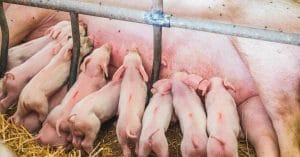
The EU Commission has announced it will propose a ban on battery cages for laying hens before the end of 2026, reviving a promise that animal welfare groups say was broken after years of delays and political foot-dragging.
After five years of waiting, Europe’s animal rights organisations are finally seeing movement. The EU Commission confirmed this afternoon that it will table legislation to ban caged hens as part of its new agricultural strategy. It sounds like a breakthrough, but anyone who has watched Brussels closely knows this is barely the starting line.
Back in 2021, the Commission promised to phase out all cages in farming by the end of 2023. That promise came in response to End the Cage Age, a citizen initiative that collected 1.4 million signatures across Europe. It was one of the most successful petitions in EU history. Yet by 2024, animal welfare groups were so frustrated they took the Commission to court for failing to deliver.

Now the Commission says it will act. But the details matter, and right now, those details are thin on the ground. The proposal reportedly focuses on laying hens, which is significant but far from the comprehensive cage ban that activists had been promised. Around 143 million hens live in cages across the EU, spending their entire lives on a space roughly the size of an A4 sheet of paper.
Denmark already banned new battery cage production in 2023, with full phase-out required by 2035. So for Danish producers, this is not new territory. But for most of Europe, it is a different story. Countries like Germany, Czech Republic, and Slovakia have national bans coming into force between 2025 and 2030. The rest of the EU has been waiting for Brussels to set the rules.
What Took So Long
The timeline reveals a familiar Brussels pattern: bold promises, expert reports, and then years of silence. After the 2021 pledge, the European Food Safety Authority delivered scientific opinions confirming welfare problems in caged systems. Public consultations drew more than 190,000 responses backing cage-free farming. Yet Kommissionen sat on its hands.
Animal welfare activists say the delay was driven by lobbying from agricultural interests and political resistance in member states worried about costs. Mathias Madsen, campaign leader at Anima, calls today’s announcement “a relief and a victory.” But he is cautious. “We have been here before,” he said in a statement. “The question now is whether this proposal actually happens, and what it covers.”

The Commission has also promised support schemes for farmers making the transition. These are expected to draw on the Common Agricultural Policy, which already channels funds toward environmental and animal welfare upgrades. But the details of those schemes are not yet public. For farmers, that creates uncertainty about whether they can afford the transition.
Why It Matters Beyond Hens
A ban on battery cages is symbolically important, but it is only one part of a much larger animal welfare overhaul. Leaked EU documents from previous years indicated plans to ban routine tail docking in pigs, beak trimming in hens, and farrowing crates for sows. Those measures have not been confirmed in today’s announcement.
That matters because the original End the Cage Age initiative was not just about hens. It called for an end to all cage systems for farmed animals, including rabbits, calves, and sows. Today’s focus on laying hens suggests the Commission is taking a narrower approach, at least to start.
For Danish pig farmers, that could be significant. Denmark has been under intense scrutiny over pig welfare, with recent exposés showing systematic abuse on farms. If the EU moves forward with cage bans for sows or restrictions on farrowing crates, it would force further changes in an industry already under pressure.

The Commission has also said it will ensure imported products meet the same cage-free standards. That is crucial. Without import controls, European farmers could face unfair competition from cheaper products produced under lower welfare standards. But enforcing such rules at the border is technically and politically complex. It remains to be seen whether the Commission will follow through.
What Happens Next
The Commission says it will present its proposal before the end of this year. After that, it goes to the European Parliament and Council for approval. Even in the best case, implementation will take years. The European Parliament previously called for cages to be phased out by 2027, but that timeline now looks highly optimistic.
For expats living in Denmark, this is a reminder of how slowly EU institutions move, even on issues with overwhelming public support. Denmark is often ahead of the curve on these questions. Battery cages for hens are already history here. But the rest of Europe is still catching up, and the political machinery in Brussels grinds slowly.

What this means in practice is that the eggs you buy in a Danish supermarket are already cage-free. But if you travel elsewhere in Europe, or buy imported products, that is not always the case. A harmonised EU standard would change that. It would also give Danish farmers a level playing field, rather than being undercut by producers in countries with weaker rules.
Still, today’s announcement is more promise than policy. The Commission has a track record of announcing bold plans and then quietly watering them down. Animal welfare groups will be watching closely. After five years of waiting and a court case to force action, they are not taking anything for granted.
Sources and References
Ritzau: EU slår fast: Slut med bure i landbruget!
The Danish Dream: Secret footage exposes shocking abuse at pig farm
The Danish Dream: Danish pig welfare U-turn sparks outrage
The Danish Dream: Denmark targets pig farms in antibiotic crackdown