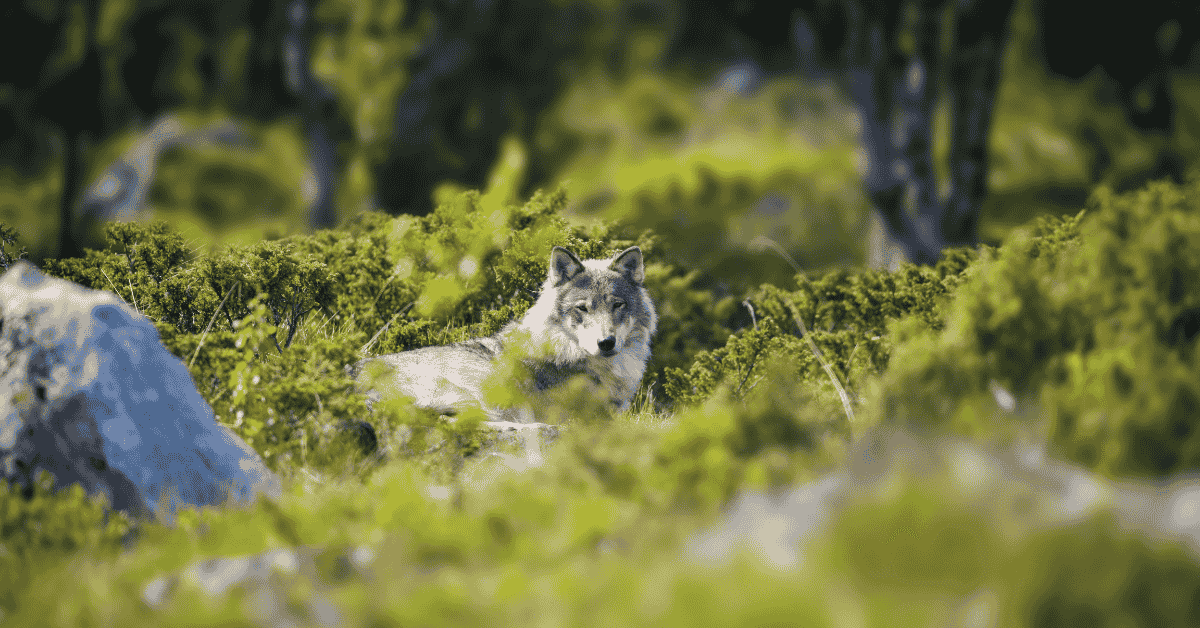
Denmark’s wolf population has hit a record 42 animals across at least nine territories in Jutland, and this spring authorities issued the country’s first targeted shooting permits near Oksbøl after a wolf was filmed metres from million-kroner sport horses grazing in an open paddock.
The incident in West Jutland captures everything that makes Denmark’s wolf debate so tense right now. A horse owner watched surveillance footage of a wolf rolling on the ground just outside the fence where his expensive breeding animals grazed. He contacted police and the local municipality. Within weeks, four hunters received permits to shoot problem wolves in the area. Meanwhile, conservation groups pushed back, arguing that culling during denning season could orphan pups and make the problem worse.
I have watched this debate evolve since wolves returned to Denmark in 2012 after more than two centuries. What started as a conservation success story has become a daily source of anxiety for rural Jutlanders who keep livestock, walk dogs on heathland, or stable horses near forest edges.
Record Numbers and Closer Encounters
The April 2026 national monitoring update confirms ten wolf territories entering the new season, with breeding expected in all of them. That means many more wolf cubs are on the way this summer. Aarhus University estimates the current population at around 42 animals, all in Jutland, spread across six packs, two pairs, and one lone territorial male.

The numbers themselves do not tell the full story. What has changed is where these wolves are showing up. Videos posted in April show a wolf following a dog walker in Rens, Southern Jutland. Another set of clips from late April captured multiple wolves near village edges in Mid and Southwest Jutland. These are not remote wilderness areas. These are places where expats live, ride horses, and raise families.
Political Pressure and EU Rules in Flux
Danish authorities are caught between rural anger and strict EU protection rules. The European Commission has proposed downgrading the wolf from strictly protected status in the Habitats Directive, which would give member states more flexibility to manage populations. That proposal is still working its way through the European Parliament and Council, so Denmark cannot yet move to broader hunting or culling.
In the meantime, the government has responded with case by case shooting permits for specific problem wolves. The Oksbøl permits issued in May were the result of repeated livestock attacks and mounting local pressure. Opinion polls show Danes are split almost evenly, with 38 percent supporting wolf hunting and 34 percent clearly opposed.
The Rural Urban Divide
The divide runs deep. Urban Danes tend to value having a large predator back in the landscape after two centuries. Rural residents, including many expat hobby farmers and horse owners drawn to cheap Jutland properties, see wolves as a direct threat to their animals and their way of life. Dansk Skovforening, representing forest owners, has called it necessary to be allowed to shoot wolves, citing significant damage to game and livestock.

Conservationists argue that most conflicts stem from inadequate fencing and that better prevention would reduce the need for lethal control. They also warn that shooting wolves during pup rearing periods can destabilise packs and create orphaned juveniles that may become bolder or less predictable. That argument has gained traction in June 2026, with calls to pause or restrict culling while dens are active.
What This Means for Expats in Jutland
If you live in Central or West Jutland and keep animals, you need to take this seriously. The official monitoring portal, Ulveatlas.dk, is the best source for current sighting maps and guidance. Electric fencing to specific heights is recommended for sheep and goats. Horse owners with foals or valuable breeding stock should consider secure night stabling in wolf areas.
Dog owners should keep pets on a lead at dawn and dusk in known wolf territories. Most wolves will move away if given space, but a loose dog can trigger a chase response. If you witness an attack on livestock, report it immediately to your municipality to access compensation schemes. Prompt documentation is essential.

The practical challenge for non Danish speakers is that most official guidance and compensation processes are only available in Danish. Navigating Borger.dk and municipal agriculture departments requires either fluent Danish or help from a Danish speaking neighbour.
A Small Population in a Crowded Country
Denmark’s 42 wolves are tiny compared with Germany or Poland, where populations number in the hundreds or thousands. That is why EU protection has remained strict until now. But Denmark is also one of Europe’s most densely settled countries, with a patchwork landscape of farms, villages, wind turbines, and recreational areas. There is very little true wilderness left.

That mismatch is the heart of the problem. Wolves are behaving like wolves, expanding into available habitat and hunting available prey. Humans are behaving like Danes, using the countryside intensively for agriculture, tourism, and recreation. The two patterns are colliding, and no one has a clear answer for how to manage it in the long term. For now, expats in Jutland are learning to live with a level of wildlife risk that Denmark has not seen in living memory.